Start with a gentle routine
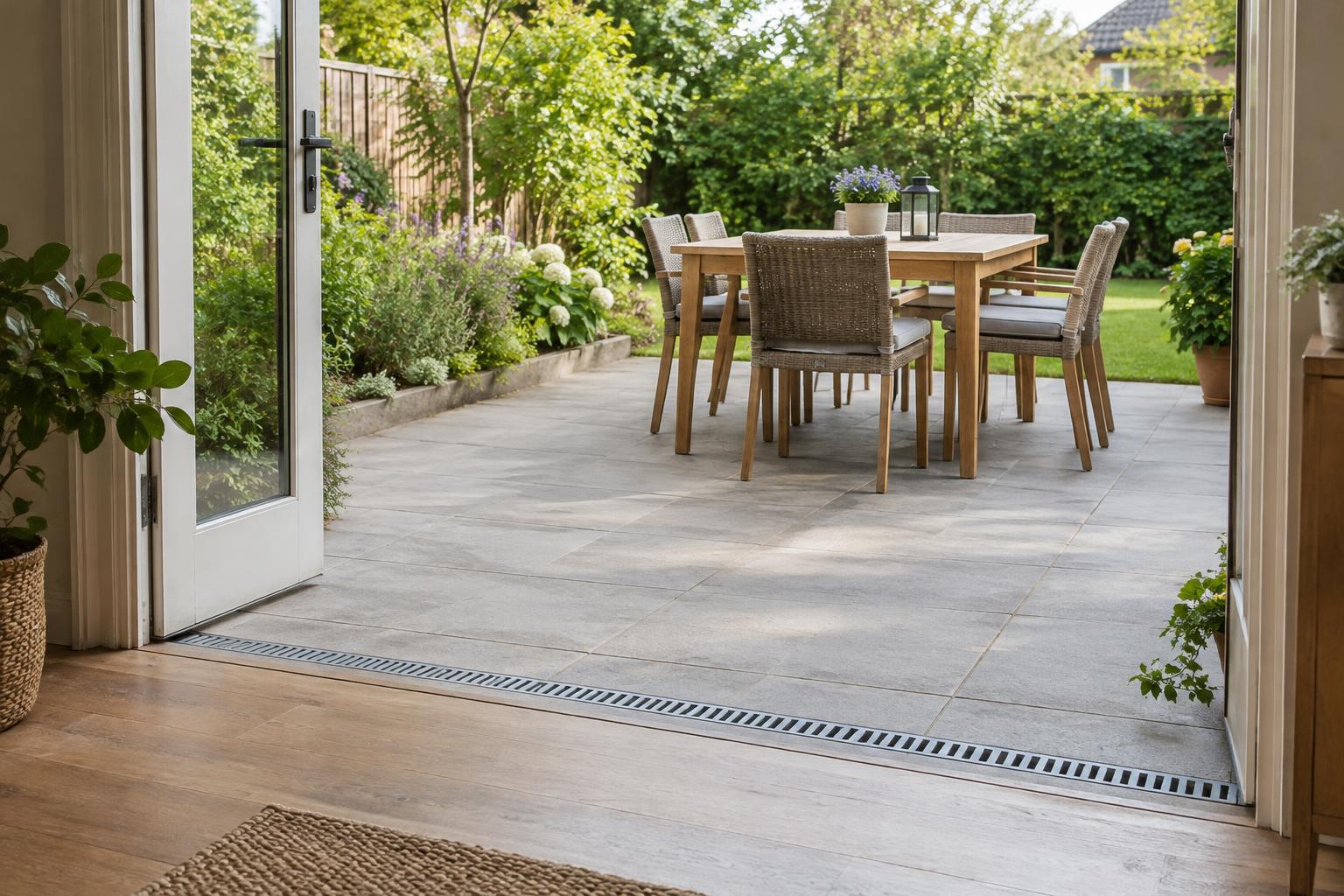
The simplest patio habit is often the most useful: sweep away leaves, grit and soil before they hold moisture against the surface or get ground into it. Move planters and furniture occasionally so you can clean underneath them and spot stains early. Keep nearby drains and drainage gaps clear, and trim plants that continually brush against the patio. In damp or shaded areas, more frequent light cleaning may be easier than tackling a thick buildup later.
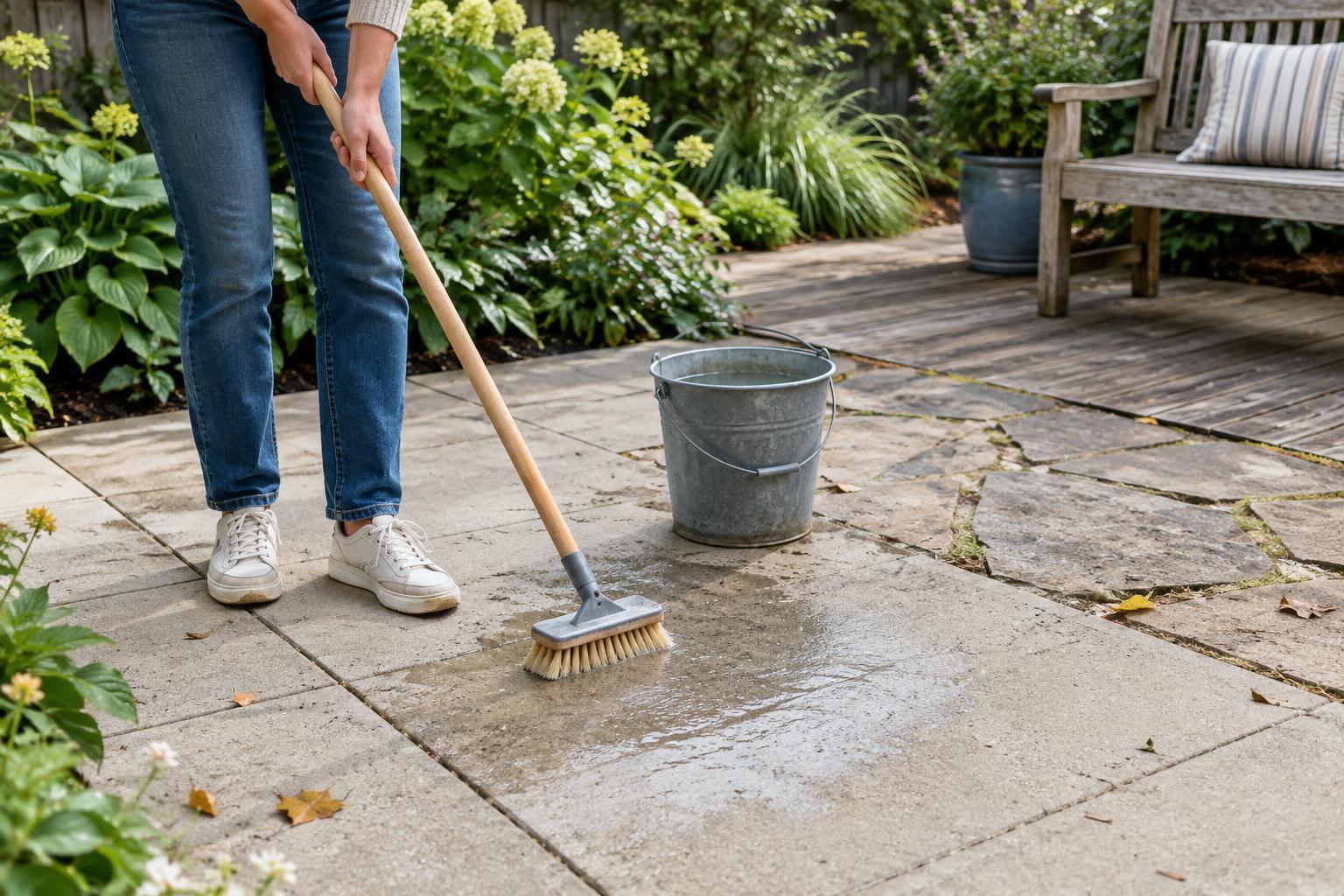
For a general wash, start with water, a soft or medium-stiff brush and a small amount of mild detergent if needed. Test any cleaner in an inconspicuous spot, then rinse thoroughly. Choose a method that lets runoff stay away from garden beds and ponds. Pressure washers can be tempting, but a concentrated jet may erode joints, roughen finishes or force water into places it should not go. If you use one, check the surface manufacturer's guidance and begin with a low-pressure setting.
Concrete and concrete pavers
Plain concrete is relatively straightforward to maintain. Sweep it regularly and scrub ordinary dirt with water and mild detergent. Attend to spills before they soak in; absorb oil with a suitable absorbent material before cleaning the remaining mark. Avoid harsh acids unless the product and finish are specifically suited to them, as they can change the appearance of concrete. Small cracks are worth monitoring: clearing debris from them and addressing drainage problems may help limit further damage.
Concrete pavers need attention between the units as well as on top. Pull weeds when they are small, clear accumulated soil from joints and replace jointing material if it has washed out, using a type appropriate to the installation. Loose or uneven pavers can create a trip hazard and may point to a problem beneath them. Resetting them securely is more useful than repeatedly washing the same area. If the pavers are sealed, follow the sealer maker's cleaning and reapplication guidance rather than applying a new coating automatically.
Natural stone and outdoor tile
Natural stone varies widely in hardness, porosity and sensitivity to cleaners. A product suitable for one stone may mark another, so identify the material if you can and check any care instructions that came with it. As a cautious starting point, use a pH-neutral cleaner intended for stone, a nonmetal brush and plenty of water. Avoid vinegar and other acidic cleaners on acid-sensitive stone, including limestone and marble. Remove fallen fruit, food and drink spills promptly, particularly from porous surfaces.
Outdoor tile is usually easy to wash, but its grout and edges deserve a closer look. Sweep first so grit does not scratch the finish, then mop or scrub with a cleaner compatible with both the tile and grout. Rinse away residue that could leave the surface slippery. Watch for cracked tiles, crumbling grout or hollow-sounding areas; cleaning will not fix water getting beneath a loose tile. On any tiled patio, choose cleaning tools that do not make a textured, slip-resistant surface unnecessarily smooth.
Wood and composite decking
For wood decking, clear debris from gaps and places where boards meet walls or planters. Wash with a soft brush and a cleaner recommended for the wood and its finish, working along the grain when practical. Let the boards dry before judging whether they need further treatment. Check for splinters, soft patches, raised fasteners and loose boards during cleaning. A finish may help protect wood, but preparation and timing matter; apply one only when the surface is clean, dry and suitable for the product.
Composite decking generally does not need the same finishing routine as wood, but it still collects dirt and can stain. Sweep it, wash it with mild soap and water, and follow the board maker's directions for stubborn marks. Avoid abrasive pads or unapproved solvents that could alter the surface. Leave ventilation gaps clear and keep hot objects, such as a grill, at a distance recommended by its manufacturer. Neither wood nor composite benefits from water being trapped beneath rugs and pots for long periods.
Make maintenance a seasonal check
After a spell of heavy rain or freezing weather, walk the patio and look for pooling water, movement, damaged joints and slippery patches. In autumn, clear leaves before they decompose; in warmer months, check shaded areas for algae or other growth. Use a cleaner suited to the surface when washing alone is not enough, and follow its label for application, rinsing and protection of nearby plants.
There is no need to deep-clean every patio on a fixed schedule. Let its exposure, material and amount of use guide you. Regular sweeping, prompt attention to spills and an occasional close inspection usually do more for a patio than aggressive cleaning after years of neglect. When a stain or damaged area resists a gentle approach, identify the surface and its finish before trying a stronger treatment.