Mistake 1: Choosing the shape before deciding how the patio will be used
It is tempting to draw a neat rectangle against the house and fill it in later. But a patio that looks generous on paper can feel cramped once a table, chairs, planters and people occupy it. Before settling on an outline, decide what you actually want to do there. A place for two to drink coffee needs a different arrangement from an outdoor dining area or a space where children can play within sight of the house.
Make a simple plan showing the doors, garden paths and objects that must fit. If possible, mark the proposed footprint on the ground with a hose, string or temporary markers. Put your existing furniture in place, or use cardboard to stand in for new pieces. Pull chairs out as you would during a meal and walk around them. This quick test reveals tight corners and helps you size the patio for real use rather than for an empty drawing.
Mistake 2: Forgetting the routes people take
A patio can have plenty of floor area yet still be awkward if the main route to the lawn, shed or gate cuts straight through the seating. People may have to squeeze behind chairs or step into planting beds. Watch how you already move through the garden, then give those journeys a clear path. Keep frequently used doors and steps unobstructed, and place furniture so someone can pass even when a chair is occupied.
Consider the route from indoors as well. A dining spot close to the kitchen may be convenient for carrying food, while a quiet reading chair might work better farther from the door. If one patio must serve both purposes, use furniture placement or containers to suggest separate zones without blocking movement. Check that any new paths connect naturally to the patio rather than arriving at the back of a bench or the middle of a table.
Mistake 3: Treating sun, shade and wind as afterthoughts
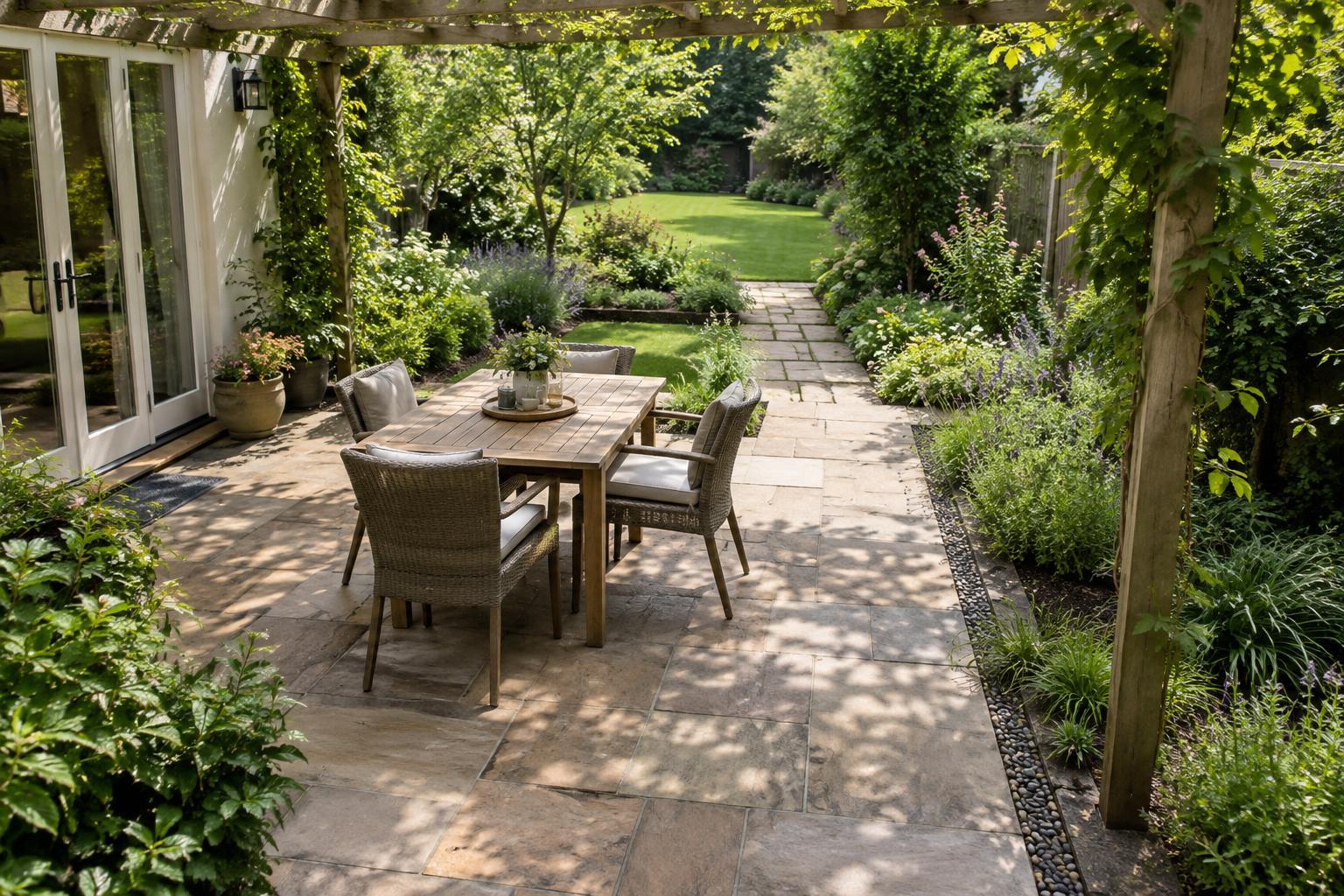
The most convenient patch of ground is not always the most comfortable place to sit. A spot that feels pleasant in the morning may be exposed when you usually eat outside; a shaded corner may stay cool when you want warmth. Spend time in the proposed location at the hours you expect to use it. Notice where shade falls, where wind feels strongest and whether nearby windows look directly onto the seating.
Use those observations to shape the layout. Move a dining table toward dependable shade if midday meals are the priority, or reserve a sunnier edge for cooler-day seating. A movable parasol, suitable screening or carefully placed planting can add flexibility, but each needs room of its own. Leave space for a parasol base and for plants to grow without swallowing the walking route.
Mistake 4: Ignoring levels, drainage and the edges
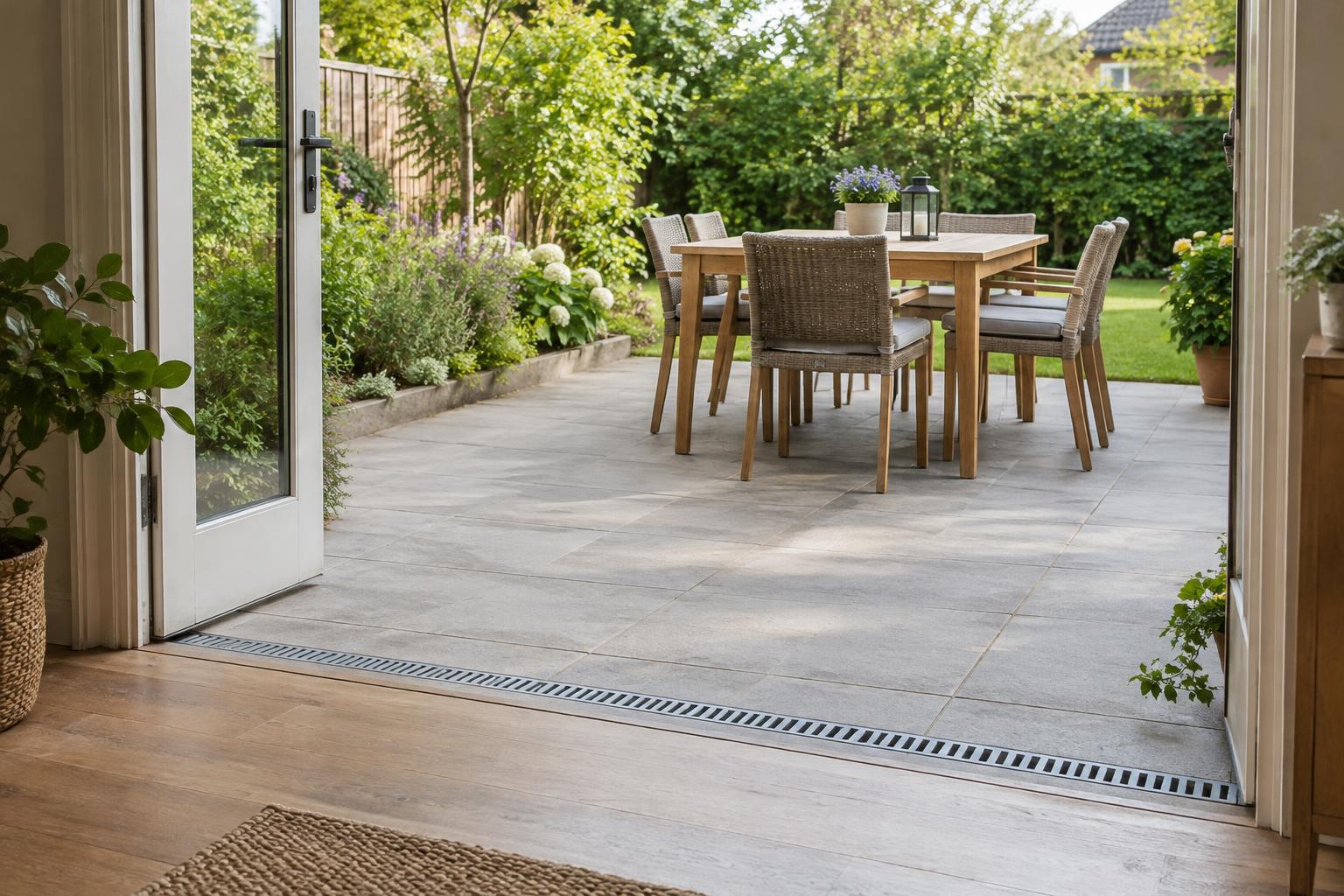
A patio should feel like an extension of the garden, not a platform that leaves rainwater with nowhere sensible to go. Before choosing paving or decking, look at the ground levels, the direction water travels after rain and how the proposed surface will meet the house, lawn and beds. Avoid layouts that direct runoff toward the building or create a low pocket beside a doorway. The right solution depends on the site and the surface, so drainage and finished levels are worth resolving before installation.
Edges matter just as much to the finished layout. A sudden drop, an inconvenient step or a narrow strip of soil can make a patio harder to use and maintain. Plan where steps and transitions belong, and allow enough planting space for the mature size of the plants you want. If the site has a substantial slope or an uncertain drainage problem, getting site-specific help before work begins is usually easier than correcting a finished patio.
Mistake 5: Filling every spare space
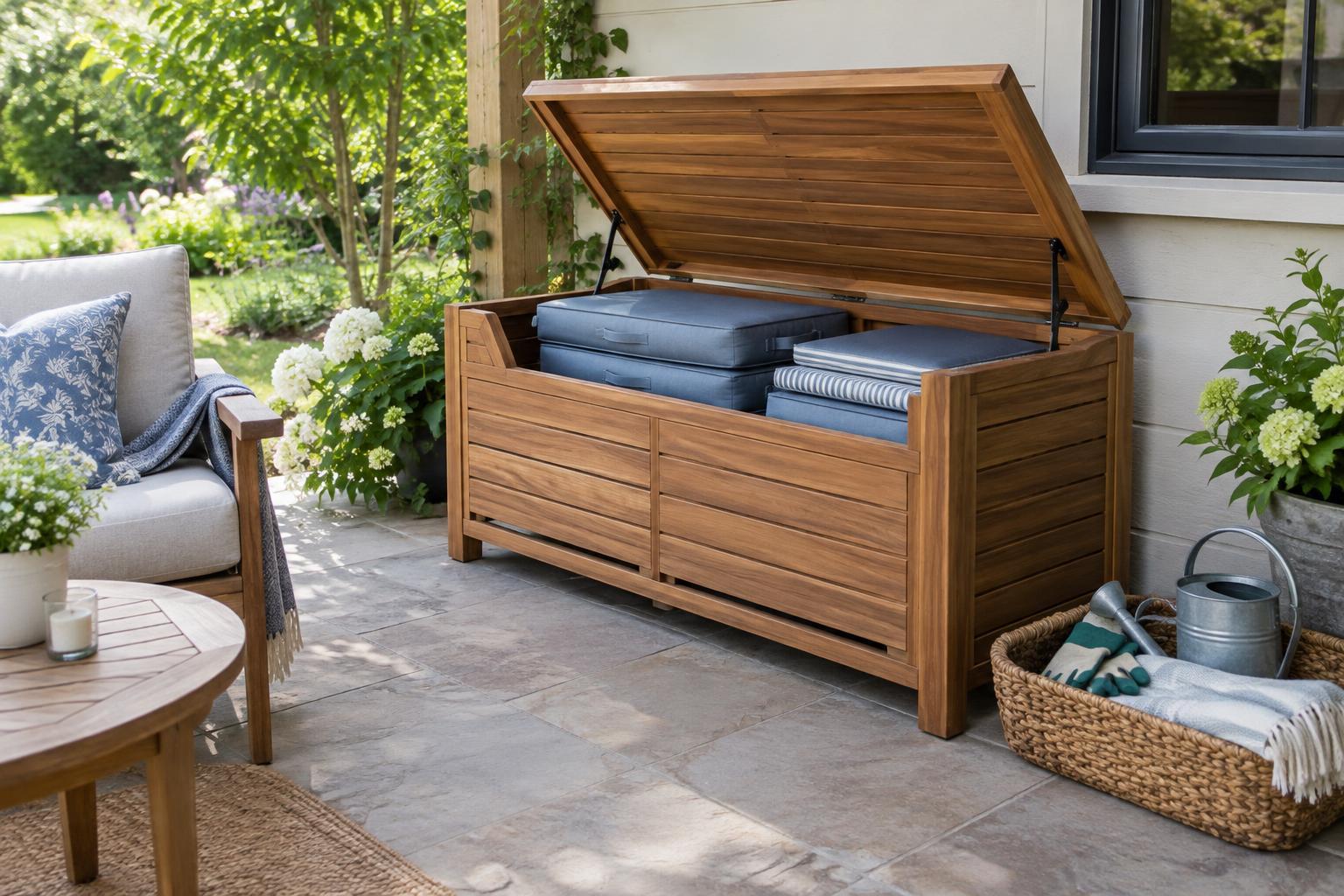
Patio plans often accumulate features: a large dining set, a lounge area, raised beds, storage and a grill. Each may be useful, but fitting them all into a modest space can leave no comfortable room to move. Choose the activities you value most and give those priority. Furniture that folds, stacks or serves more than one purpose can make a smaller patio more adaptable without crowding it every day.
Finally, look outward from the seats. A layout that faces a fence at close range may feel less inviting than one angled toward a tree, border or open view. Leave some breathing room between hard surfaces and greenery, even if it is only space for a few well-placed containers. A successful patio does not have to include everything at once; it needs enough clear, comfortable space for the way you will actually spend time outdoors.