Start with the space you have, not the plants you want
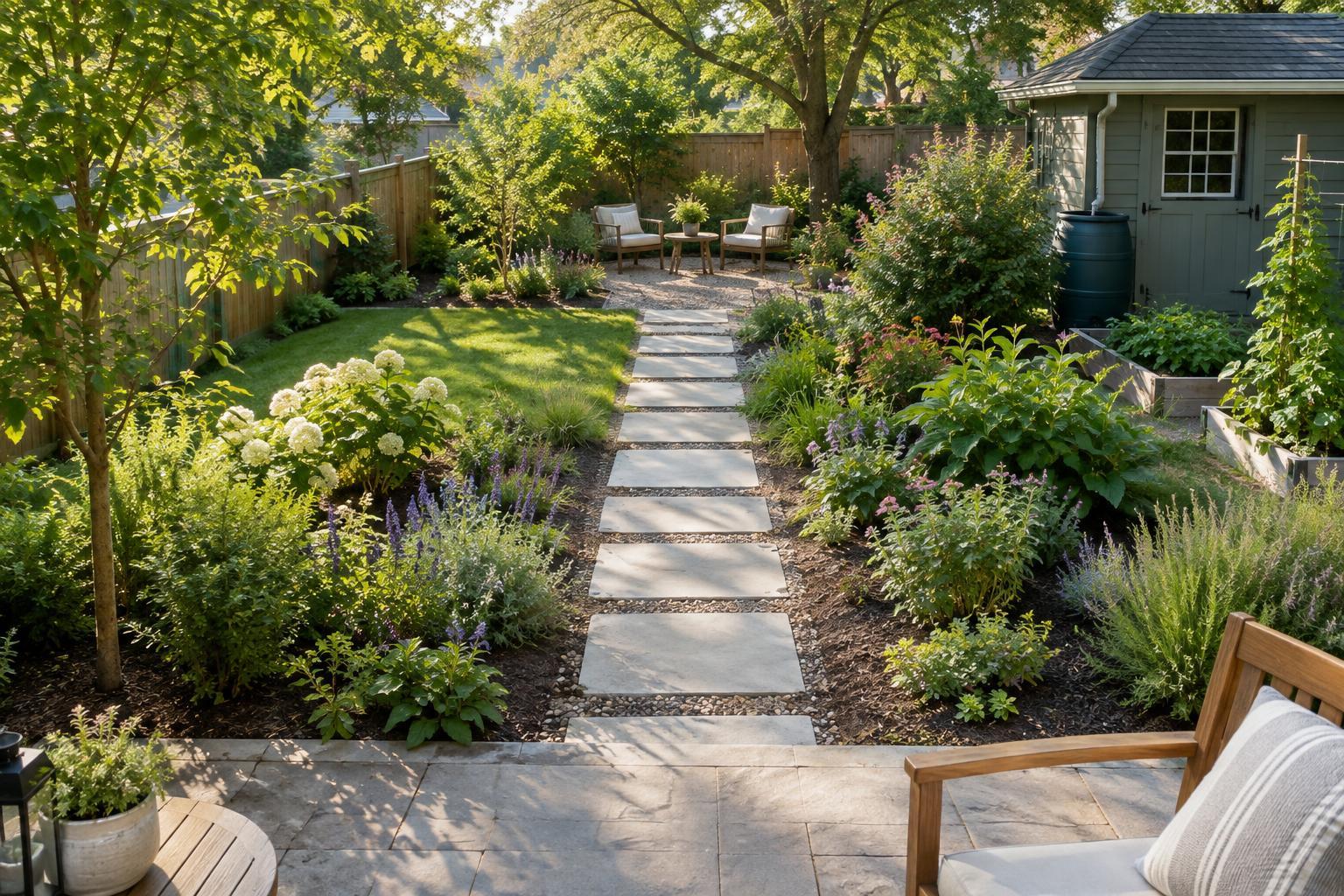
Before choosing plants, measure the bed or planting area and mark anything that limits growth. Include paths, walls, fences, doors, windows, seating, overhead wires and existing plants. Note where you need to walk, reach a tap or move a wheelbarrow. A plant can fit inside a bed on paper yet still become a nuisance if its branches spill across a route you use every day.
Observe the site’s light and exposure, too. A label’s mature dimensions are a starting point, not a promise: growth can vary with climate, soil, water, pruning and the exact variety. Check the expected size of the variety you intend to buy rather than relying only on a general plant name. If information differs between sellers, plan around the larger likely width unless you are comfortable maintaining the plant at a smaller size.
Draw the garden at full-grown scale
A simple scale drawing makes spacing easier to judge. Sketch the bed on graph paper, or use a digital drawing with a consistent scale. Draw each plant as a circle representing its expected mature spread. The circle’s radius is half that spread, measured from the plant’s center. This matters because planting instructions usually refer to the distance between centers, while the edges of mature plants determine whether a path stays clear.
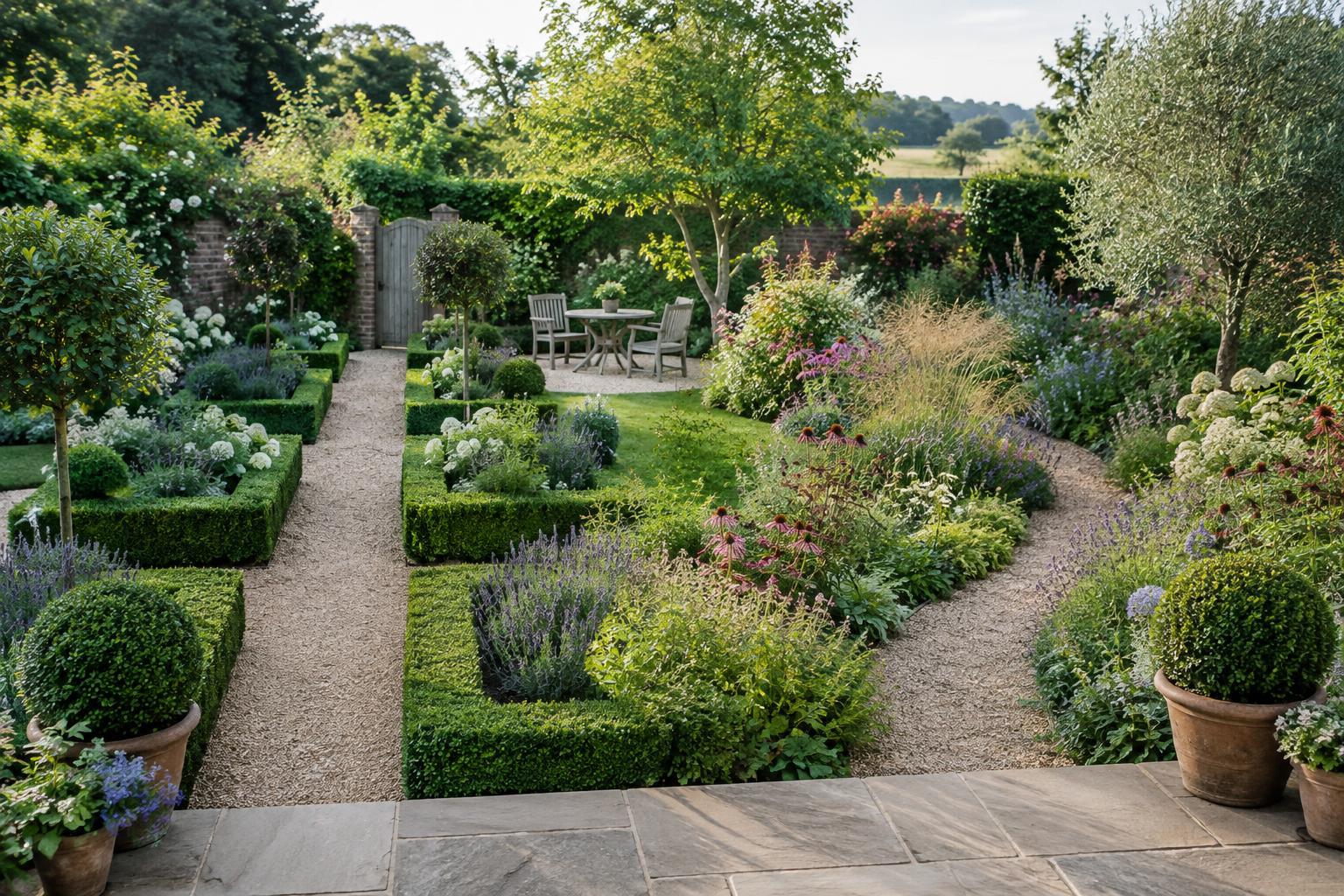
Place trees and large shrubs first; they are harder to relocate and have the greatest effect on light and circulation. Then position smaller shrubs, grasses and perennials. You do not have to prevent every circle from touching. A little overlap can give a planting a continuous look, especially where plants have open or upright forms. Heavy overlap, however, may hide smaller plants or make routine care difficult. Where a boundary must remain clear, draw that boundary into your plan rather than treating it as spare planting room.
Think about height, habit and access
Mature width is only part of the picture. Record each plant’s likely height and shape alongside its spread. An upright plant may occupy less ground space than a broad, arching one of the same height. A deciduous shrub changes the view and shade through the year, while an evergreen keeps its bulk. Arrange plants so the taller ones do not block a window, crowd a doorway or shade sun-loving neighbors more than you intend.
Leave room to work around plants where maintenance calls for it. Consider whether you can reach the back of a border to weed, prune or collect leaves without stepping on other plants. Make particular allowances near steps, gates and narrow paths, where growth will be more noticeable. Pruning can help manage a planting, but it works best as occasional care, not as the only thing keeping a naturally large plant within its space.
Give new plantings a way to look good now
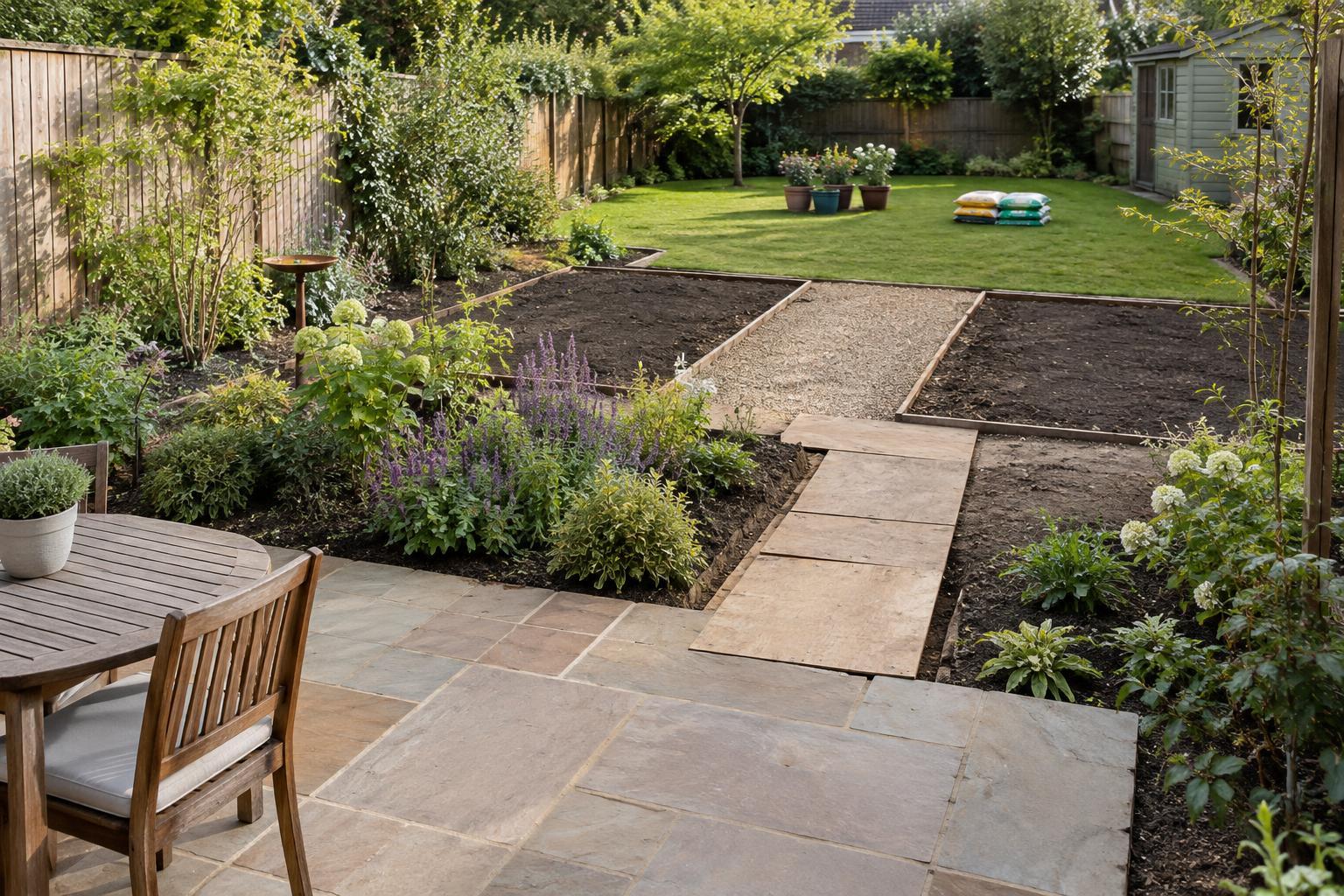
Spacing for mature size can leave a young garden looking unfinished. Resist the urge to solve that by adding permanent shrubs in every opening. Instead, use short-lived or easily moved plants between the long-term ones. Annual flowers, vegetables in a suitable sunny spot, or perennials you are willing to divide or relocate can provide interest while shrubs fill out. Mulch can also give open soil a tidy appearance and help reduce weed growth.
Treat these gap fillers as a temporary layer on your plan. Mark which plants are meant to stay and which will move when their neighbors expand. That distinction makes future decisions simpler: an annual finishing its season is not a loss, and a perennial can be divided before it becomes crowded. If you prefer a garden that looks full immediately, choose some plants with a modest mature size rather than packing large plants too closely.
Review the plan as plants grow
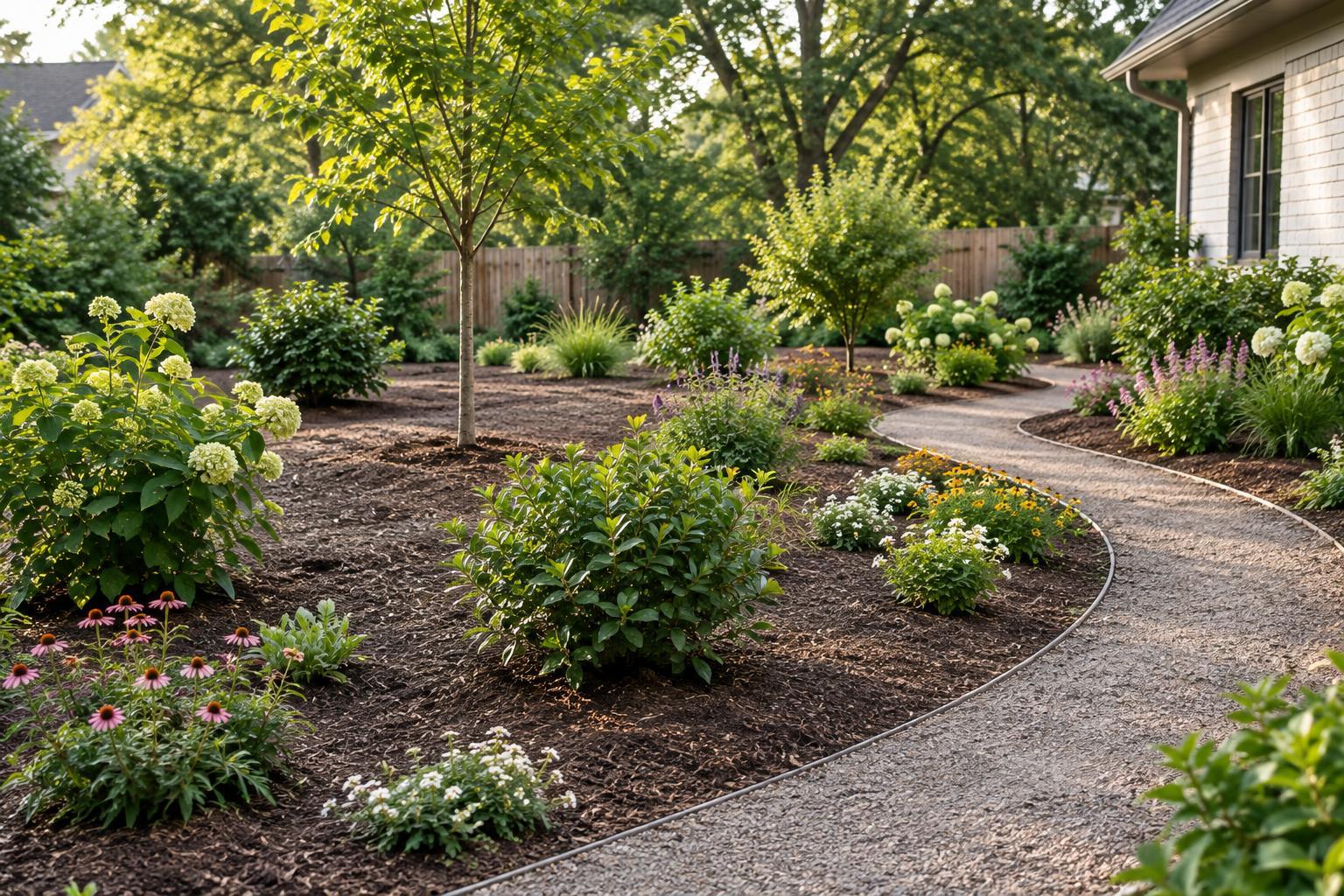
A planting plan is a useful guide, but living plants will not grow into perfect circles. After planting, keep a note of each plant’s name and intended position. Take a look each growing season at how much space it is using, where shade is falling and whether paths still feel comfortable. That gives you a chance to move a small plant or divide a clump before the bed becomes difficult to manage.
When something outgrows its place, first check whether the issue is its position, its mature size or a change in how you use the space. Selective pruning may be enough for a small obstruction; moving or replacing a plant may be the more practical long-term answer. Planning around mature dimensions will not eliminate every adjustment, but it gives the garden a better starting structure and lets you enjoy the spaces between plants as part of the design.