Start with the journeys you actually make
Before choosing stone or gravel, notice how you move through the garden. List the places you visit often: the back door, bins, shed, washing line, seating area, vegetable beds and gate. Watch where people already walk across the lawn. Those informal routes can reveal a more useful path layout than a drawing made indoors.
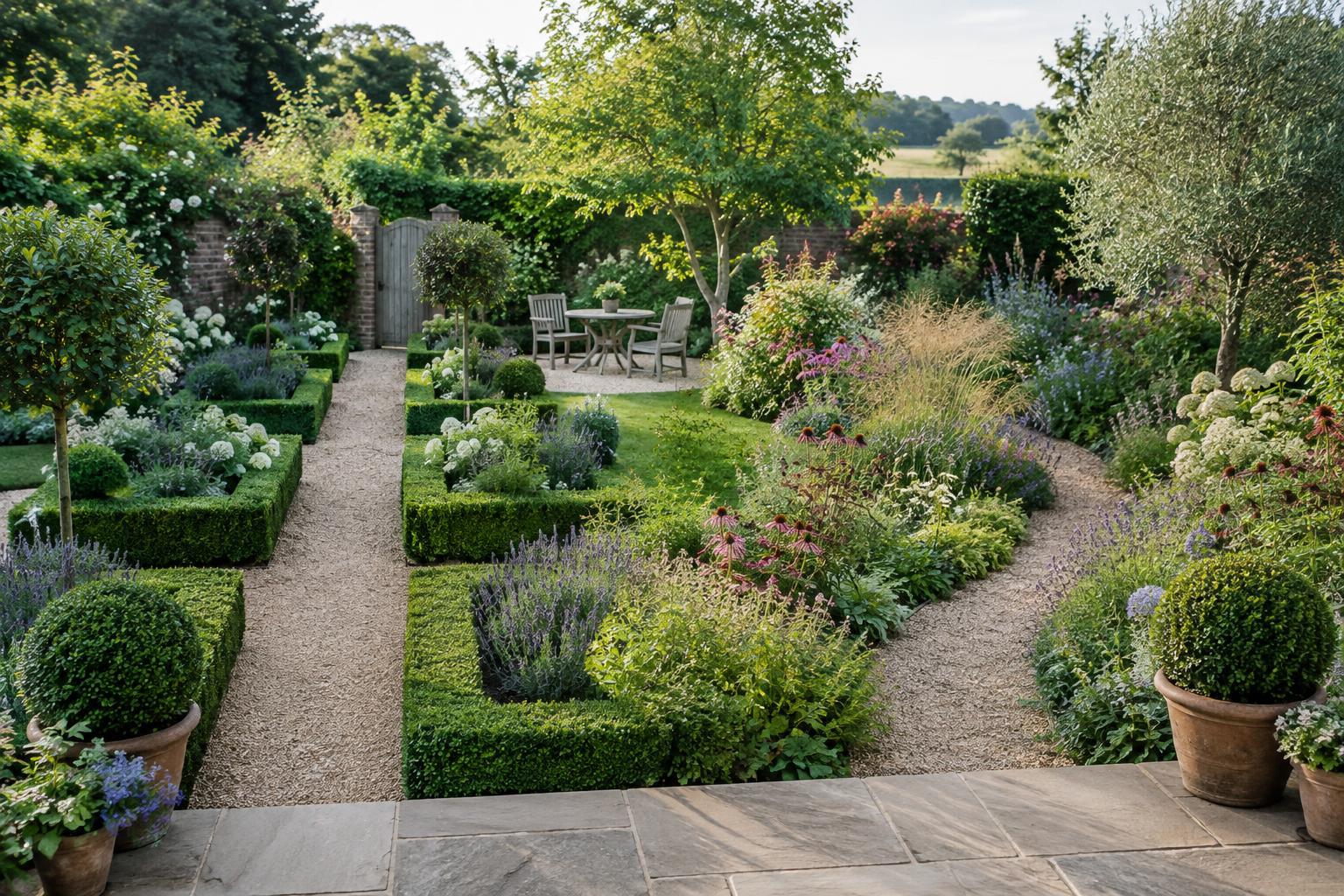
Give the most-used journeys the most direct routes. A path to the bins should work when your hands are full; a path to a bench can take a gentler curve. If one route serves several destinations, place a junction where it feels natural rather than making walkers double back. Check that doors and gates can open fully without blocking the path.
Make room for people and garden tasks
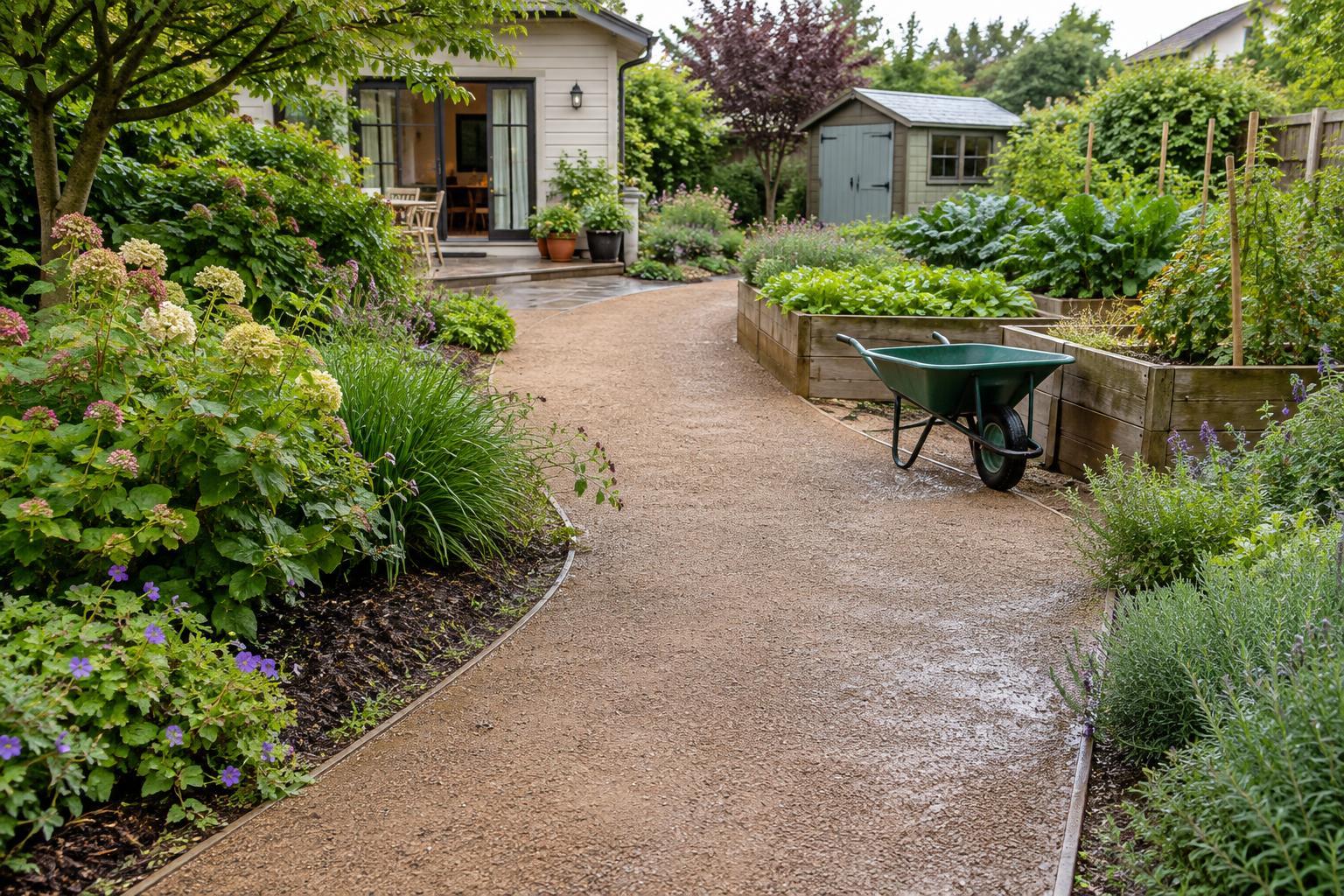
A path that looks generous on paper can feel narrow once plants grow over it. Mark the proposed edges with string, a hose or temporary stakes, then walk the route carrying a watering can or pushing a wheelbarrow. Try turning at corners and passing any steps, taps or raised beds you will use regularly.
Where two people may walk together, allow more space than you would for a single-file route. Leave extra room at gates, seating areas and spots where you need to turn equipment around. If someone will use a mobility aid, plan around that person's needs from the outset: a firm, even route, comfortable turning space and manageable changes in level matter more than a decorative shape. Check relevant local guidance for any formal accessibility requirements.
Keep planting in mind as you set the edges. Low, soft plants may brush pleasantly against a path, but thorny branches or dense shrubs can make it awkward. Allow space for mature growth or choose plants you can easily trim back.
Choose a surface for your weather and workload
The right surface depends on how often the path is used, how wet the ground gets and how much maintenance you want to do. Firm, well-laid paving is often a practical choice for a main route used in all seasons. Closely fitted joints and a stable base help keep the walking surface consistent. Select finishes that offer grip when damp, particularly in shaded areas.
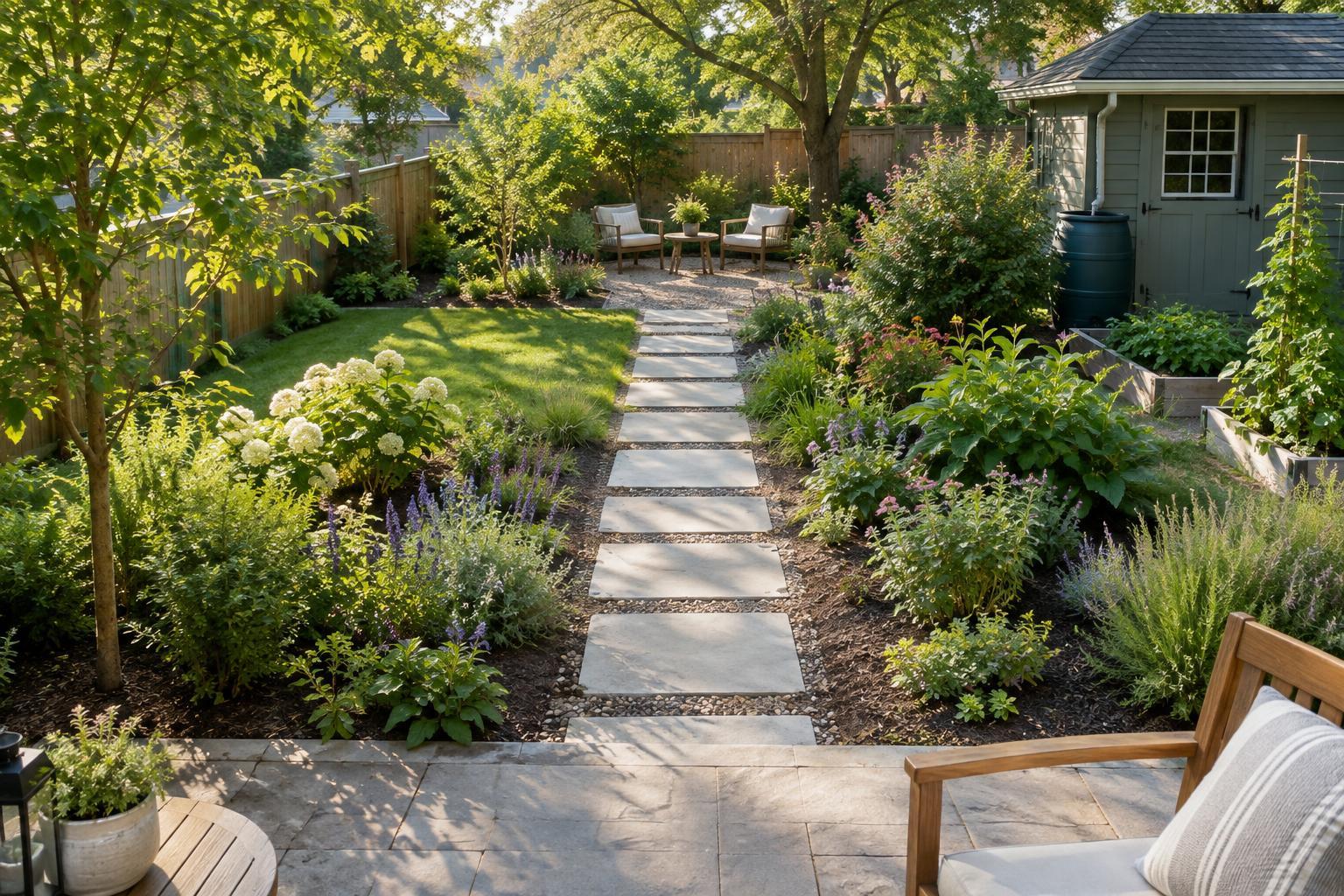
Loose gravel can suit an informal route, but it may shift under wheels and need occasional raking or topping up. Stepping stones can work for a lightly used shortcut, provided the spacing feels natural; they are less convenient when carrying loads or moving equipment. Bark and other soft materials can make pleasant secondary paths, though they tend to break down and need replenishing.
Think beyond the material visible on top. A path needs an appropriate base and edges to help it stay in place. Before committing to a large area, lay out a small sample if you can. Walk on it in ordinary shoes and consider how it will feel after rain, when leaves have fallen or when you are in a hurry.
Plan for slopes, water and changing seasons
Follow the shape of the ground rather than forcing every route into a straight line. On a slope, a gentler line may be easier to use than a short, steep one. Where a change in level cannot be avoided, make it obvious and consistent. Steps should be easy to see, with enough space to pause at the top and bottom. For significant level changes or complex drainage, seek experienced local help.
Water should not collect on the path or be directed toward the house. Observe the garden during or after rain to spot puddles and runoff routes. Allow for drainage as you plan the path's height and edges, and avoid creating a barrier that traps water against beds or buildings. In colder climates, consider which stretches are likely to stay icy; in hot climates, think about where shade would make a frequently used route more comfortable.
Also picture the path in winter or after dark. Clear edges, suitable outdoor lighting where needed and plants that do not obscure the route can make everyday use easier throughout the year.
Test the layout before building
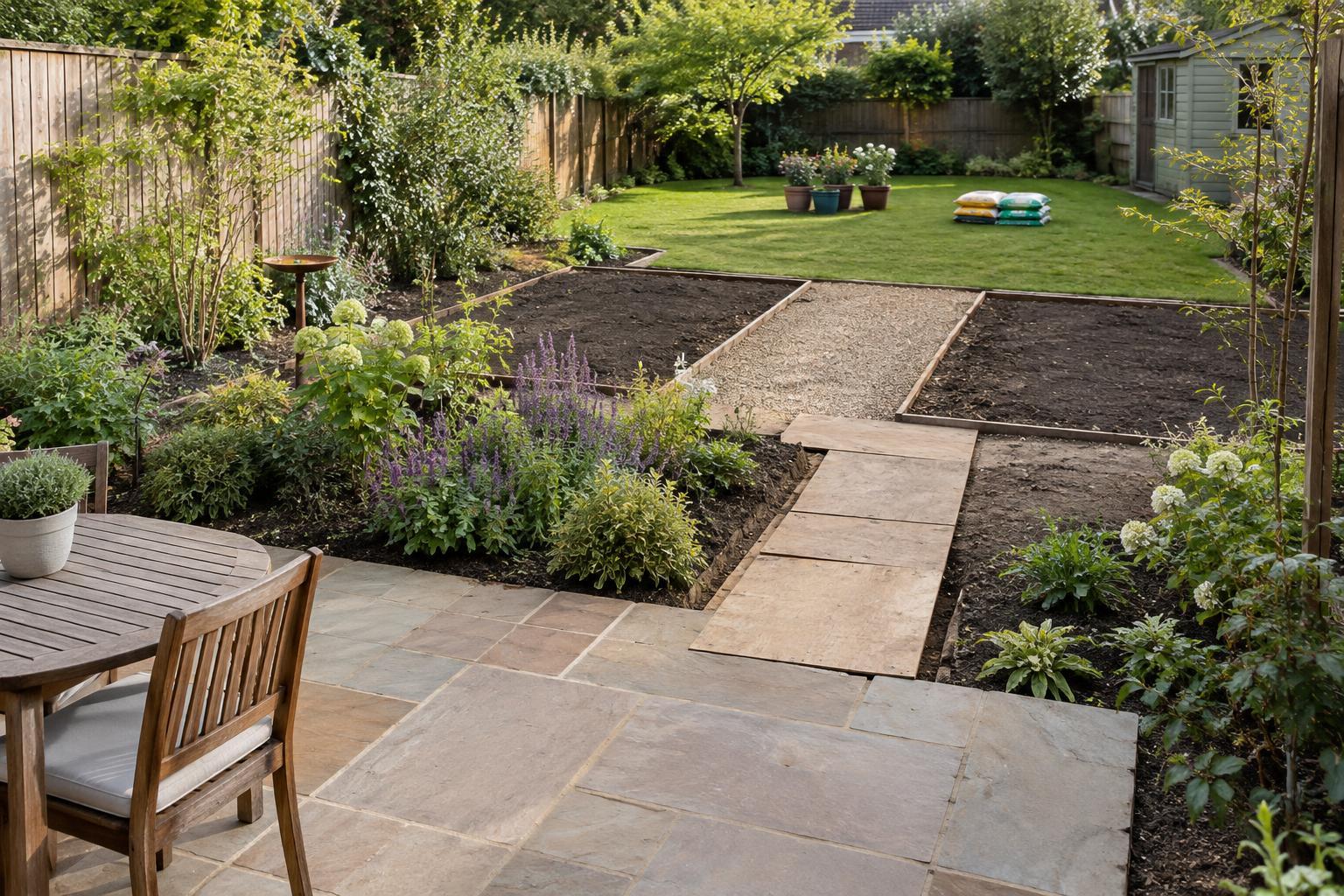
Mark the full route on the ground and use it for several days if possible. Carry out normal jobs, not just a leisurely walk. You may find that a curve is too tight for a barrow, a junction lands in the wrong place or a path would be better a little farther from a planting bed. Adjustments are much easier before materials arrive.
Finally, decide which paths truly need a durable, all-weather finish. A main route deserves priority, while a rarely used shortcut can remain simpler. Planning in that order helps the garden feel connected without covering more ground than necessary. The best path is one you can use comfortably on an ordinary day, with enough room to work and a surface you are willing to maintain.