Get to know the slope before drawing a plan
Begin with a simple sketch showing the house, boundaries, existing trees, steps, drains and places you might want to sit or grow plants. Mark which way the ground falls and where the steepest sections are. You do not need a detailed survey to start thinking, but rough measurements of distances and changes in height will make your ideas more realistic. If you are considering major earthworks, a measured site plan is worth arranging before designs are finalized.
Walk the garden at different times and, if possible, after rain. Note where water runs, where soil stays damp and where it dries quickly. Look for exposed roots, bare patches or small channels that suggest erosion. Sun and wind may also vary from top to bottom: an upper area can feel open and dry while a lower corner is sheltered. Treat these observations as clues rather than assuming every part of the slope needs the same solution.
Decide what needs to be level
A useful plan starts with activities, not construction. A dining table, play space or accessible work area may need a reasonably level surface; a planted bank often does not. Choose the few places where level ground will make the biggest difference, then let other areas follow the natural contours. This can reduce the amount of digging and help the garden feel connected to its setting.
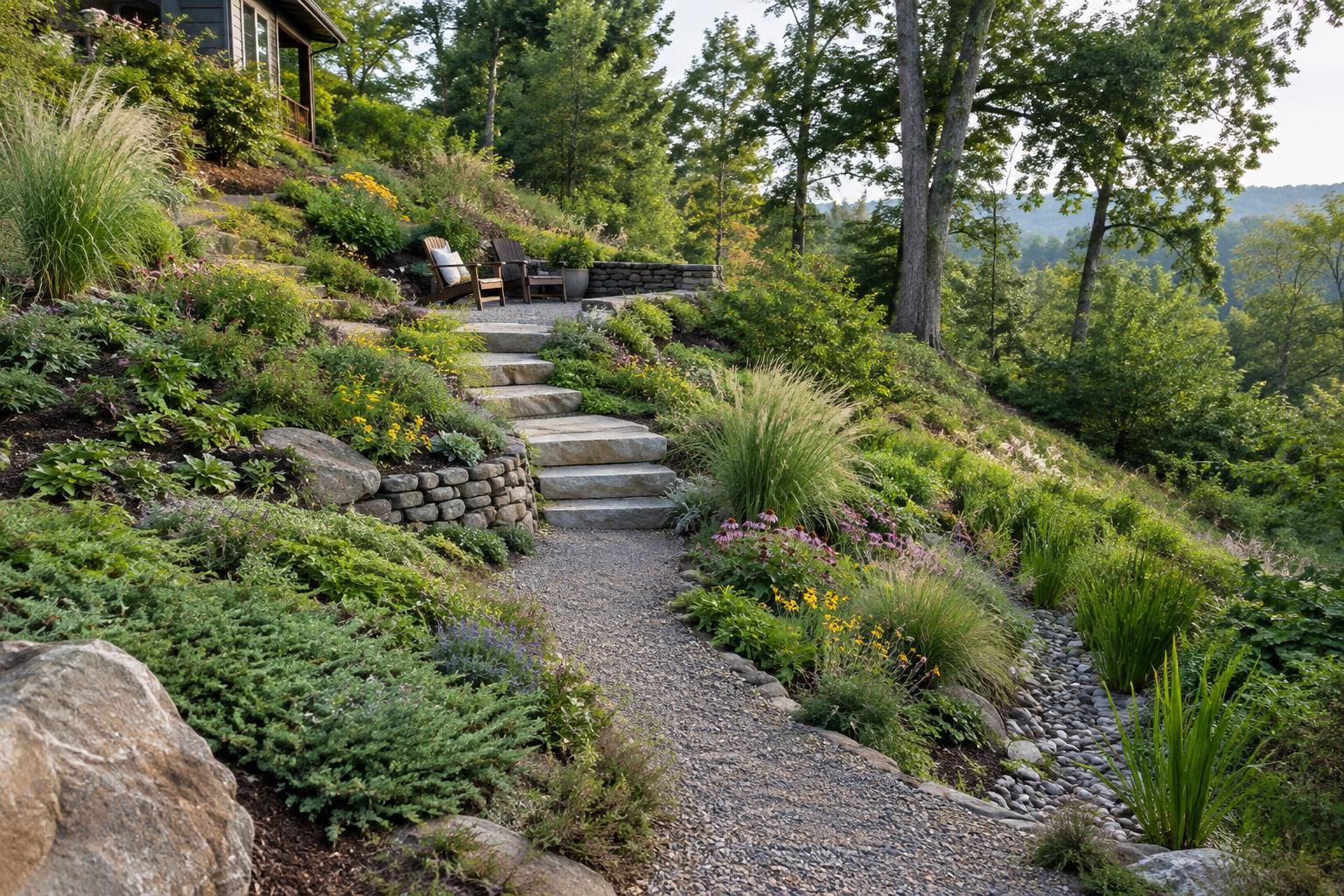
Several small terraces can be easier to fit into a slope than one large flat platform. Sketch how each area will connect to the next, and consider what you will see from the house as well as from the bottom of the garden. Retaining walls, substantial steps and changes to drainage need careful design: their size, soil conditions and any local requirements may call for qualified help. Build that possibility into your budget rather than treating it as a finishing detail.
Make movement comfortable and clear
Draw the routes you will use most often before placing beds or features. A direct line uphill may look tidy on paper but feel tiring or slippery in use. Where space allows, a path that crosses the slope at an angle can provide a gentler climb. Add a comfortable place to pause or turn, particularly if you will carry tools, compost or watering cans along the route.
Think about the path surface in wet weather as well as on a dry day. Loose materials can shift downhill unless edges and construction are suited to the site; smooth paving may become slippery. Steps need consistent dimensions and good visibility, while lighting can help with evening use. If step-free access matters, establish the space needed for a suitable route early, since it may shape the whole layout.
Work with water and soil
Water moving downhill can wash soil from bare beds and collect at the foot of a slope. Keep existing vegetation where it is useful, cover exposed soil promptly and avoid concentrating runoff onto paths, structures or neighboring land. Mulch can help protect the surface, but on a steep bank it may slide unless the planting and slope treatment hold it in place. Where runoff is persistent or close to a building, get site-specific drainage guidance before making changes.
When preparing beds, disturb only the ground you need to work. Planting across the contour, rather than making long bare strips straight downhill, can help slow surface flow. Plan access for maintenance so you are not repeatedly stepping on loose soil. Watering also deserves thought: an irrigation method that works on a flat bed may run off a steep one before it soaks in. Test a small area and adjust how slowly water is applied.
Choose planting that suits each part of the site
Use plants to connect the garden’s levels and protect the soil. Ground-cover plants, grasses, shrubs and deep-rooted perennials can create layers of growth, but choose them for the actual light, moisture, soil and climate of each area. Check mature size so plants will not block a path or make steps hard to see. On a steep bank, planting in small, manageable sections lets you see what establishes well before tackling the rest.
Place high-maintenance crops and containers where you can reach them safely and easily. Save harder-to-access areas for plants that need less frequent attention once established. Finally, leave room to revise the plan. Living with a slope through changing weather may reveal a better route, a wetter planting spot or an unexpectedly good place to sit. A successful design does not erase the slope; it makes its challenges manageable and its advantages enjoyable.