Start with what is already there
An existing tree or structure is not necessarily an obstacle to a new garden. A mature tree can anchor a view, while a wall may create shelter for a seating area. Before drawing beds or choosing plants, make a simple plan of the space. Mark the house, doors, windows, boundaries, paths, paving, sheds, walls and trees. Note the approximate spread of each tree’s branches, not just the position of its trunk.
Walk the garden at different times of day if you can. Record where people naturally cross it, where water collects after rain and which spots receive sun or shade. Look for views you want to keep, such as a tree seen from a kitchen window, as well as areas you would rather screen. These observations will help you decide which features should become focal points and which need room for everyday use.
Give trees space above and below ground
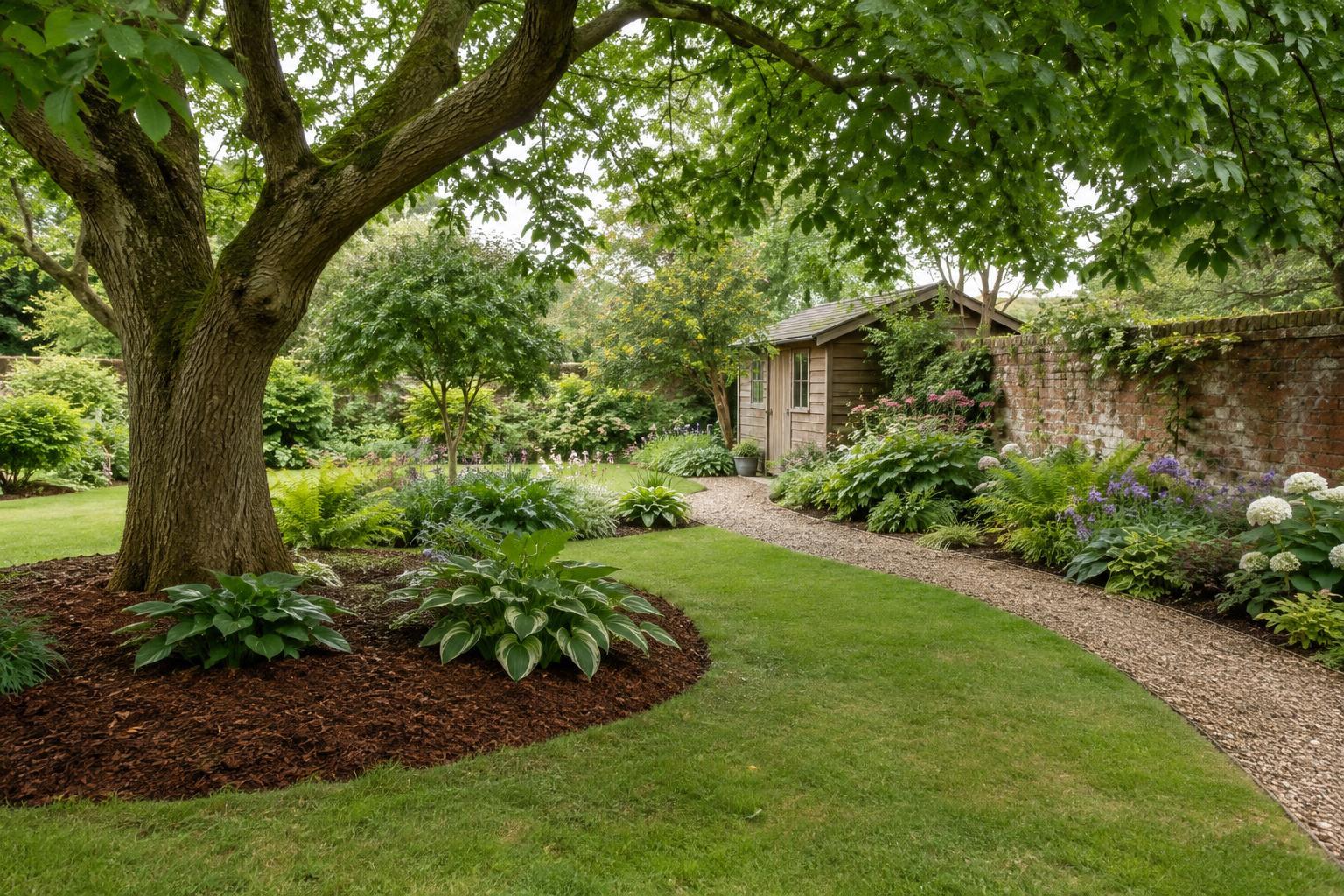
The ground beneath a tree is often a demanding place for new plants. Branches intercept light and rain, and roots compete for water and nutrients. Root growth does not stop at the edge of the canopy, so avoid treating the area just beyond the branches as clear digging space. Keep heavy equipment and stored materials away from the base of a tree, and avoid raising or lowering soil levels around its trunk.
Instead of digging a deep bed through established roots, consider a thin layer of mulch over bare soil, kept clear of the trunk. Where planting is appropriate, use small plants that need modest planting holes and suit the available light and moisture. Establishing them may take extra watering, even if they are drought-tolerant once settled. If a tree appears unhealthy or a project would require major root cutting or pruning, seek advice from a qualified tree professional before changing the area.
Let buildings and boundaries shape the layout
Structures influence more than the outline of a garden. A wall can cast shade for much of the day, while paving beside a sunny wall may feel warmer and drier than an open bed. Roofs and overhangs can leave narrow rain shadows where plants receive little natural water. Check each spot on its own terms rather than assuming that one plant palette will suit the whole garden.
Leave enough space to reach gates, maintain fences, clean windows and move bins or garden equipment. A bed that looks generous on paper may become awkward if it narrows a frequently used route. Keep planting and irrigation from directing persistent moisture against buildings, and make sure changes to paving do not send runoff toward foundations or neighboring spaces. For substantial alterations near buildings or shared boundaries, check the requirements that apply locally before starting work.
Make circulation and planting work together
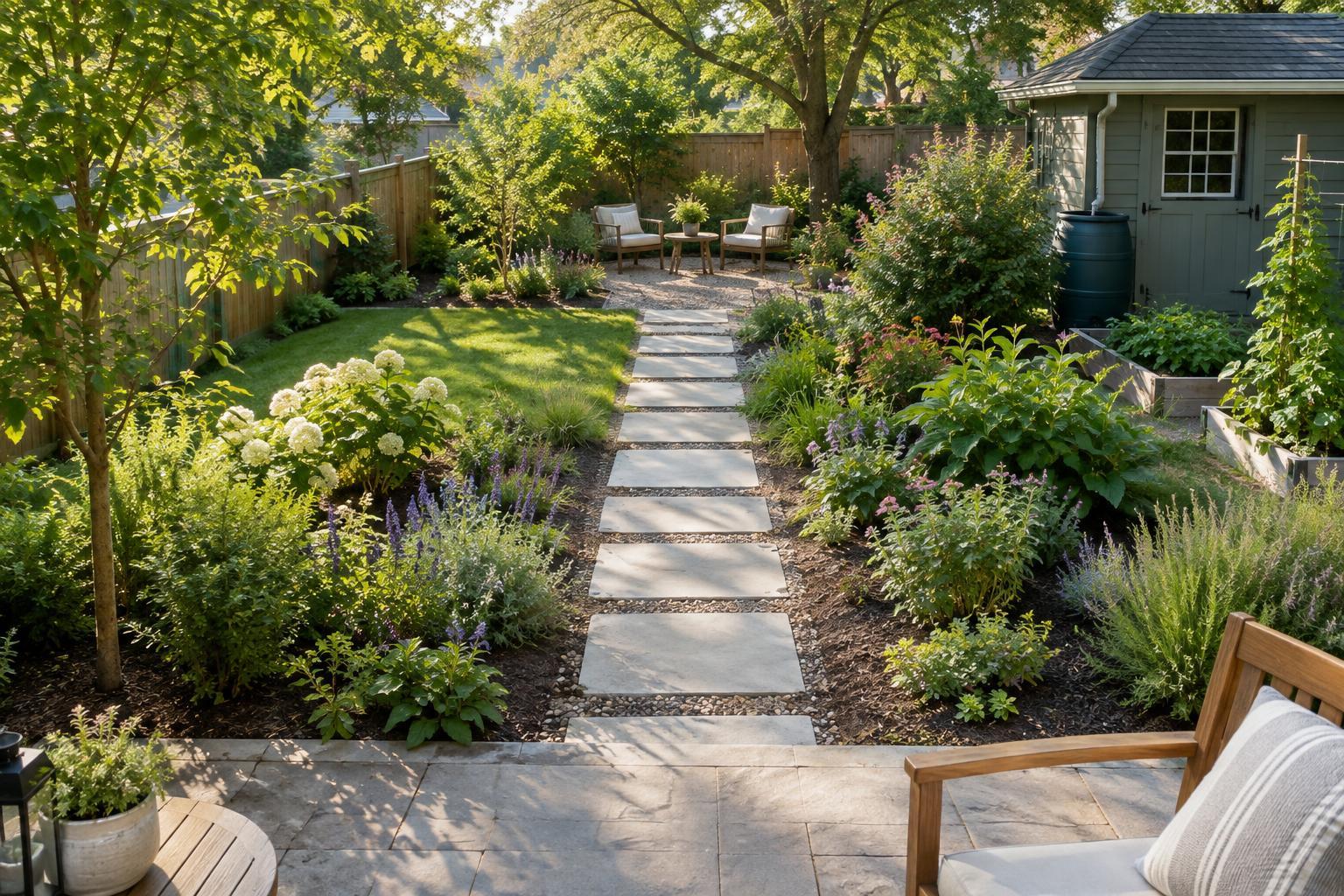
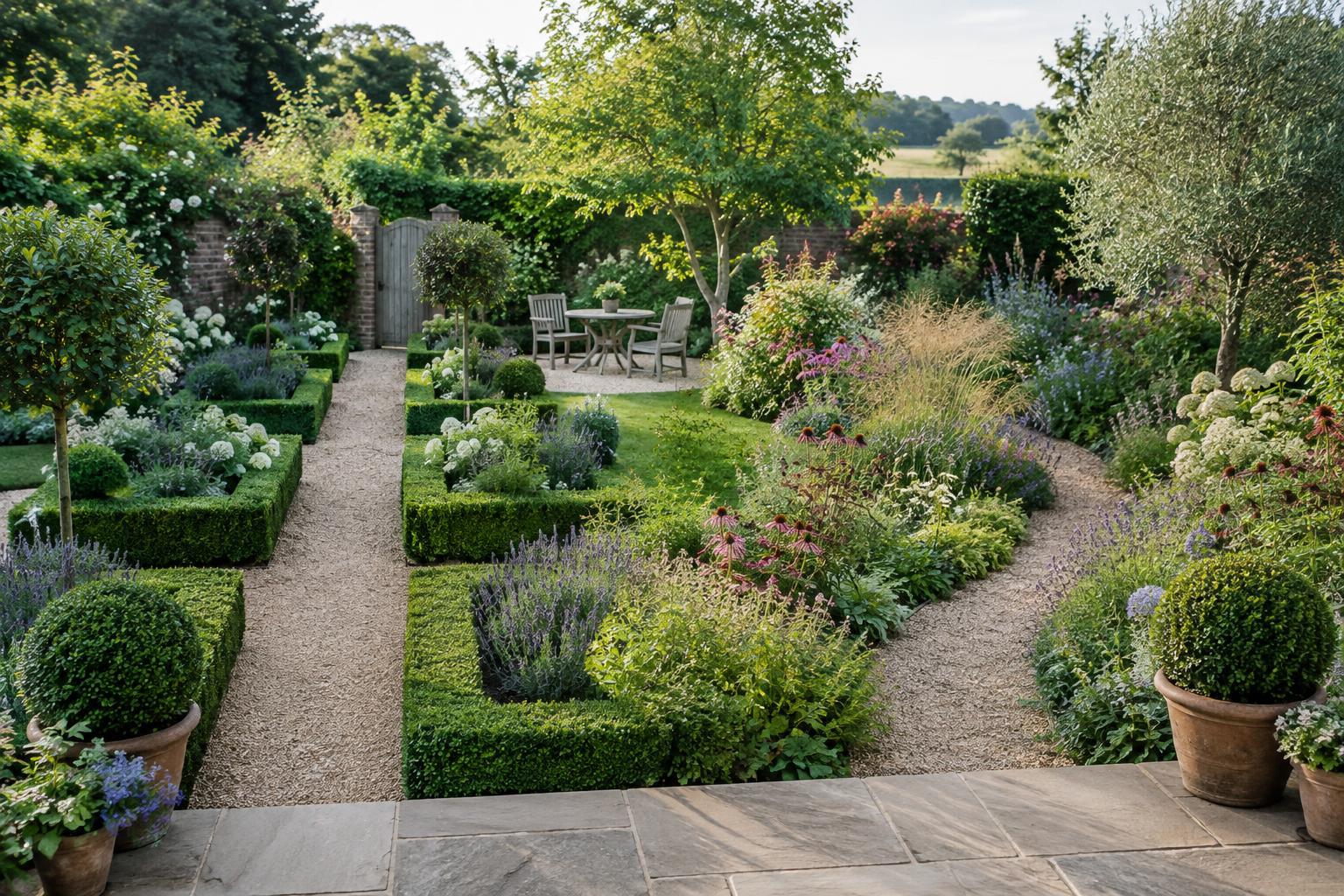
Once the fixed features are mapped, draw the main routes through the garden. Connect doors, seating, storage and working areas first; then use beds to frame those routes. A path that follows a tree’s outline or curves around a shed can feel deliberate if it leads somewhere useful. Aim for surfaces that suit their purpose and remain comfortable to walk on in wet weather.
Group plants by conditions rather than appearance alone. Beneath a tree, choose species suited to dry shade if that is what your observations show; along an open boundary, consider plants that can handle its sun and wind exposure. Layer heights so low planting leaves sightlines and access clear, with taller planting placed where it will not overwhelm a path or doorway. Containers can add color near roots, on paving or beside an entrance without requiring a new in-ground bed.
Test the plan before committing
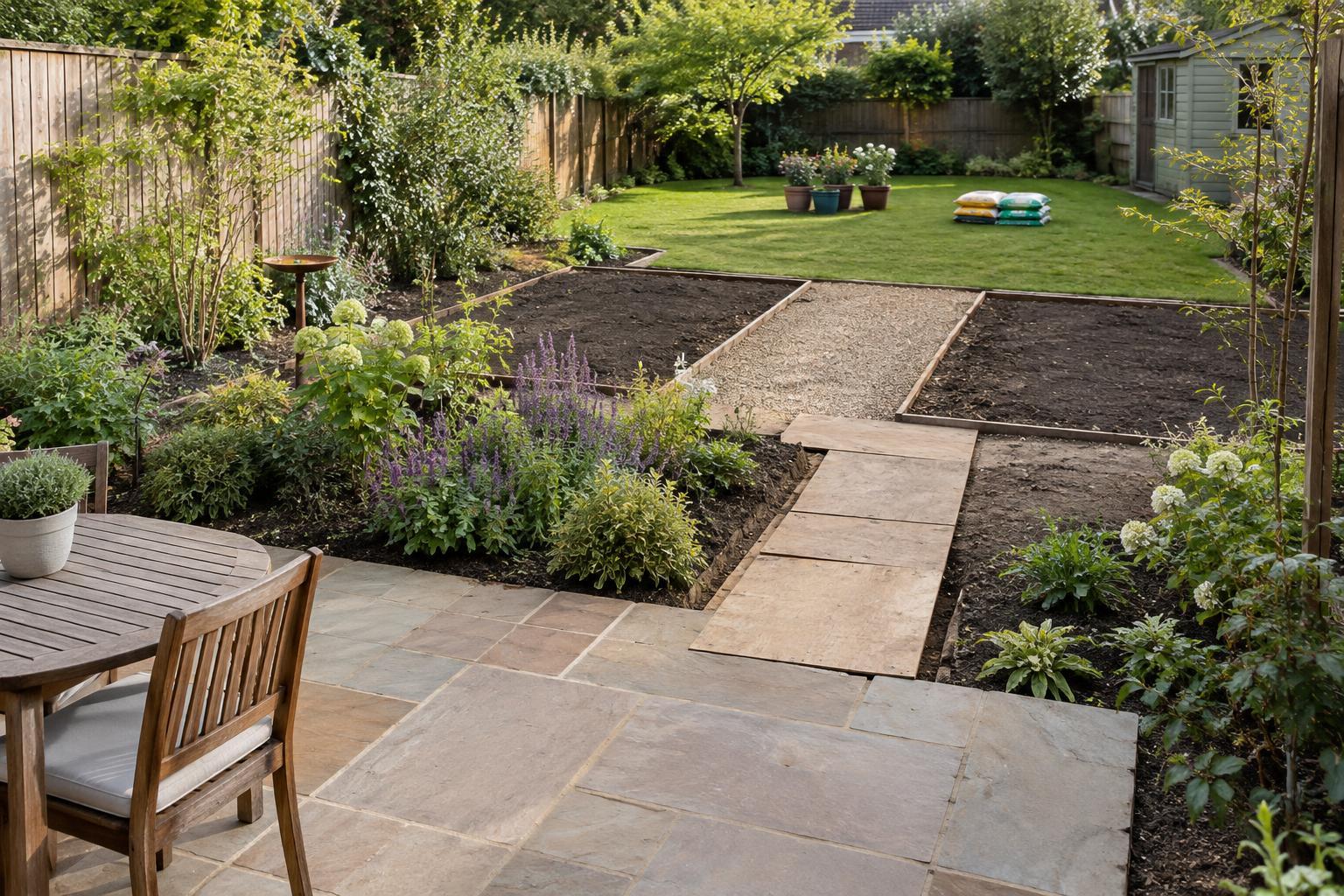
A garden plan does not have to be installed all at once. Mark proposed bed edges with a hose or string, and place movable chairs where you imagine sitting. Walk the routes while carrying the things you normally use outdoors. This simple trial can reveal a cramped turn, a blocked view or a seating spot that receives more shade than expected.
Begin with changes that protect the garden’s existing strengths: clear access, healthy trees and sensible water flow. Add plants in manageable stages, then watch how they respond through changing conditions. Planning around established features works best when the layout remains flexible. The goal is not to hide every constraint, but to make trees and structures feel like intentional parts of a garden that is pleasant to use and practical to care for.