Decide where leaves can stay
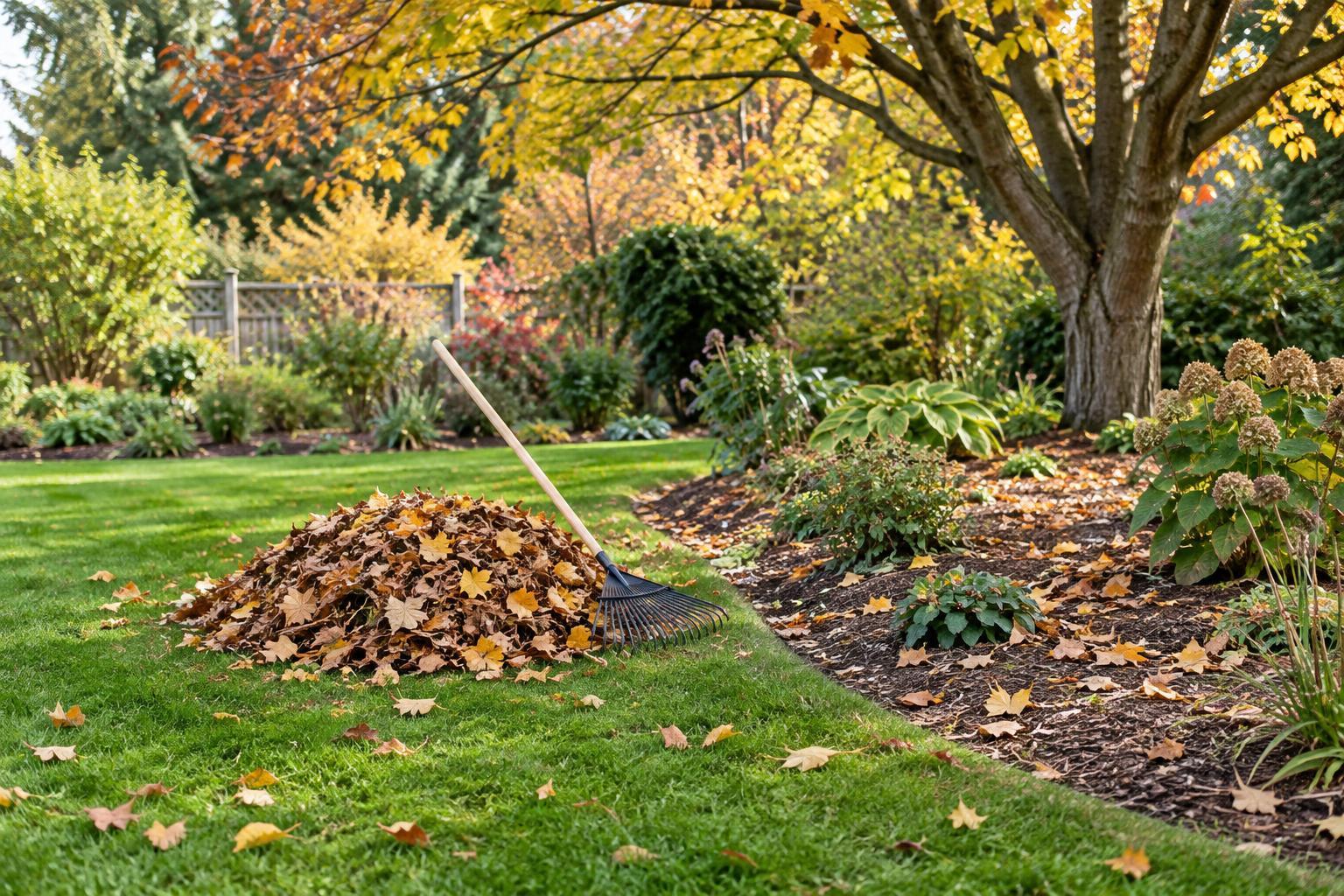
Fallen leaves are not automatically a mess to remove. As they break down, they add organic matter to the soil, help shelter small creatures and protect bare ground from heavy rain. The useful question is whether leaves are covering something that needs light or airflow. A loose scattering across a planted bed is usually different from a dense, wet layer pressed over a lawn.
Walk around the garden before collecting everything. Check grass, paths, drains, low-growing plants and beds beneath trees. Leaves that blow into a quiet corner may be left as habitat if they will not block access or smother valued plants. Leaves on slippery steps, walkways or drainage points are better cleared promptly. This selective approach saves work and keeps more useful material in the garden.
Keep thick leaf layers off the lawn
A few dry leaves scattered over grass are unlikely to cause trouble. A thick layer, especially once rain flattens it, can shade the grass and hold moisture against it. Clear leaves when they begin to form a continuous cover rather than waiting for every tree to become bare. Several short passes are often easier than lifting one heavy, soaked pile.
On a dry day, a mower can chop a modest amount of leaves into small pieces that fall between the grass blades. If the chopped pieces still hide most of the lawn, collect the excess and use it elsewhere. A rake works well on small lawns and around edges; a leaf blower may help gather leaves from larger open areas. Avoid repeatedly working on very wet or soft ground, where foot traffic and equipment can compact the soil.
Use leaves thoughtfully on garden beds
Garden beds can benefit from a light leaf cover. Spread leaves around established shrubs and between sturdy perennials to help shield exposed soil. Shredded leaves tend to settle more evenly and are less likely to blow away than whole, broad leaves. Keep the layer loose enough for rain to reach the soil, and leave a little space around stems and woody trunks rather than piling leaves against them.
Pay closer attention to seedlings, small evergreen plants and low rosettes that need light through the cooler months. Move leaves away if they bury the foliage. In windy spots, a thin layer held beneath twiggy prunings may stay in place better than a deep heap. If you notice leaves from a plant with an obvious recurring leaf disease, consider keeping that material out of a general-purpose mulch pile, particularly if you plan to spread it near the same type of plant.
Store the surplus for later use
If the lawn produces more leaves than the beds need, save the surplus. A simple leaf pile in an out-of-the-way spot will gradually settle and break down. For a tidier arrangement, fill a ventilated bin or a reusable bag with holes for airflow. Leaves do not need elaborate treatment, although chopping them first can make them easier to pack and quicker to decompose. If the pile becomes completely dry, a little moisture can help; if it is soggy and tightly packed, turning or loosening it may improve airflow.
The resulting leaf mold can be worked lightly into soil or used as a surface mulch once it has a crumbly texture. Breakdown speed varies with leaf type, size, moisture and local conditions, so judge it by appearance rather than a fixed schedule. A mixed compost pile is another option, but adding large amounts of dry leaves at once can create dense layers. Mixing them with other garden material helps keep the pile more open.
Make leaf clearing a manageable seasonal routine
Choose your method to suit the space and the weather. Dry leaves are easier to rake, shred and move; damp leaves are heavier and more likely to clump. Work in small areas, gathering leaves onto a tarp or into a lightweight container instead of carrying overfilled bags across the garden. If your area has a long leaf-drop season, focus first on keeping lawns, entrances and drains clear, then deal with beds and storage when time allows.
There is no need to make every corner spotless. A clear lawn, accessible paths and uncovered small plants can coexist with mulched beds and a sheltered leaf pile. By giving leaves different jobs in different parts of the garden, you can reduce waste while protecting the plants and surfaces that need attention.