Start with the people and the route
An accessible garden is not one fixed design. A person using a wheelchair, someone who tires easily and a gardener who finds bending difficult may need different things. Before moving plants or laying a path, walk through the garden with its regular users. Notice where people enter, what they want to reach and which parts are difficult now. Include everyday tasks such as taking out compost, carrying a watering can and reaching an outdoor table.
Sketch a simple plan showing doors, gates, paths, planting beds, seating and storage. Then draw the routes people use most often. A direct, comfortable route from the house to a favorite sitting place may matter more than access to every corner. If someone uses a mobility aid, check the space needed to pass through gates and turn near beds using that person’s actual equipment. Leave room to pause without blocking the main route.
Make paths steady and easy to follow
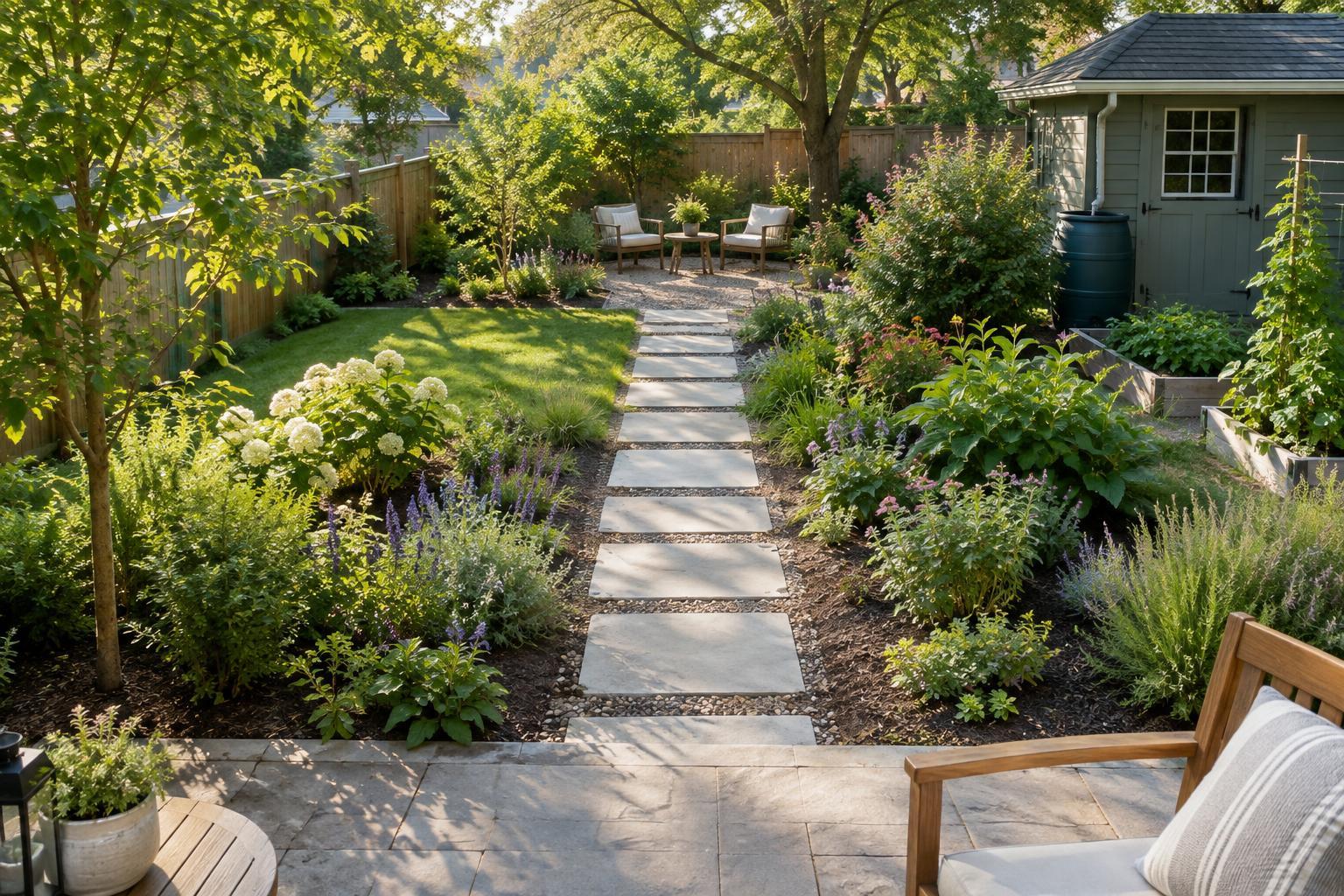
Paths shape how usable a garden feels. Aim for a firm, even surface that remains manageable after rain, rather than one that shifts underfoot or develops hidden holes. Loose gravel, widely spaced stepping stones and uneven edging can be awkward for wheels and walking aids. Where a path meets a patio or doorway, pay attention to abrupt changes in level. A small lip can become a daily obstacle.
Keep frequently used routes generous enough for the people and equipment that use them. Gentle curves can work well, but tight corners make carts and mobility devices harder to maneuver. If the site slopes, consider whether a longer, gentler route is possible. Drainage matters too: a puddle in the middle of the only path can make an otherwise good layout unusable. For substantial changes in level or a ramp intended for a particular user, seek design guidance suited to the site rather than guessing at a slope.
Bring gardening tasks within comfortable reach
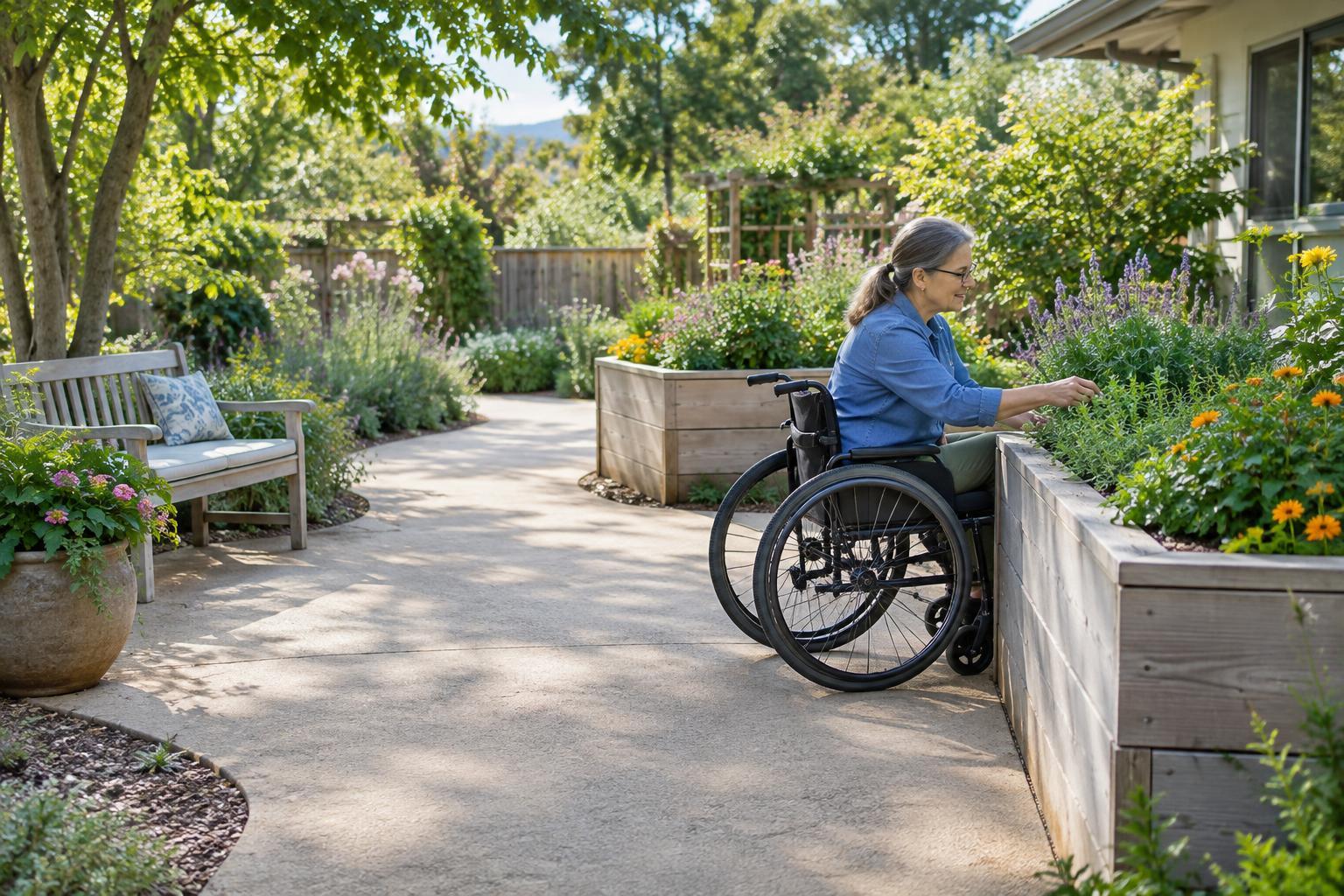
Planting areas are easier to use when gardeners can work without repeatedly stretching, kneeling or leaning across a bed. Narrow beds accessible from more than one side often work better than a broad border that can be reached only from the front. Raised beds and containers can bring soil closer, but their height should suit the person doing the work. Leave space beside them for a chair, stool or mobility device, and think about whether the bed’s edge allows someone to get close.
Put the most-tended plants near the easiest route. Herbs picked for cooking, seedlings needing regular attention and containers that dry quickly should not be at the far end of a difficult path. Keep taps, hose connections, tools and compost practical to reach as well. A hose that crosses a walkway creates a trip hazard; a nearby water point or a route for the hose away from foot traffic can make routine care simpler.
Build in places to pause and enjoy the garden
Access is about spending time outdoors, not just getting through the garden. Add seating where people might naturally want to stop: near planting beds, along a longer route or in a spot with a view. A stable surface beneath chairs makes sitting down and standing up easier. Leave enough clear space around a table for people to approach it comfortably, and consider whether seats with supportive backs or arms would be helpful.
Offer a choice of sun and shade if the space allows. A route that is comfortable in mild weather may be tiring in strong sun, while a shaded seat may feel too cool at other times. Lighting can help people find gates, steps and path edges when they use the garden after dusk. Choose fixtures that illuminate the route without creating glare, and keep branches or tall plants from obscuring them as the garden grows.
Plan for growth and change
A layout only stays accessible if it can be maintained. Allow for the mature size of shrubs so they do not narrow paths, and place vigorous plants where they will not spill across walking surfaces. Choose planting that fits the time and energy available for care. Mulch can reduce some weeding, while easy-to-reach storage makes it more likely that tools are put away instead of left on a path.
You do not need to rebuild the whole garden at once. Start with the route and destination that would make the biggest difference, then test how they work through ordinary use. A moved container, a better-positioned chair or a clearer path may reveal what to change next. Revisit the layout as people’s needs, plants and routines change; flexibility is one of the most useful features an accessible garden can have.