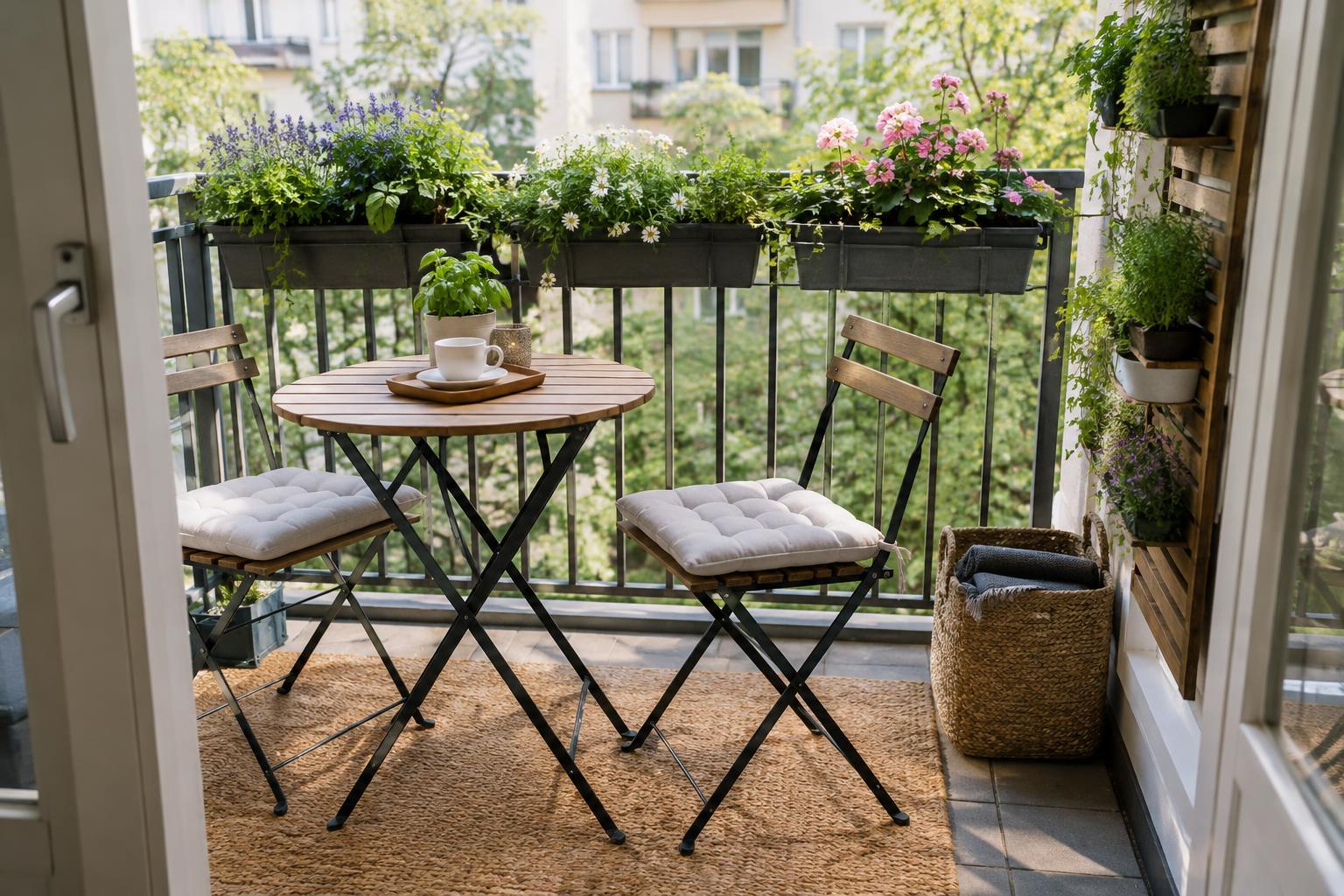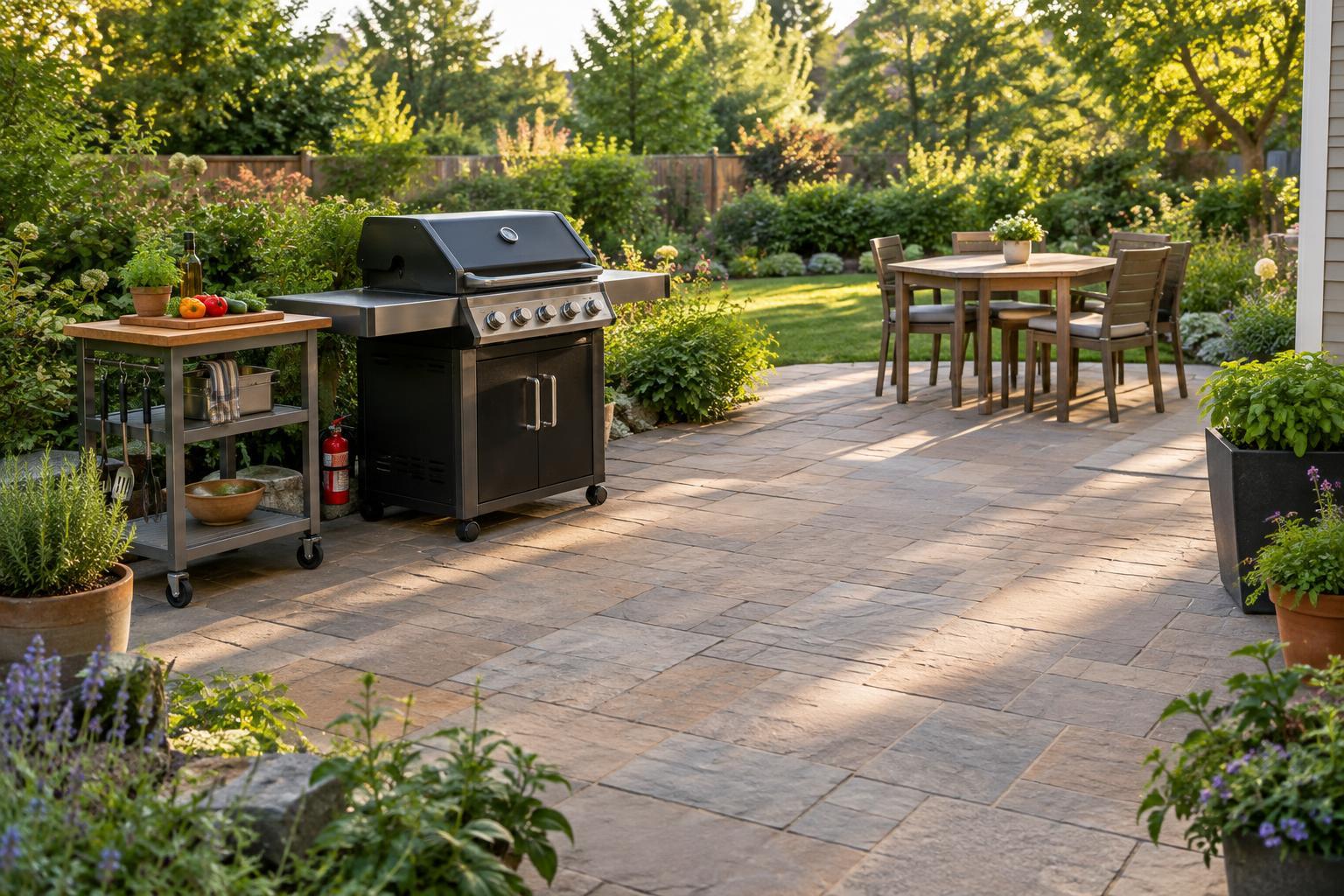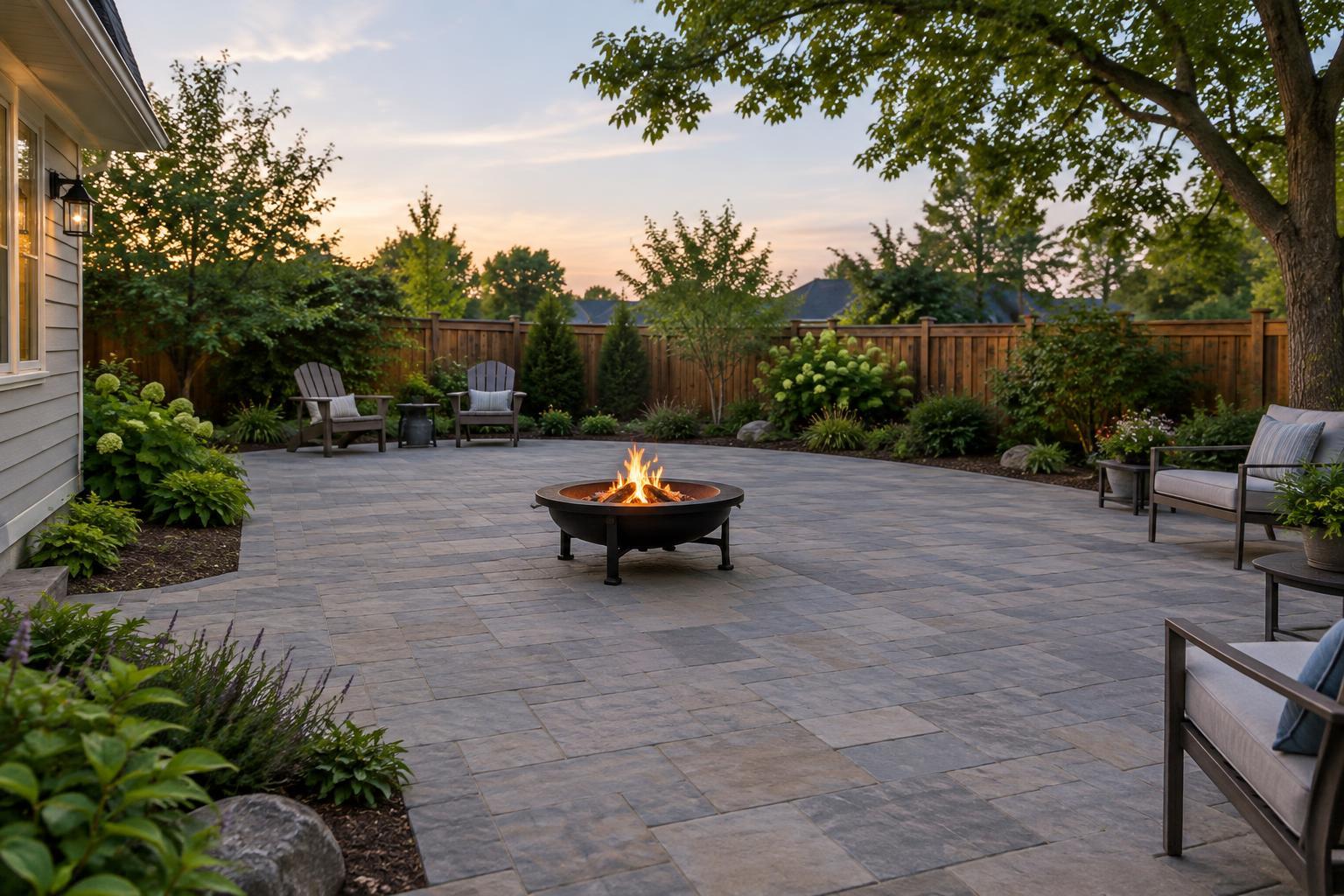
Start with activities, not fixtures
The best outdoor lighting plan begins with what people do in each part of the space. A dining table needs enough light to see food and faces. Steps and changes in level need clear visibility. A seat used for conversation can feel more inviting with a softer glow. Trying to serve all three purposes with one bright wall light often leaves some areas in shadow and others uncomfortably exposed.
Walk through the space at dusk and note where people enter, carry plates, turn corners, or sit. Look for existing light from doors and windows before adding anything new. Then sketch three simple layers: task light for dining, guidance light for movement, and low-key accent light for atmosphere. The layers need not be switched on together. Giving them separate controls makes a small patio more flexible than adding brightness everywhere.
Make dining light useful and comfortable
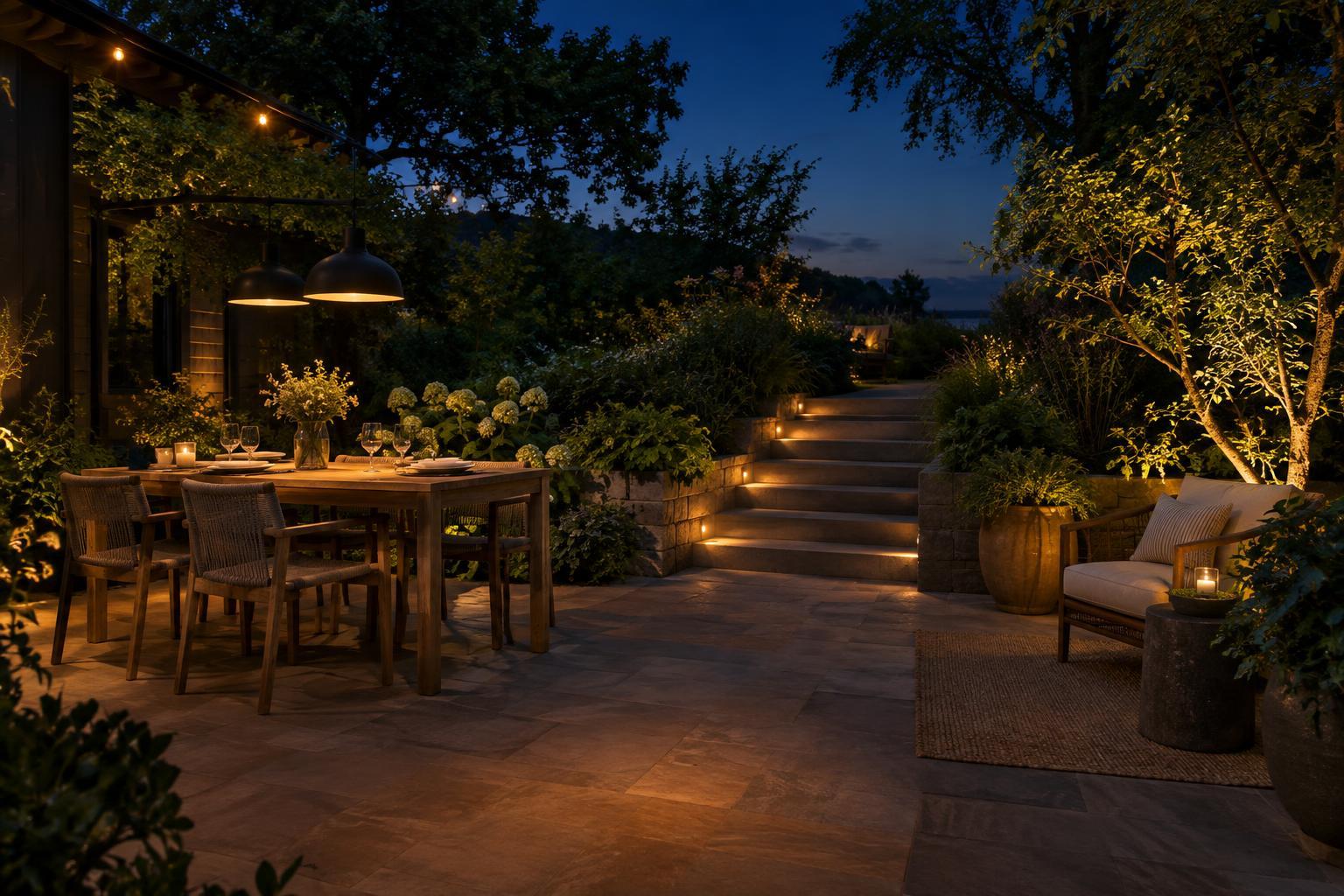
For outdoor meals, aim light toward the tabletop rather than into diners’ eyes. A shaded pendant beneath a suitable covered structure, a wall fixture near the table, or a portable outdoor-rated lamp can provide a useful pool of light. If the table moves often, portable lighting may be more practical than a fixed fixture aimed at one position. Check that a lamp will stand securely and will not obstruct serving or conversation.
Consider what diners see beyond the table. A very bright table surrounded by darkness can make the rest of the garden disappear, while a little background light gives the space depth. One or two modest accents on a nearby planter or wall may be enough. Warm-looking light generally feels more relaxed around a table than a stark, cool-looking beam. Choose shielded fixtures where possible, and adjust their positions while seated so that no one has to face a bare bulb.
Treat steps and routes as their own layer
Lighting for movement should make edges, landings, and changes in direction easy to recognize. Step lights, low wall lights, or fixtures aimed down onto a path can help without lighting the whole yard. Place light where someone needs information: at the top and bottom of a short flight, near a gate latch, or where a route meets the patio. Avoid alternating patches of intense light and deep shadow, which can make a route harder to read.
Keep fixtures out of walking lines and away from places where they could be kicked or snagged. Outdoor surfaces may also become slippery when wet, so lighting is only one part of a safer route; sound steps, clear edges, and regular upkeep still matter. If permanent wiring is involved, use fixtures suited to their exposure and have installation assessed by a qualified electrician. A plug-in or rechargeable option can be a simpler starting point where it suits the location.
Add a softer layer for relaxing
Once the table and routes work well, use accent lighting sparingly. A small light washing across a textured wall, a concealed glow beneath a bench, or a shaded lamp beside a chair can make a seating area feel settled without turning the garden into a stage. Aim for a few points of interest with unlit space between them. That contrast lets the eye rest and helps the outdoor room retain its connection to the night.
String lights can define the edge of a seating area or overhead structure, but they work best when they are secure, outdoor-rated, and not stretched across a walking route. Consider how they look from neighboring homes as well as from your own chair. Timers, dimmers where compatible, and separate switches make it easier to use only the light needed. Turning decorative lighting off when the space is empty can also reduce disturbance to nighttime wildlife.
Test the plan after dark
Before committing to fixed positions, try temporary lamps or flashlights to see where light falls. View the arrangement while walking in, sitting at the table, and looking out from indoors. Check for glare reflected in glass doors, bright spots at eye level, and shadows on steps. Shift or shield a light before deciding that you need another one.
A good final test is to switch on each layer separately. Can you carry a meal to the table without the decorative lights? Can someone find the steps when the dining light is off? Does the seating area still feel pleasant with just its softer accents? If each layer has a clear job, you can combine them for a gathering or use only one for a quiet evening. That adaptability, rather than sheer brightness, is what makes outdoor lighting feel thoughtfully planned.