Choose the spot before arranging the furniture
Start with the grill manufacturer’s instructions for placement and clearance, then check any rules that apply to your home or building. A grill needs a stable, level surface and open air. Keep it away from siding, fences, overhanging branches, umbrellas and other materials that could catch fire. Do not grill inside a garage, enclosed porch or other partially enclosed space, even if a door or window is open. Smoke and carbon monoxide can build up where you may not expect them.
Think about the route between the kitchen and the grill. A short, unobstructed path makes it easier to carry ingredients and bring cooked food inside, but the grill should not sit in the middle of a busy walkway. Leave enough room for the cook to open the lid, turn safely and set down a tray without brushing against guests or furniture. If wind commonly blows across your patio, consider where smoke will travel toward seating and doors; never solve a wind problem by moving the grill into an enclosed corner.
Create a small, useful cooking zone
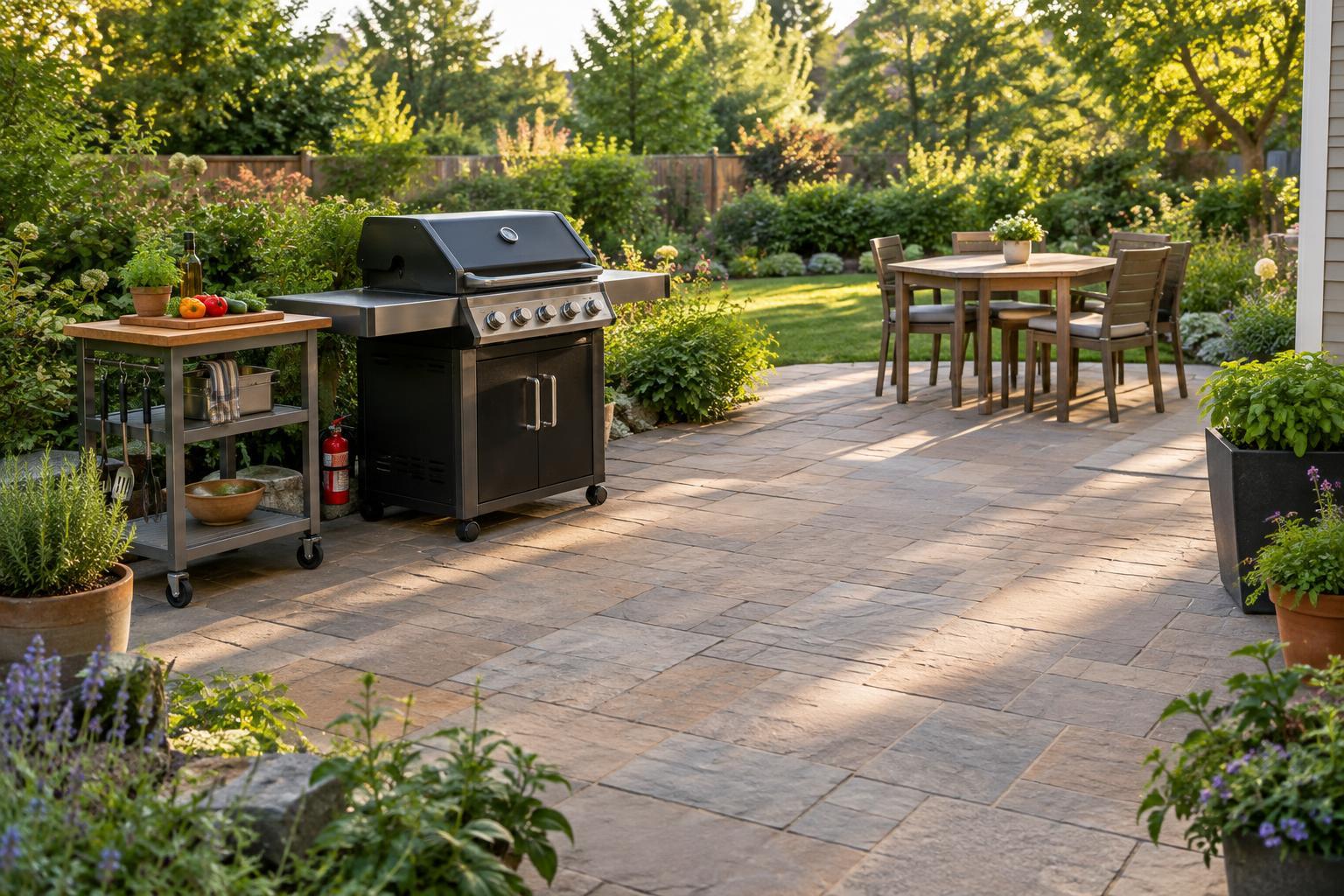
A patio kitchen does not need to be elaborate. One sturdy, easy-to-clean surface near the grill can hold a tray of ingredients, clean utensils and a place for finished food. Set it close enough to use comfortably, but outside the grill’s required clearance area. If you use a rolling cart, lock its wheels while cooking and keep loose towels or paper goods away from heat.
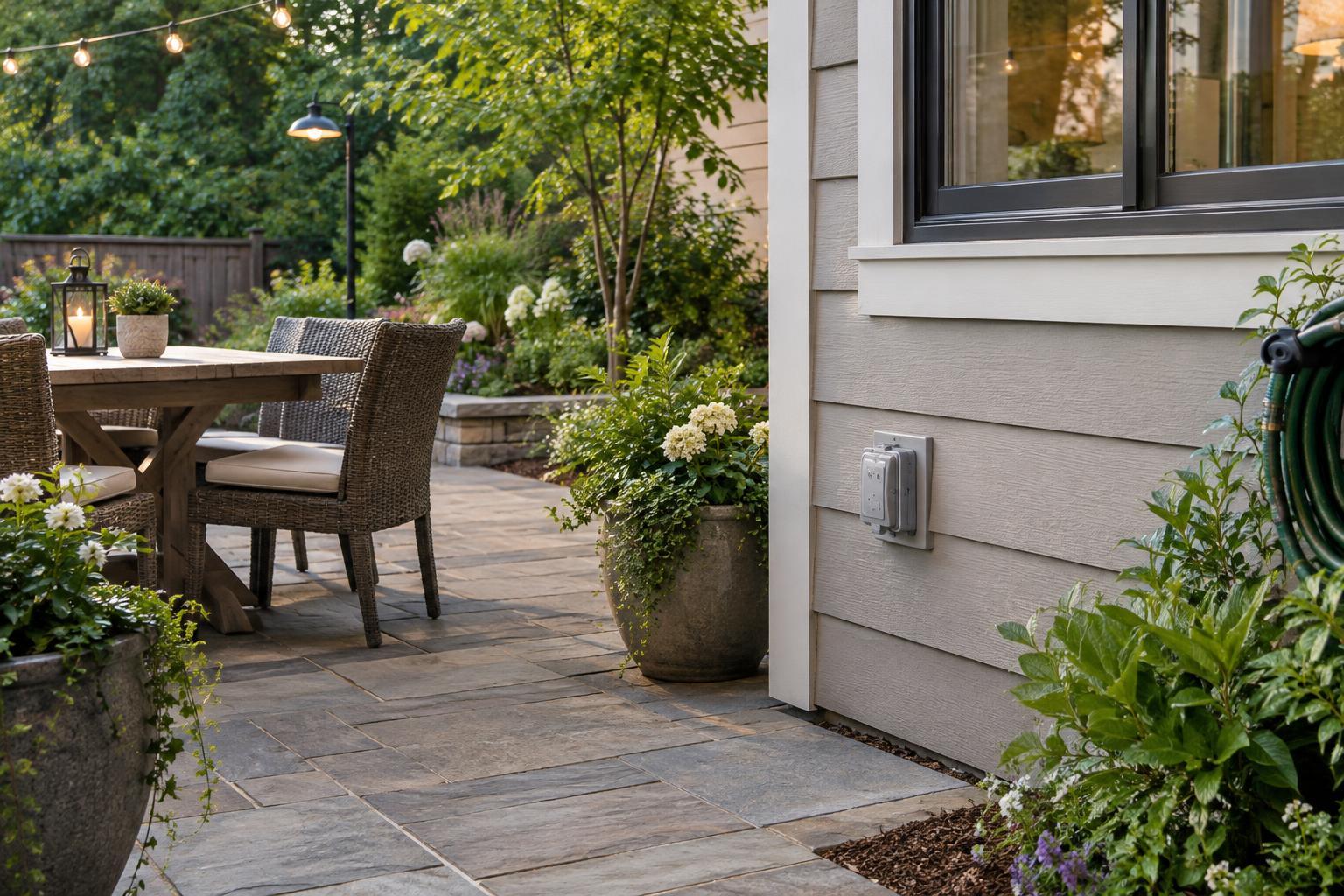
Organize the area so raw food and ready-to-eat food do not share the same plate or utensils. Bring out only what you need for the meal, and return perishable ingredients indoors promptly rather than leaving them on a sunny patio. A lidded bin for waste and a clear route to handwashing make cleanup easier. Good task lighting also matters: you should be able to see the controls, cooking surface and walking path without balancing a portable lamp near heat or trailing cords across the ground.
Make room for people without crowding the grill
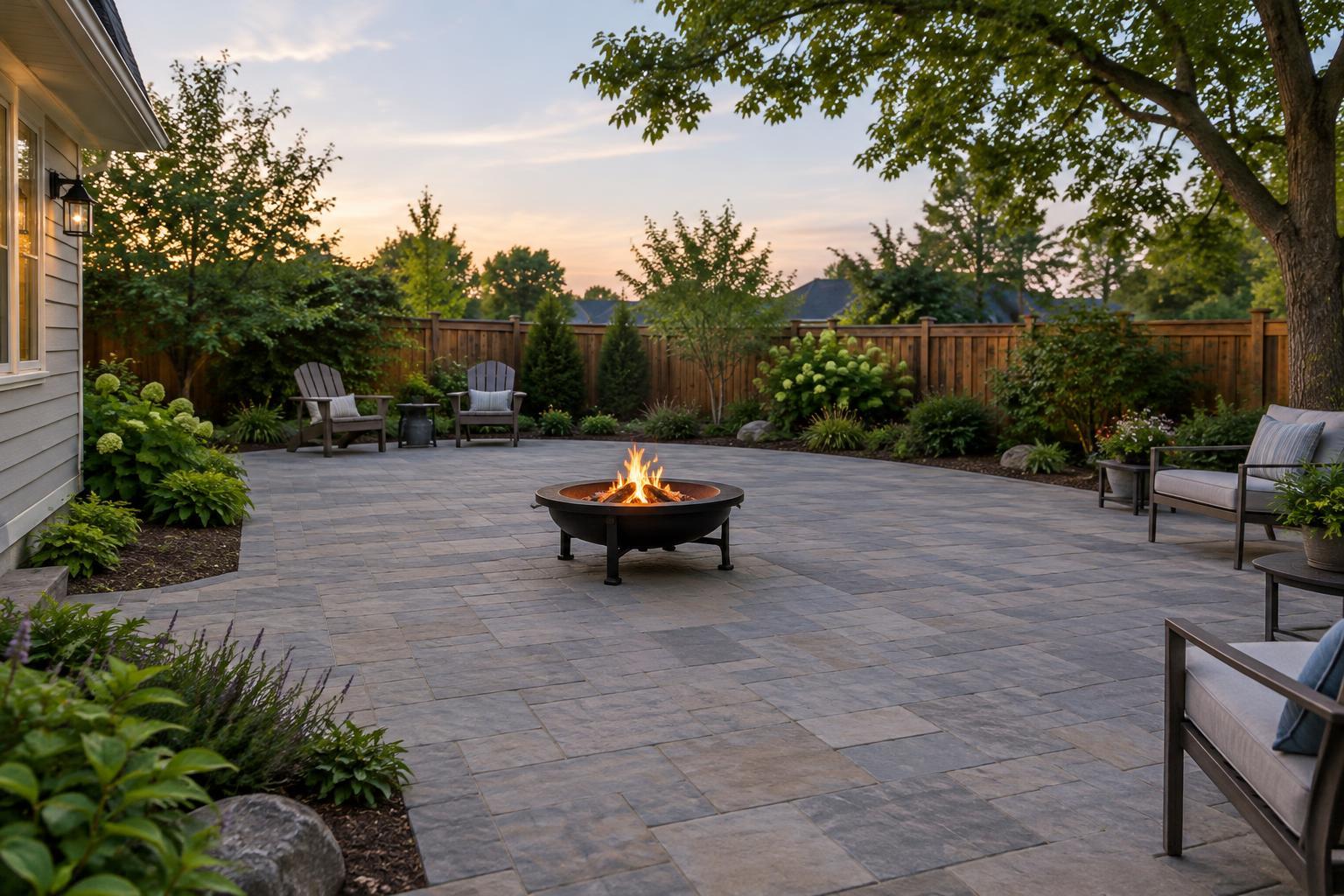
Position seating so conversation can include the cook without turning the grill into a gathering point. A planter, change in paving pattern or furniture arrangement can gently define where guests stop and the cooking area begins. Keep children and pets out of the immediate grill zone, especially while the grill is heating, in use or cooling down. The lid, grates and surrounding surfaces can remain hot after the food is served.
Choose patio furniture with movement in mind. Chairs should be able to slide back without blocking the cook’s path, and bags, toys and serving dishes need places to go other than the floor. If the patio is small, a folding prep table or compact bench may work better than a large dining set. The aim is not to fill every gap; open space is part of a functional layout.
Plan for fuel, fire response and changing weather
Follow the grill’s instructions for connecting, using and storing its fuel. For a gas grill, check connections as directed by the manufacturer and never use a flame to look for a leak. If you smell gas, turn off the supply if you can do so safely, move away and follow the manufacturer’s emergency guidance. For charcoal, use an appropriate lighting method and give coals time to cool fully before disposing of them in a suitable metal container. Do not put warm ashes in a garden bed or ordinary bin.
Keep a suitable fire extinguisher accessible and learn how to use it before you need it. If a fire grows beyond what you can safely manage, leave the area and contact emergency services. Rain and strong wind are also reasons to pause cooking or adjust plans rather than improvising a shelter over the grill. An umbrella, awning or canopy may protect the cook from weather but can create a hazard if it is too close to heat.
Finish with easy-care details
A practical setup should be simple to reset after dinner. Keep grill tools together, wipe down prep surfaces and clean the grill according to its instructions. Store cushions and other soft furnishings away from cooking grease and stray sparks. If you add a storage cabinet, reserve it for items the manufacturer says are safe to keep near the grill; fuel and flammable products need appropriate storage.
Before making permanent additions, test the layout with movable furniture for a few meals. Notice where people walk, where trays land and whether the light is useful after dusk. Small changes in placement often do more for comfort than adding equipment. The best patio grilling area gives the cook room to work, guests room to relax and everyone a clear way around the heat.