Start with the fire pit and the rules that apply
The best place for a fire pit depends on the model, its fuel and the space around it. Before rearranging the patio, read the manufacturer’s instructions for required clearances, approved surfaces and operating conditions. Check local fire rules and any property, rental or homeowners association restrictions as well. A layout that looks spacious may still be unsuitable for a particular fire pit.
Wood-burning pits can release sparks and embers; gas models have their own requirements for fuel connections, ventilation and access to controls. Neither type belongs in an enclosed room or a space the manufacturer does not approve. If you cannot meet the applicable requirements in your preferred spot, look for another location rather than trying to make the fire pit fit.
Look up and out for anything that can burn
Assess the proposed location in every direction, not just the ground beneath the pit. Roof eaves, awnings, pergolas, umbrellas and overhanging branches can put combustible material above the heat. Nearby fences, siding, stored firewood, cushions and furniture also need attention. Follow the clearances specified for your model and any applicable local rules; avoid treating a general rule of thumb as permission to place a pit closer.
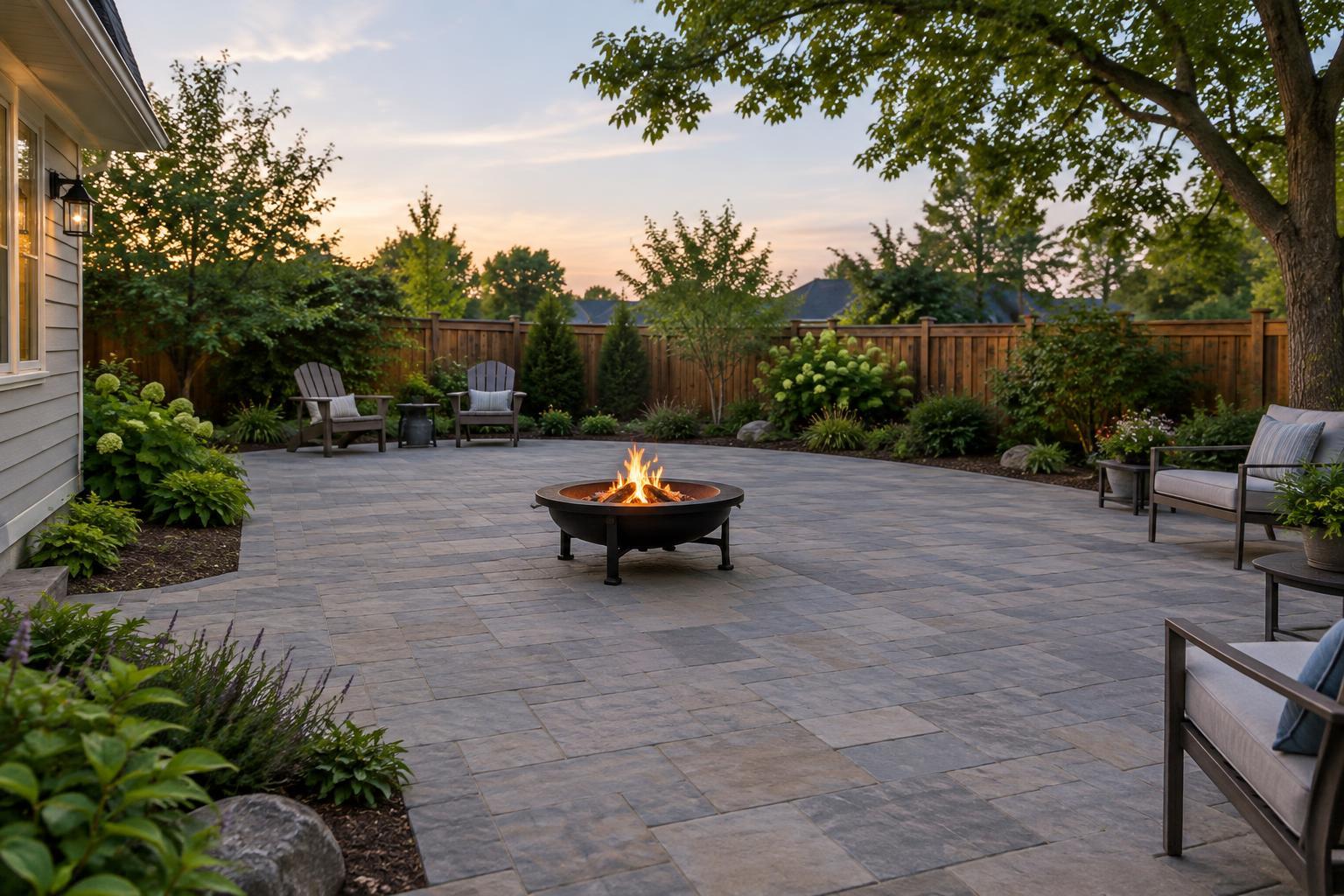
Think about how the patio changes in use. A chair may be pushed back toward the flames, or a blanket may slip from someone’s lap. Leave enough room for people to sit and move without crowding the pit, and keep a clear route to the house and garden. A fire pit should not occupy the only convenient path through the outdoor space.
Choose stable ground and protect the patio surface
A fire pit needs a firm, level position where it cannot tip or shift during use. Check the surface beneath it, especially if the patio has loose gravel, uneven pavers or a noticeable slope. Position the unit according to its instructions rather than propping it up with improvised supports. For a gas model, place the fuel supply and any hose as directed, away from foot traffic and heat.
Do not assume a surface is heat-safe simply because it is outdoors. Decking, artificial turf and some patio finishes may be damaged by heat; even masonry surfaces can have limitations depending on their construction and the fire pit’s design. Use a protective base only if it is suitable for the model and surface, and follow the manufacturer’s guidance. Keep the area free of dry leaves and other debris before lighting a fire.
Consider wind, smoke and neighbors
Watch how air moves through the patio at the times you are likely to use it. Wind can carry smoke into seating areas or nearby windows, and gusts may move sparks beyond the immediate fire pit area. Walls and fences can redirect airflow in ways that are not obvious from a plan on paper. If the spot is frequently gusty, choose a more suitable location or postpone using the pit when conditions are poor.
Also consider what lies beyond your patio. Smoke may drift toward a neighbor’s doors, windows or outdoor seating. A location that works for your own chairs may be uncomfortable for someone next door. Moving a seating area or choosing a different permitted fire pit can sometimes make the space more workable without squeezing the pit into a hazardous corner.
Make safe use part of the layout
Choose a spot where an adult can attend the fire without blocking walkways or leaving children and pets an easy route into the hot zone. Keep the controls or shutoff accessible on a gas unit. For a wood-burning pit, plan where tools and unburned fuel will go so they are not piled beside the flames. Have appropriate fire-safety equipment readily available, and follow the model’s instructions for lighting and extinguishing it.
Finally, picture the patio after everyone goes indoors. A fire pit and its contents can remain hot after the flames appear to be out. Allow them to cool fully and dispose of ashes as directed, using a suitable metal container if one is called for. A good fire pit location supports the whole routine—not just an attractive view of the flames, but clear space to use, monitor and leave the area safely.