Decide what the balcony needs to do
Before buying furniture, choose one main use for the balcony. A place for morning coffee needs a different layout from a reading corner or a spot for tending plants. Trying to fit all three into a narrow space can leave little room to enjoy any of them. Make the main activity comfortable first; add other features only if space remains.
Measure the floor, doorway and usable wall space. Note where the door swings, whether you need access to a drain and how you will walk between the door and a seat. Tape or cardboard outlines can help you test furniture sizes without carrying anything outside. Check building rules before attaching items to railings or walls, and follow any guidance on balcony loads. Heavy planters and furniture are worth considering together, not as separate purchases.
Choose furniture that earns its space
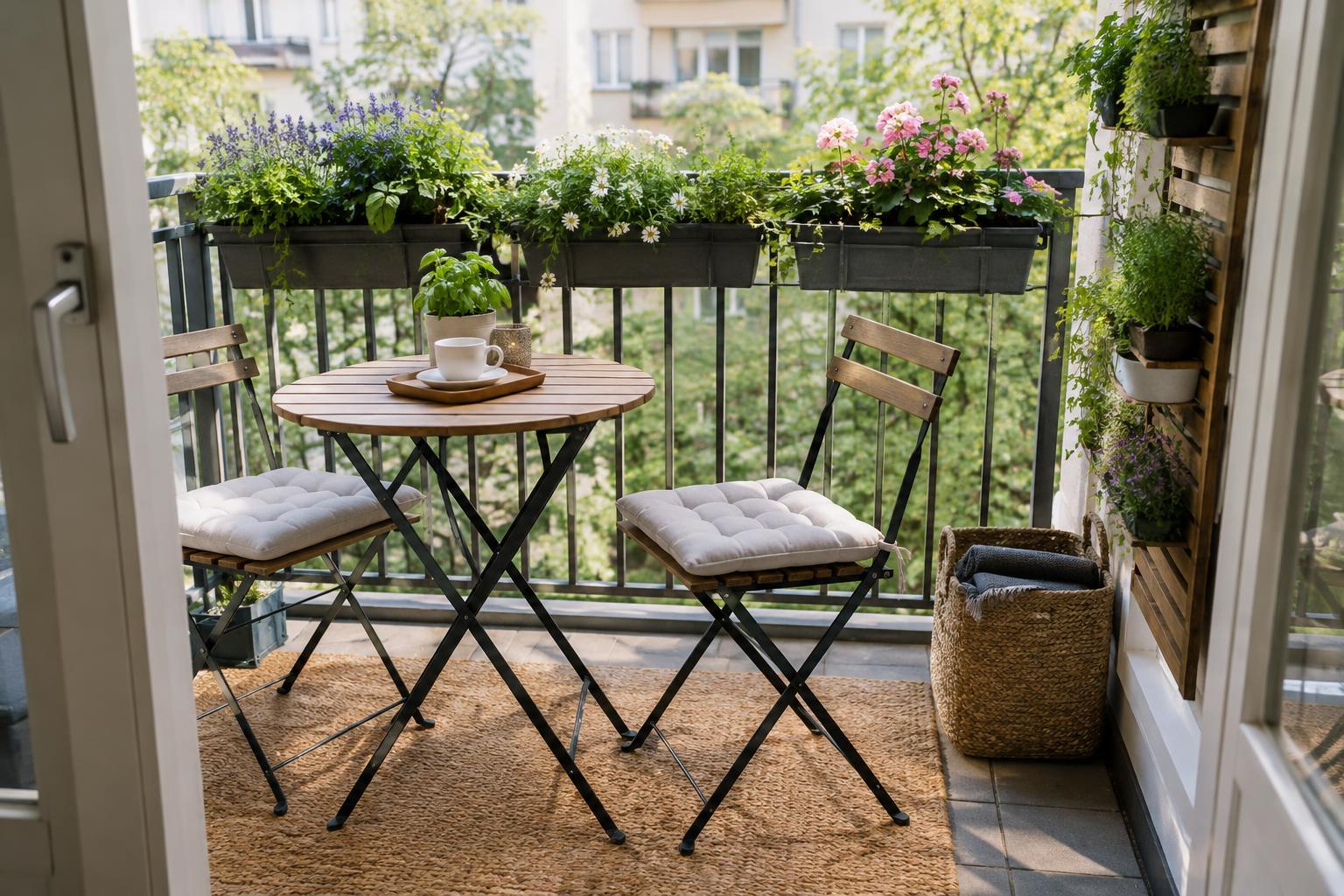
A compact chair you enjoy sitting in is often more useful than a full dining set that is awkward to move around. For a narrow balcony, consider a folding chair and a small side table, or a slim bench against a solid wall. If two people regularly use the space, test whether both seats can be pulled out without blocking the doorway. Leave enough clear floor for a natural route rather than forcing people to sidestep around furniture.
Look for pieces that are easy to lift, clean and store. A folding table can provide a surface for meals or potting tasks and disappear when you want more open space. A storage bench may help, but check that its lid can open where you plan to place it. Cushions add comfort without committing floor area; choose covers intended for outdoor use and keep them dry when the balcony is not in use.
Make comfort responsive to the weather
Observe the balcony at the times you are most likely to use it. A sunny seat may feel welcoming in the morning but too hot later; a shaded corner may be pleasant in summer and chilly in cooler months. Wind can matter as much as sun, particularly higher up or around exposed building corners. Lightweight furniture should be secured or brought inside when conditions call for it, and any shade solution must be suitable for the space and local rules.
Choose materials with the balcony’s exposure in mind. Outdoor-rated furniture still benefits from regular cleaning and a chance to dry after rain. Avoid placing rugs or storage boxes where they could trap water against the floor or cover drainage points. For evening use, a portable, outdoor-suitable light can be simpler than installing a fixture. If you use electricity outside, follow the product’s safety directions and keep cords out of walking paths.
Add plants without crowding the floor
Plants can soften hard edges and make a balcony feel more connected to the outdoors, but they need a workable place to live. Start with a few containers matched to the available light and your willingness to water. Grouping pots near the edge of the seating area can make a stronger impression than scattering them where feet and chair legs need to go.
Use vertical space carefully. A freestanding shelf or plant stand may free up floor area, provided it is stable and does not invite pots to fall in wind. Do not hang planters over a railing unless they are permitted and securely fitted. Put saucers beneath pots where needed, empty excess water and keep drainage routes clear. If watering involves carrying a can through the home, choose container sizes and plant numbers that make the routine manageable.
Keep the finished space easy to use
The best small-balcony layout is one you can use without rearranging everything first. Give everyday items a home: a covered container for small tools, a nearby place indoors for cushions and a clear route to the door. Resist using the balcony as overflow storage if that makes sitting outside feel like a chore.
Live with a simple arrangement for a few weeks before adding more. You may find that the table is more useful on one side, that one plant gets in the way or that a second chair matters more than extra decoration. Small changes are easy to make when the balcony has room to breathe. A comfortable seat, a usable surface and a little greenery are enough to turn even a modest space into a regular part of outdoor life.