Start with the conditions plants actually experience
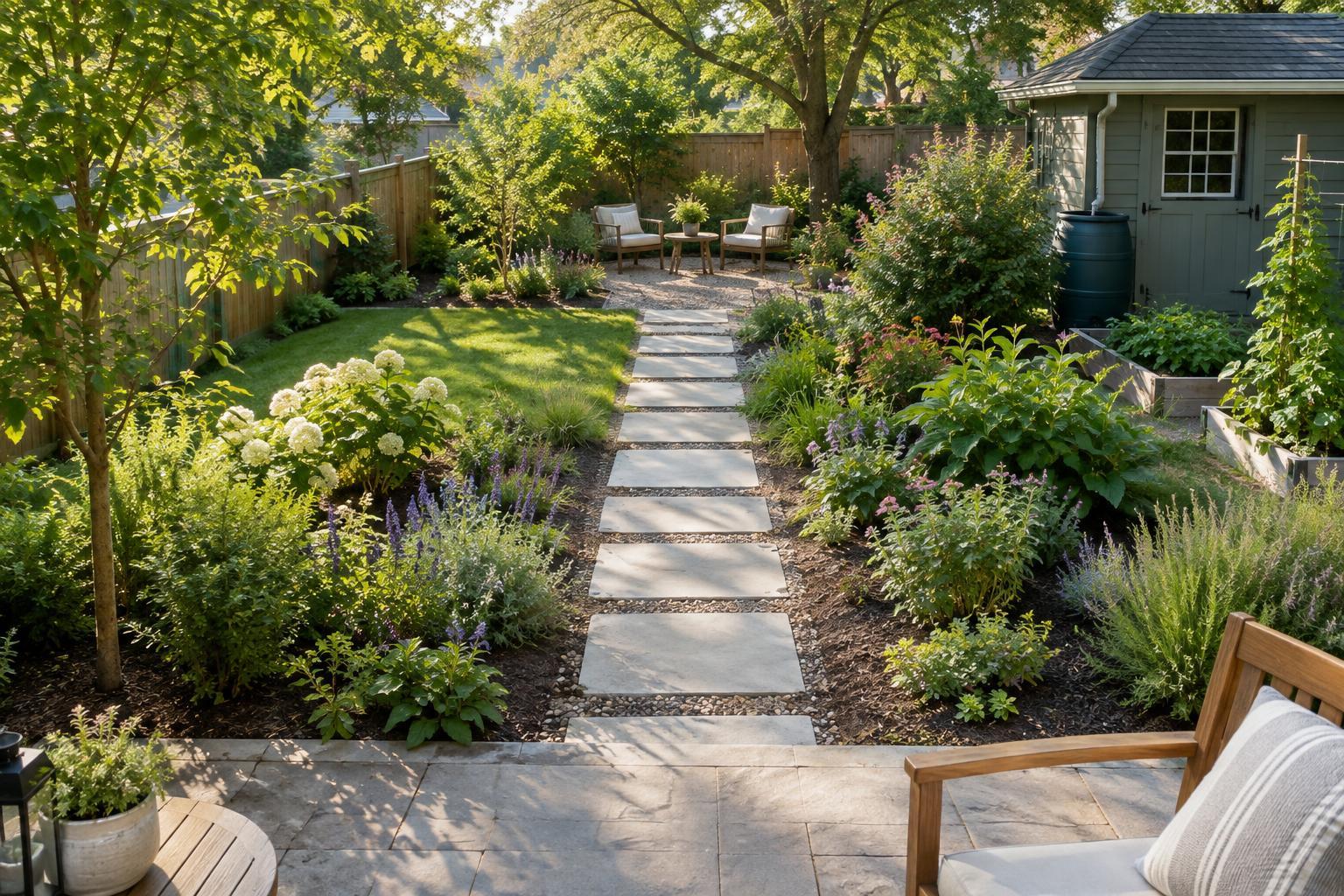
A microclimate is a small area with conditions that differ from those around it. The sunny strip beside a wall, the damp ground at the foot of a slope and the sheltered corner behind a hedge may all behave differently, even though they share the same yard. Identifying these spots helps you plan around conditions you already have rather than trying to make every bed behave alike.
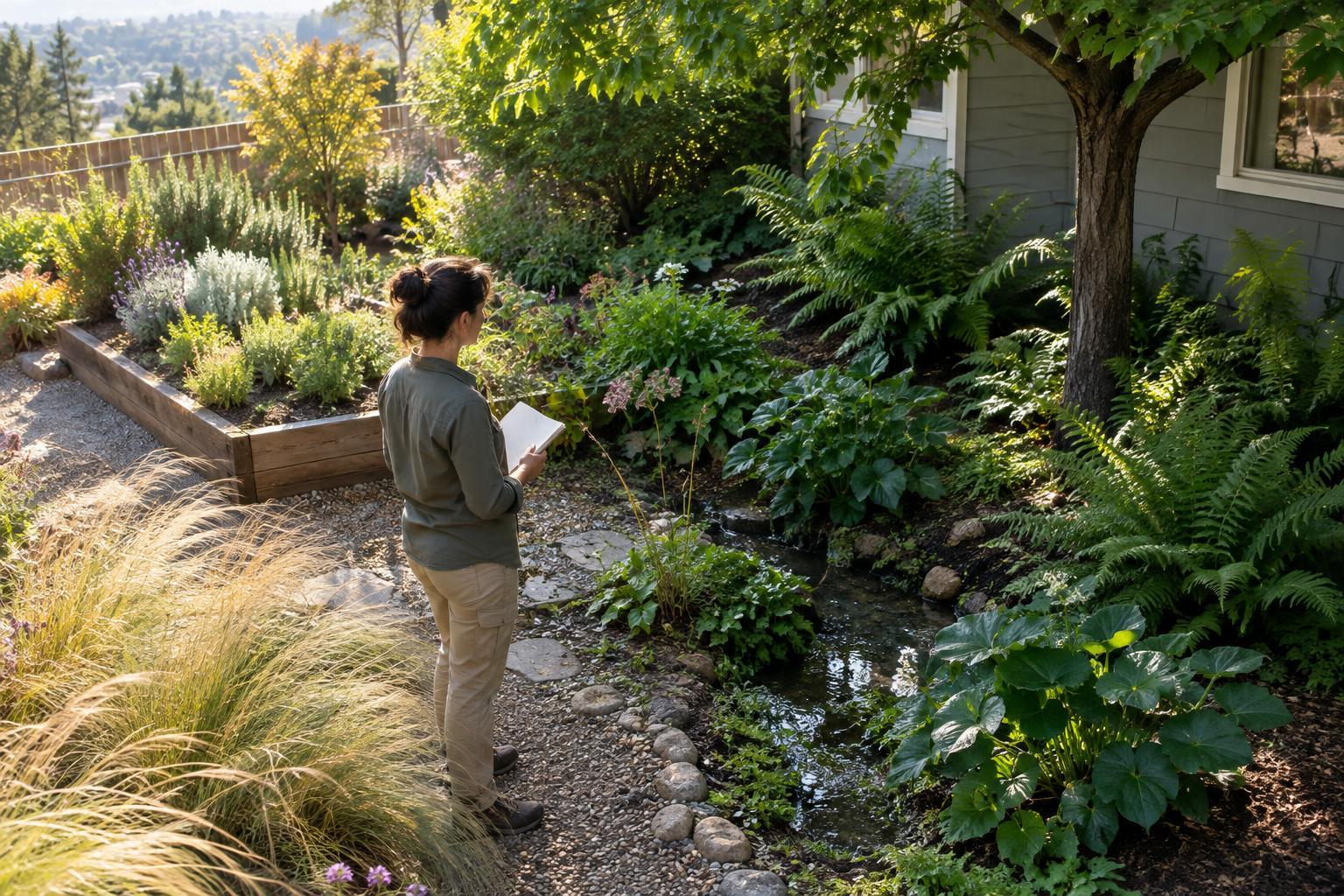
Begin with a simple sketch of your yard. Mark buildings, fences, trees, paved areas, slopes and existing beds. You do not need precise measurements; the sketch is a place to collect observations. Leave room to note what happens at different times of day and in different seasons. A spot that looks ideal on a summer afternoon may receive little light when the sun is lower or a nearby tree has leaves.
Track sunlight and shade
Walk the yard in the morning, around midday and later in the afternoon. On your sketch, note which areas receive direct sun and which sit in shade. Repeat the exercise at least once in another season if you can. Deciduous trees, rooflines and fences can change the pattern considerably through the year. Also notice whether shade is steady and deep or broken by moving patches of light.
Look closely at reflected heat. A bed beside a sunlit wall or paving may feel warmer and dry out faster than an open bed nearby. That can suit some plants but make others harder to maintain. Conversely, a north-facing wall in the Northern Hemisphere, or a south-facing wall in the Southern Hemisphere, may keep a narrow bed shaded for much of the day. Use what you observe on site rather than relying on the direction alone.
Notice wind, warmth and cold pockets
Wind exposure is easy to overlook until a new plant struggles. Watch how grasses and branches move on breezy days, and note where wind passes between buildings or hits an open boundary. A fence may create shelter immediately behind it while leaving another area exposed. If you are planning a seating area, spend a few minutes there in the conditions when you would actually use it.
Temperature can vary across a yard, too. Walls and paving often hold warmth after a sunny day, while low areas may feel colder on still nights as cool air settles. You may notice that frost lingers in one patch or tender growth appears earlier in another. Treat these as clues, not guarantees: a sheltered spot is not necessarily frost-free, and an unusually mild or harsh day may not show its usual pattern.
Follow water through the yard
After rain, look for puddles, runoff paths and places that remain wet longer than the surrounding ground. Check beneath roof edges, beside paving and at the bottom of slopes, where water may collect or move unexpectedly. A dry-looking surface does not always tell the whole story, so check soil moisture a little below the surface before deciding that a bed is consistently dry.
Then look for the opposite: soil that dries quickly near thirsty tree roots, under eaves or beside heat-reflecting surfaces. Compare several spots after a similar stretch without rain. Soil type and past landscaping can also create differences within a small space. Record what you see over time rather than assigning permanent labels after one wet or dry week.
Turn your map into a planting plan
Add your observations to the sketch using plain labels such as “morning sun,” “windy,” “stays damp” or “dries quickly.” If a spot changes with the season, write that down too. Existing plants can offer useful hints: vigorous growth may suggest a good match, while repeated wilting or sparse growth may point to a mismatch. Either can have other causes, so consider them alongside your sun, wind and moisture notes.
Use the map to narrow your choices before buying or moving plants. Put plants that prefer well-drained soil where water does not linger, and reserve reliably moist spots for plants suited to those conditions. Match light needs to the hours of sun you observed, allowing for seasonal changes. If you are unsure about a location, try a container or a small planting before committing a whole bed. Your map can change as trees grow and structures are added; revisiting it each season makes it more useful.