Start by asking whether the plant needs food
Fertilizer can replace nutrients that plants use as they grow, but it cannot fix every problem. Yellow leaves, slow growth, and poor flowering can also result from dry or waterlogged soil, limited light, damaged roots, or unsuitable temperatures. Before reaching for a product, check the growing conditions and look at the plant as a whole. A few older leaves fading naturally are different from widespread changes in new growth.
Garden soil may already contain enough nutrients for established plants, especially where compost or other organic matter has been added over time. If a bed has persistent growth problems, a soil test can help you decide whether a particular nutrient or a change in soil pH needs attention. Without that information, feeding lightly is usually more sensible than trying to correct an uncertain deficiency with a large dose.
Choose a fertilizer for the job
Fertilizer labels commonly list nitrogen, phosphorus, and potassium as three numbers. Nitrogen supports leafy growth; phosphorus and potassium play roles in root development and other plant functions, including flowering and fruiting. Plants need all three, along with other nutrients, but the right balance depends on the plant and what is already in the soil. A general-purpose fertilizer is often a reasonable starting point when a plant needs routine feeding.
Products also differ in how quickly they release nutrients. Liquid fertilizers are convenient for measured, occasional feeding, particularly in containers. Granular and slow-release products can provide nutrients over a longer period, but they still need careful measuring. Compost improves soil structure and can supply some nutrients, though its nutrient content varies. It is useful as part of soil care, not as a precise substitute for every fertilizer application.
Choose a product whose label includes the plants and growing situation you have in mind. A fertilizer meant for a lawn, for example, is not automatically the best choice for a pot of herbs. If you are unsure which product to use, start with one straightforward option rather than layering several feeds whose combined nutrient supply is hard to track.
Measure, apply, and water with care
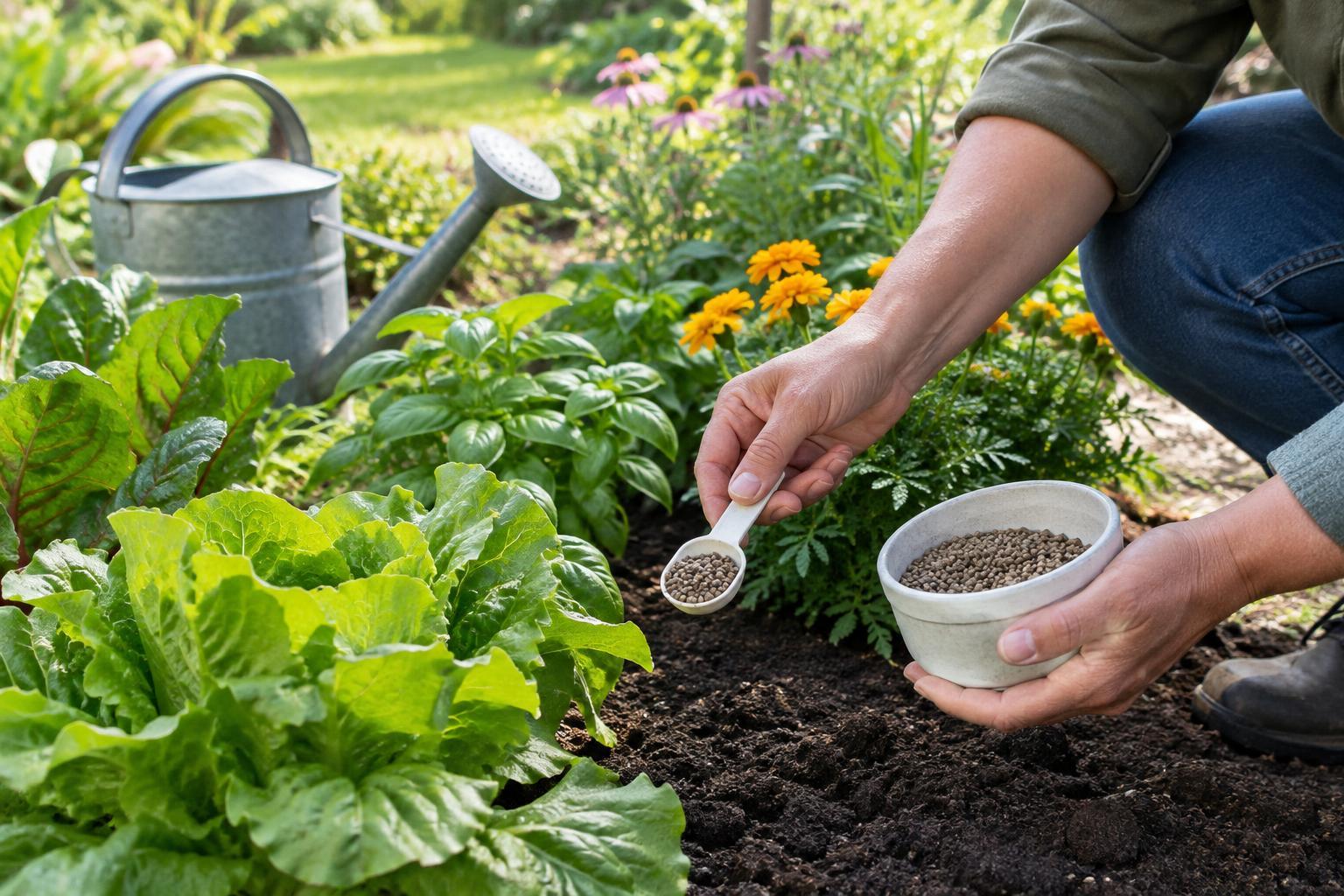
Follow the label’s rate, timing, and application method. Measure for the actual size of the bed or container rather than estimating by eye. Adding extra “for good measure” can leave salts concentrated around roots, especially in pots. If a label gives a range, the lower end may be a cautious place to begin for a plant that is growing reasonably well. Keep a simple record of what you applied and when, so you do not accidentally feed twice.
Apply fertilizer to the soil or potting mix as directed, keeping granules away from stems and leaves unless the label says otherwise. Moist soil is generally a better starting point than a severely dry root zone. After applying a product that calls for watering in, use enough water to move nutrients into the root area without creating unnecessary runoff. Avoid fertilizing immediately before heavy rain, when nutrients may wash away rather than stay where plants can use them.
Adjust feeding to the plant and the season
Fast-growing vegetables, annual flowers, and plants in containers may need more regular attention than established shrubs growing in the ground. Container plants have a limited volume of potting mix, and watering can carry nutrients out through drainage holes. Even so, a pot should not be fed on a rigid schedule regardless of its condition. Check the product directions, the plant’s growth, and whether a slow-release fertilizer is already mixed into the potting mix.
Feed when plants are actively growing and able to use added nutrients. In many climates, growth slows during colder or darker periods; in hot or dry conditions, plants may also pause. Timing will vary by climate and species, so observe the plant rather than relying only on a calendar. Late applications that encourage tender new growth may be unhelpful where cold weather is approaching. Newly transplanted or stressed plants often benefit more from suitable water and growing conditions than from an immediate heavy feeding.
Know when to stop
More leaves are not always a sign of better results. Excess nitrogen may encourage lush foliage at the expense of flowers or fruit on some plants. Leaf-edge browning, wilting despite moist soil, or a crust on the surface of container mix can also raise questions about excess fertilizer, although these signs have other possible causes. If trouble appears after feeding, stop further applications while you investigate watering, drainage, and the amount used.
For a container with adequate drainage, watering thoroughly may help flush out accumulated soluble fertilizer; let the excess drain away, and do not leave the pot standing in it. For garden beds, avoid trying to counter one large application with another amendment. Give plants time, maintain even moisture where appropriate, and reassess new growth. The most reliable habit is modest, measured feeding paired with attention to soil and plant health.