Start with activities, not boundaries
A functional zone is an area that supports a particular use. It does not need its own fence or a formal shape: a table near the house, a sunny growing bed and a chair under a tree can each be a zone. The aim is to make everyday activities comfortable while keeping the garden easy to move through and care for.
Before drawing a plan, list what you want to do outside and how often you expect to do it. Separate essentials, such as a route to the shed or a place for bins, from wishes that can be scaled down. Then sketch the garden’s existing features. Mark doors, taps, established trees, slopes, views you like and areas that stay wet or dry. Watch where sun and shade fall at the times you are likely to use the space. This gives you a better starting point than dividing the plot into equal sections.
Put each zone where it works best
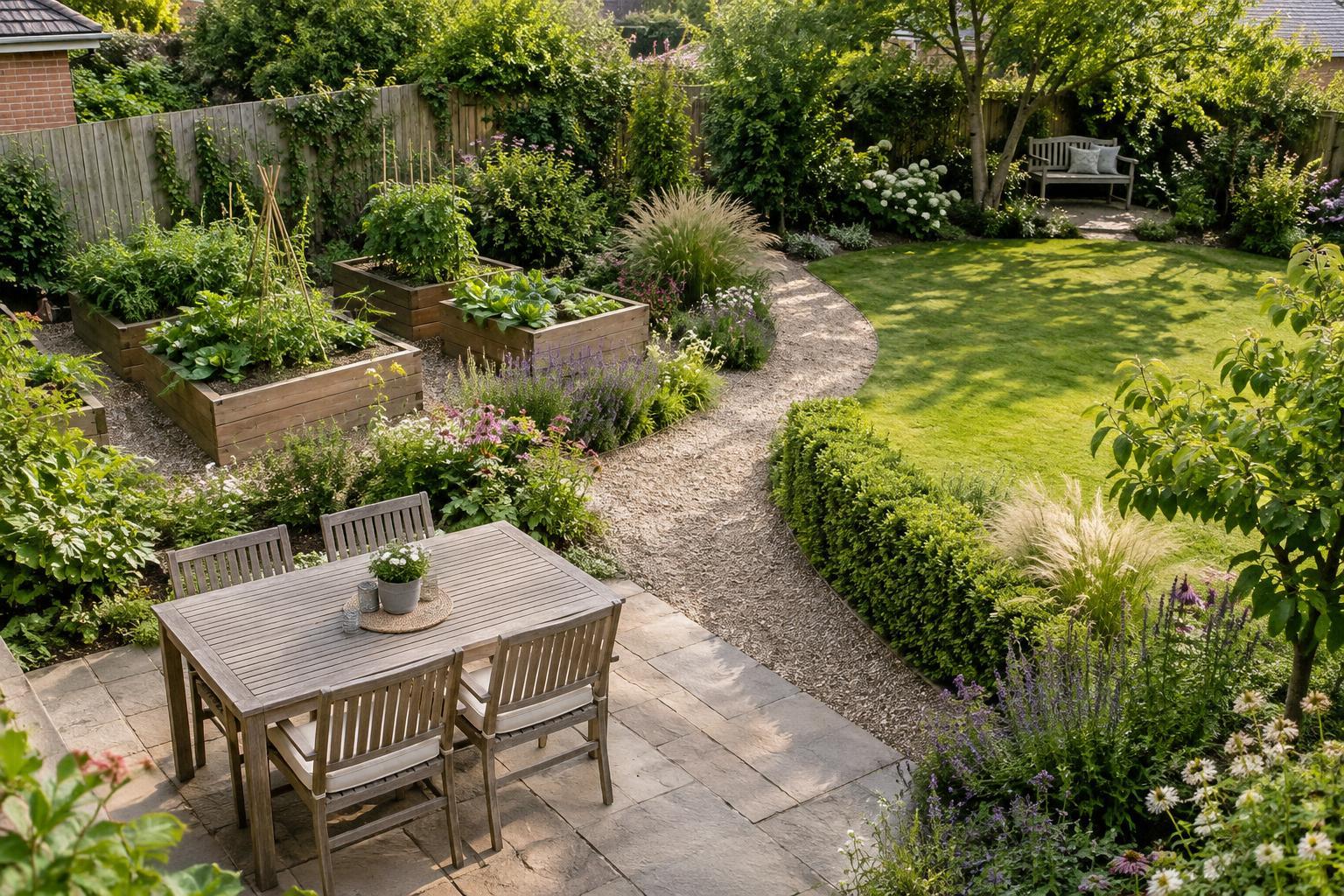
Place frequently used areas where they are convenient. An outdoor dining spot near the kitchen is easier to use than one at the far end of the garden. A compost area can be less prominent, but should still be reachable with garden waste and a wheelbarrow. If children or pets use the space, consider whether you need a clear view from the house and an open route around play areas.
Match growing and sitting spaces to their conditions rather than forcing a layout. Many edible crops need generous light, while a seat that feels pleasant in spring may need shade during a hot summer afternoon. Wind, reflected heat from paving and damp ground can also affect comfort. In a small garden, let one area serve more than one purpose: a broad path can provide access and room for pots, while a sturdy table can be used for meals and seed sowing at different times.
Connect the garden before separating it
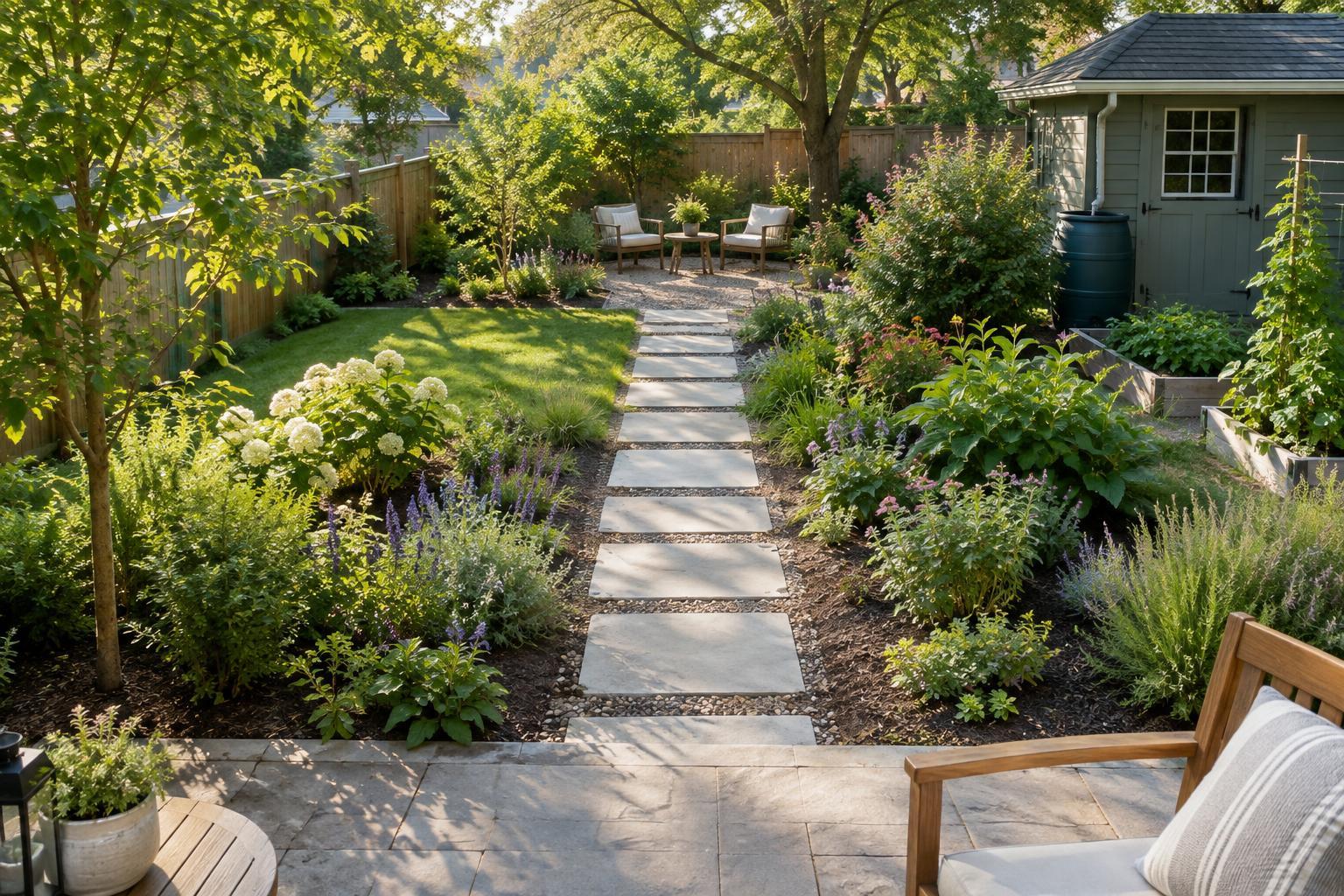
Draw the main routes between the house, seating, growing areas, storage and any gate. Keep them direct enough for regular trips, especially when carrying tools or a watering can. Allow room to move comfortably and choose a surface suited to local weather and the way the path will be used. A path that looks attractive but becomes slippery or muddy may discourage use of the spaces it connects.
Think about what you see along those routes. A glimpse of a bench or a distinctive plant can make the garden feel inviting, while a clear sightline helps you keep track of a play space. Not every destination needs to be visible at once, though. A gently curving path or a planted edge can create a quieter corner without making it feel cut off.
Use soft boundaries where you can
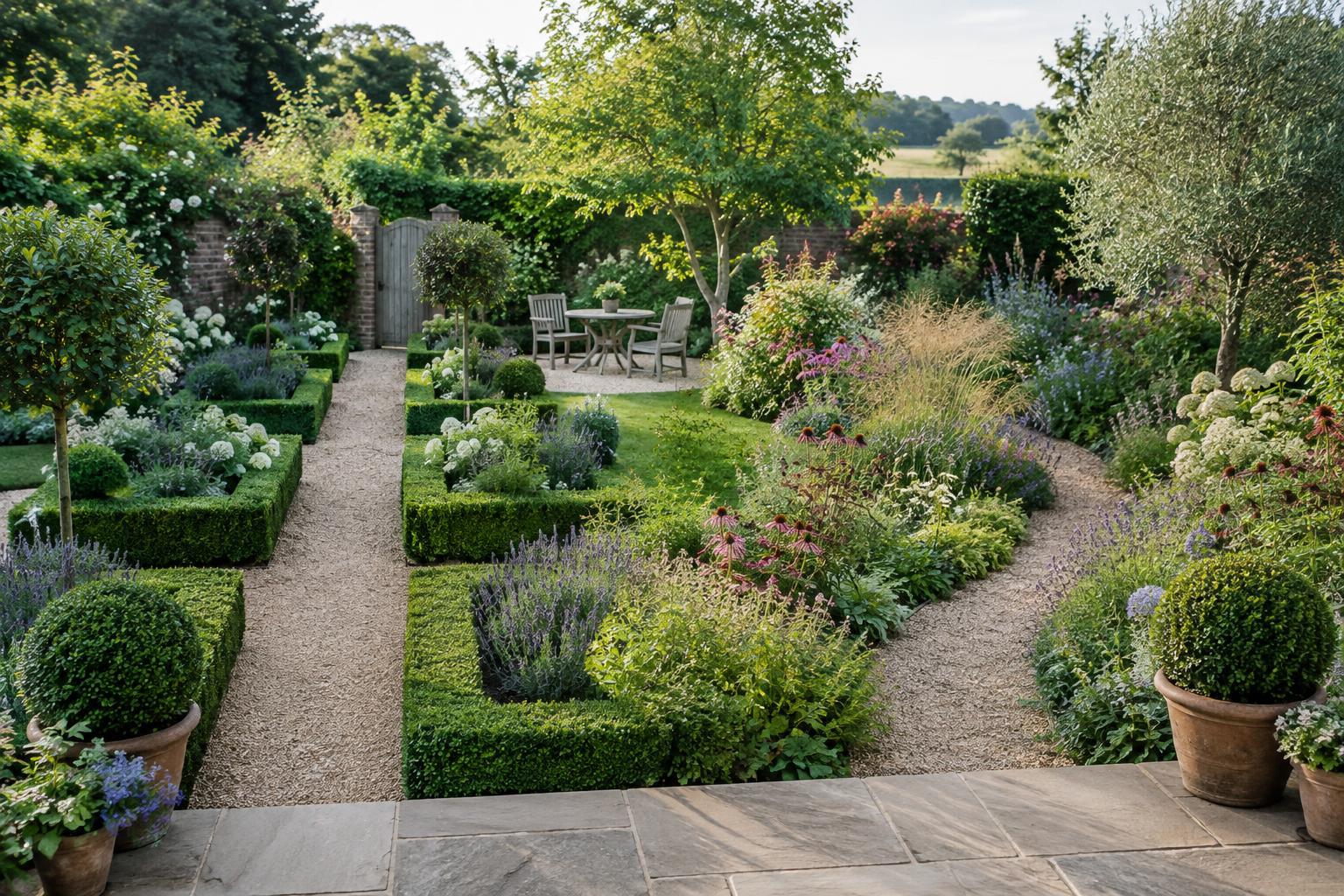
A change in surface often signals a new purpose without building a barrier: paving can define dining, gravel can mark a seating nook, and mulch can distinguish planting beds. Low shrubs, ornamental grasses or containers can provide similar cues. Repeat a few plants or materials across the garden so the zones feel related rather than assembled from separate designs.
Choose the level of separation to fit the activity. A quiet seat may benefit from taller planting that offers some privacy, while an area used for games may need an open edge. Leave enough space around beds and furniture for maintenance, and check the mature size of plants before placing them beside paths. Where a boundary must keep pets out of a growing area, a simple gate or low fence may be more reliable than planting alone.
Test the layout and let it change
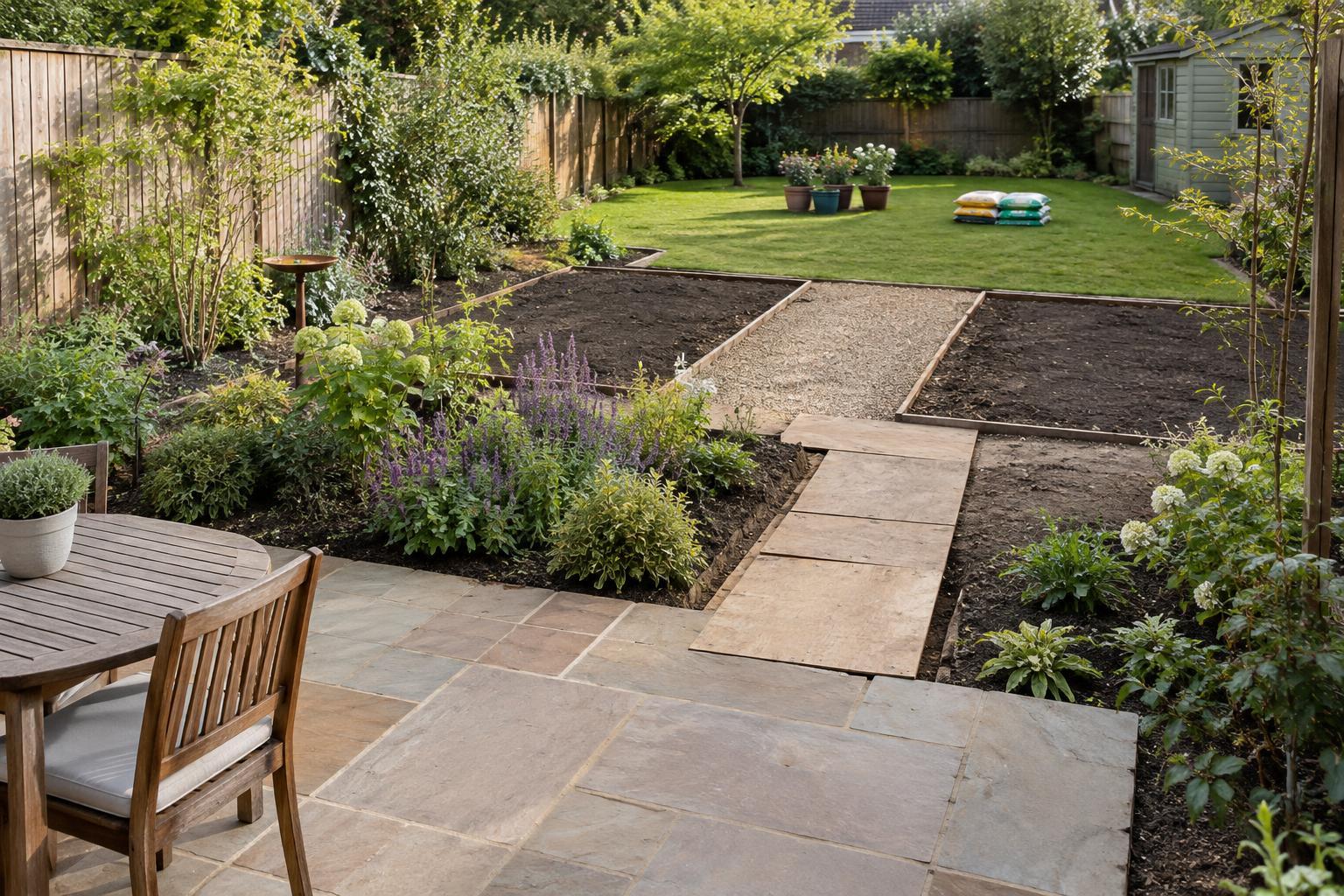
You do not have to build every zone at once. Mark proposed edges with a hose, string or movable pots, then try walking the routes and placing furniture where you plan to use it. Notice whether chairs have room to pull out, whether a wheelbarrow can pass, and whether you can reach beds without stepping on them. Small adjustments on paper or with temporary markers are much easier than moving finished paving.
Start with the routes and the area you will use most, then add other zones as time and resources allow. Gardens change as plants grow and household needs shift. Keeping some edges flexible makes it easier to turn a play patch into a growing bed, enlarge a seating area or add a wildlife-friendly corner later. A successful plan is not one that fixes every activity in place; it is one that makes the garden useful now and adaptable in the future.