Start with the work you want to reduce
An easier garden is not necessarily a smaller or plainer one. It is a garden designed around the time, energy, and resources you can give it. Before changing anything, walk through your space and note the jobs that keep repeating: mowing around awkward corners, watering thirsty containers, weeding bare soil, or cutting back plants that block a path. These observations are more useful than a general wish for “low maintenance,” because they point to changes you can make.
Decide which tasks you enjoy, too. You might happily tend a vegetable bed but resent trimming a long hedge. Keep the parts that reward your effort and simplify the rest. A small, well-placed growing area can be easier to manage than several scattered patches. If you are planning from scratch, sketch the places you use most often, the routes between them, and any sunny, shady, wet, or exposed areas. Design around those conditions rather than trying to make every corner behave alike.
Make the layout easy to reach and care for
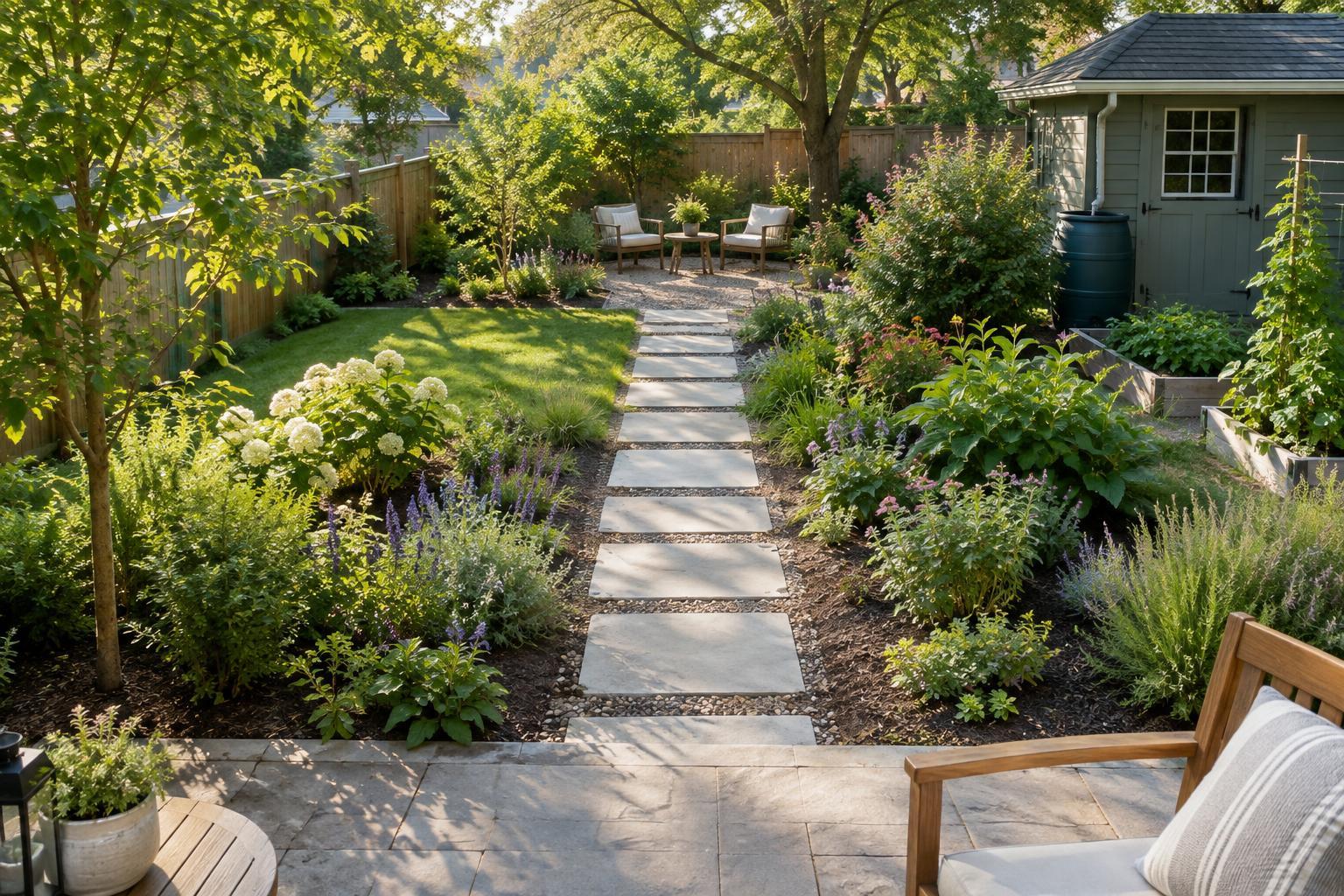
Good access saves effort every time you garden. Paths should connect the places you regularly visit, such as the tap, compost area, seating, and beds. Give yourself enough room to carry a watering can or move a wheelbarrow where needed. If a bed is too wide to reach comfortably from its edges, narrow it or add a stepping place. This helps you weed and prune without standing on the soil.
Simple shapes are generally easier to maintain than beds with many tight curves or isolated pockets of planting. Group plants into generous areas rather than leaving small strips of grass that are difficult to mow. A clear edge between lawn, planting, and paving also makes routine work more straightforward. Choose paths and edging that suit your climate and budget, and consider how you will clear leaves or repair surfaces later. Even a durable material needs attention if it is poorly laid or difficult to access.
Choose plants that fit the site
Plants tend to demand more attention when they are asked to cope with conditions they do not suit. Check how much sun each area receives, how quickly the soil drains, and whether wind or reflected heat affects it. Then look for plants suited to those conditions and to your local climate. Check their expected mature size before planting: a shrub that naturally fits its space may need far less repeated pruning than one that quickly outgrows it.
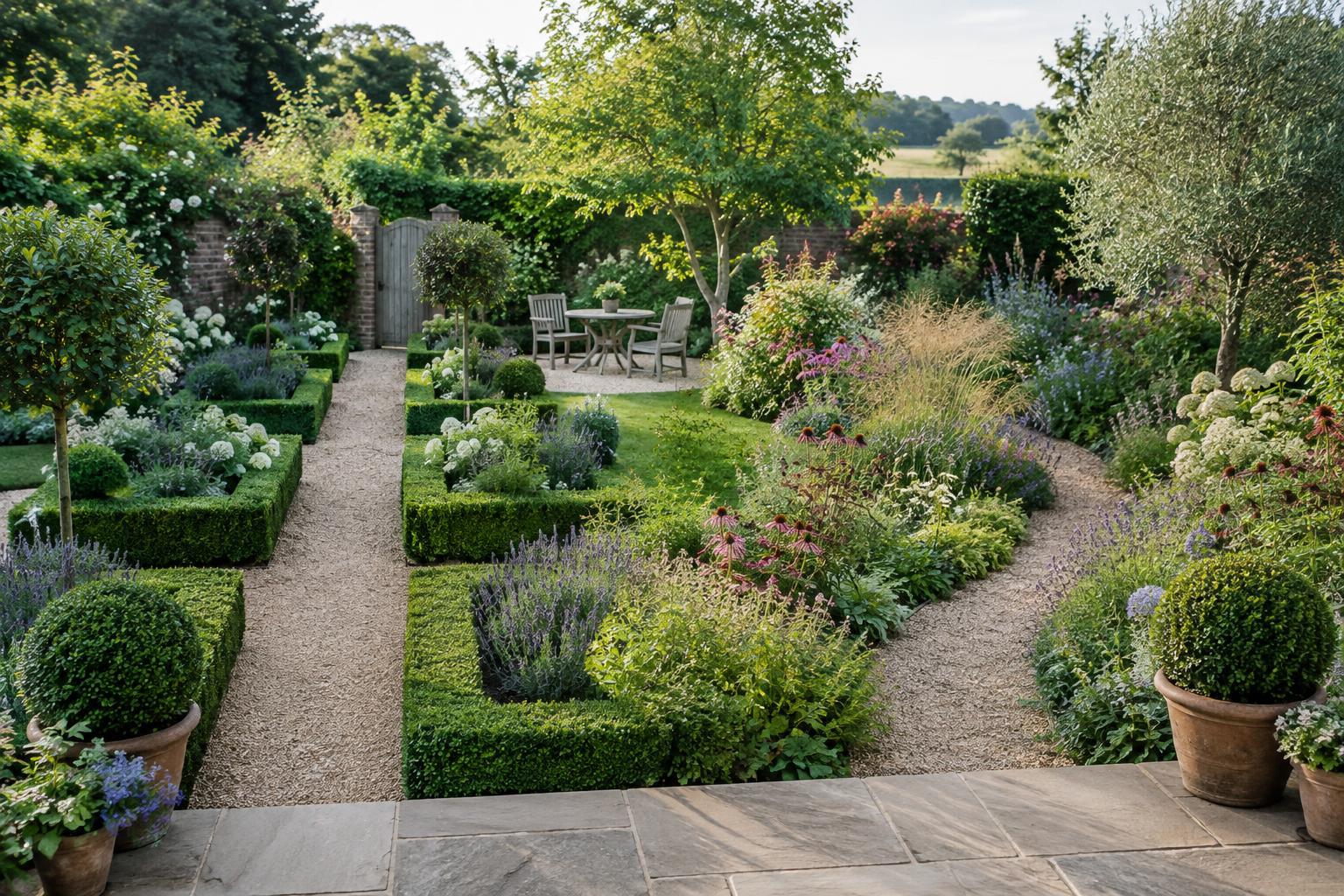
A limited palette can make a garden feel calm and simplify care. Repeating a few reliable plants in suitable spots lets you learn their needs instead of managing many different routines. Include plants with different forms and seasons of interest so the space stays appealing without constant replanting. If you want flowers for visiting insects, choose a mix suited to your area and allow room for them to grow. Avoid treating any plant as maintenance-free; even sturdy choices may need watering while they establish and occasional checks afterward.
Plan for less watering and weeding
Watering is easier when plants with similar needs are grouped together. Keep thirstier choices near a convenient water source, and place more drought-tolerant choices only where the site suits them. A hose or irrigation arrangement that reaches beds without dragging across delicate plants can make a noticeable difference. Whatever method you use, check the soil before watering rather than relying only on a fixed schedule; rainfall, temperature, and soil type all affect how quickly it dries.
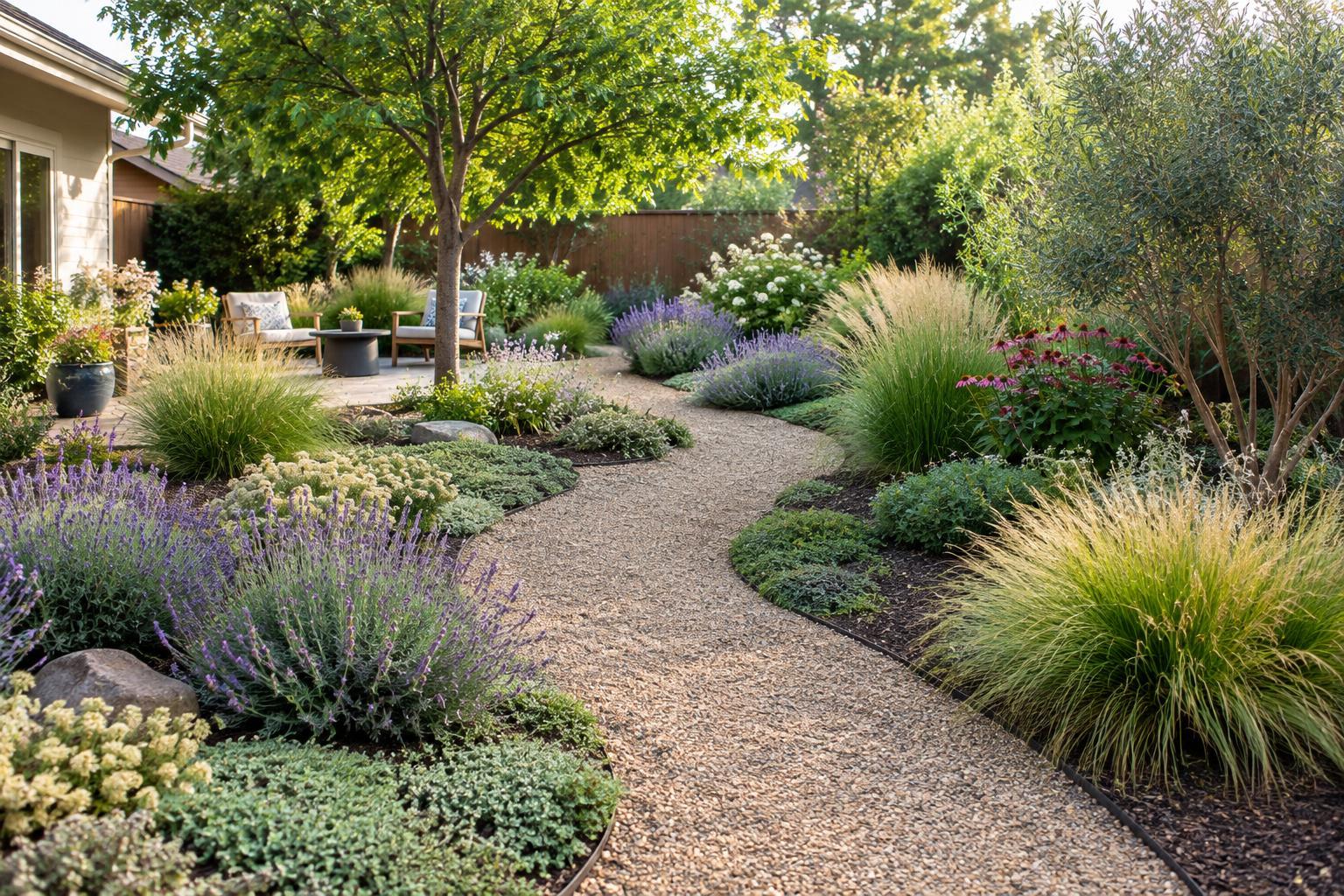
Covering exposed soil can reduce weeding and help it retain moisture. Mulch is one option, provided you choose a material appropriate for the plants and keep it away from stems and trunks. Ground-cover plants can also fill gaps over time, but allow for their eventual spread when planting. Before adding either, remove persistent weeds as thoroughly as you can. Covering an overgrown bed may hide the problem briefly without making it easier to manage later.
Build a garden you can keep up with
Lower maintenance does not mean no maintenance. Leave room to inspect plants, pull new weeds while they are small, and replace anything that repeatedly struggles. A short, regular visit is often less daunting than waiting until every task has become urgent. Store frequently used tools where you can reach them easily, and keep a place for garden waste or compost if you have the space and want to use it.
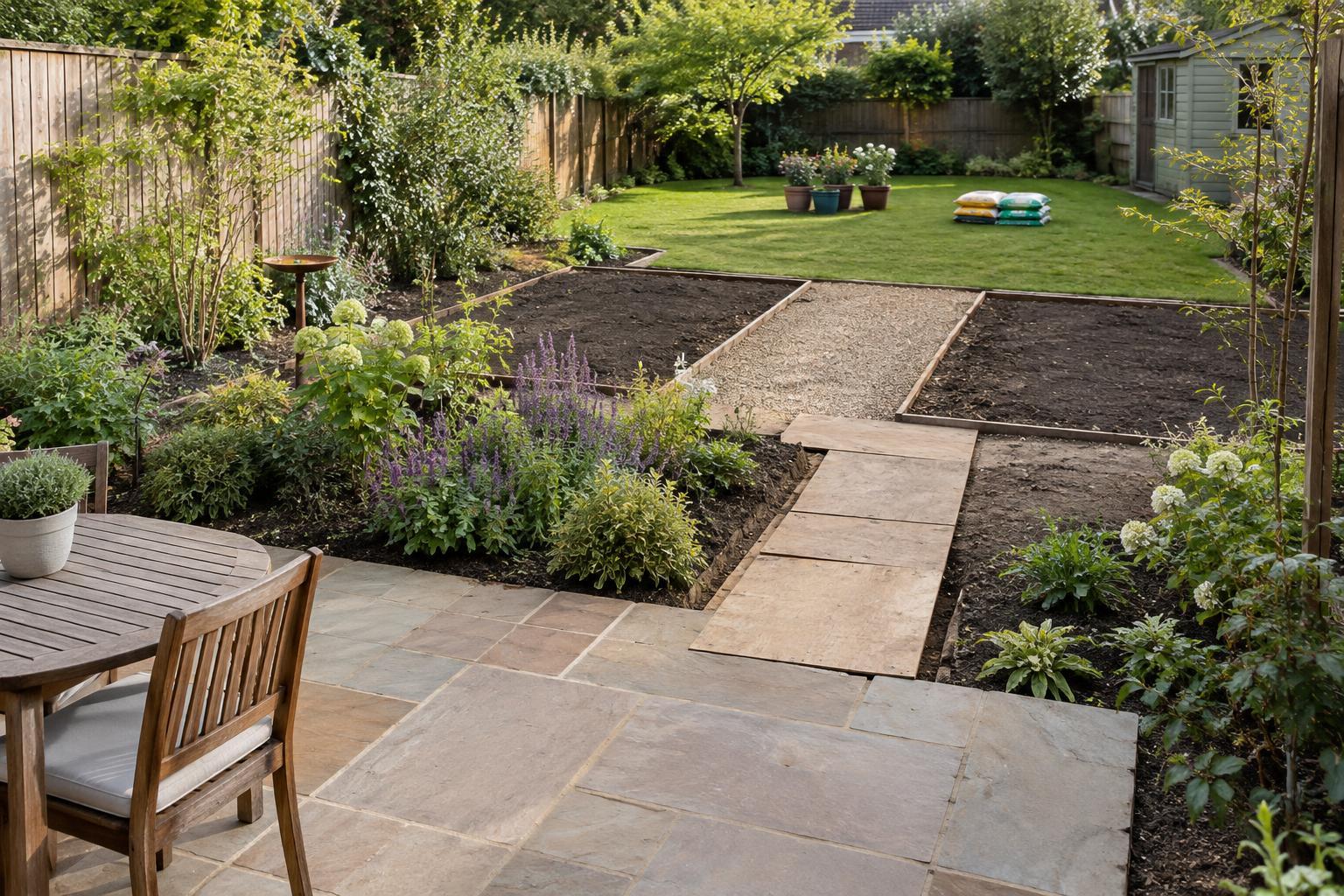
Make changes in stages so you can see what works. Start with one demanding area, perhaps a hard-to-mow lawn edge or a bed that needs frequent watering. Simplify its shape, improve access, or replant it with more suitable choices, then observe it through changing weather. The aim is not a perfectly controlled garden. It is an outdoor space whose everyday care fits comfortably into your life.