What deadheading does
Deadheading means removing a flower after it fades, usually before it forms mature seeds. Many annuals respond by producing more buds, extending their display through the growing season. It also clears away wilted petals that can make a container or border look tired. Deadheading cannot make a plant bloom indefinitely, though. Heat, limited water, poor light or the natural life cycle of the plant may still slow flowering.
Not every annual needs this task. Some varieties shed old flowers cleanly or keep blooming without regular attention. Others are grown partly for their seed heads, which can add interest or provide food for birds later in the season. Before making deadheading part of your routine, watch a plant for a week or two: if spent blooms linger and seed pods begin to form while new flowers become scarce, it may benefit from your help.
Find the right place to cut
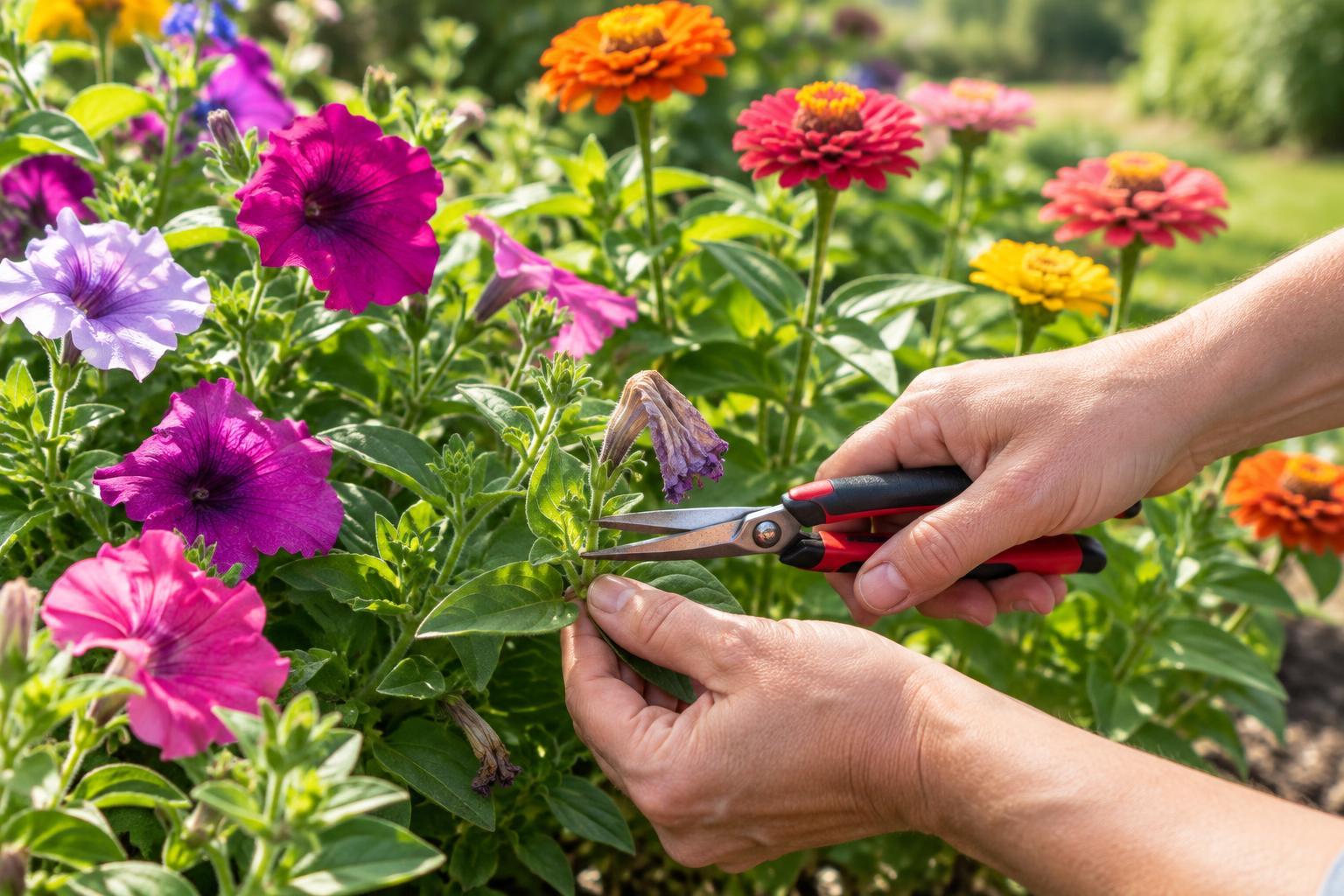
Start by identifying a flower that is clearly finished: its petals may be faded, dry, drooping or missing. Follow its stem down to the first healthy leaf, pair of leaves or side shoot, then pinch or cut just above that point. On a branching plant, this leaves growing points in place for fresh stems. Removing only the petals can leave the developing seed pod behind, so take the flower base and its short stem as well.
For soft, thin stems, your fingers may be enough. Use clean, sharp snips for tougher stems or crowded growth, where pulling could tear a healthy branch. Take care around unopened buds: they are generally firmer and more compact than fading flowers. If you are unsure which is which, wait a day or two rather than cutting.
Plants carry their flowers in different ways, so follow their shape rather than using one cut for everything. On a plant with many small blooms in a cluster, remove the whole cluster once most flowers are spent. On a plant with flowers spaced along a stem, remove individual faded blooms while the others are still opening.
Make it a quick summer habit
A brief pass through pots and beds every few days is often easier than a major cleanup after many flowers have set seed. Carry a small container for the trimmings so old petals do not collect among the foliage. Check plants at eye level and underneath the top layer of growth, where faded blooms can hide. Work gently when stems are brittle or the soil is dry.
Deadheading is a useful time to notice what else a plant needs. If the soil feels dry below the surface, water thoroughly according to the plant and its setting; containers can dry out faster than garden beds. If flowering has slowed during very hot weather, avoid treating every pause as a pruning problem. Consistent care and suitable light matter as much as removing old blooms. Follow any feeding guidance for the plant or potting mix rather than adding fertilizer simply because flowers are scarce.
What to do when plants turn leggy
By midsummer, some annuals develop long stems with leaves and flowers mostly at the tips. Picking off individual blooms may no longer be enough to improve their shape. For a plant that is otherwise healthy and growing actively, a light trim can encourage branching and a fuller appearance. Cut back a portion of the longest stems to healthy leaves or side shoots, keeping some foliage so the plant can continue to grow.
A harder cut is not suitable for every annual and may leave a temporary gap in the display. If you do not know how a plant responds to trimming, try a few stems first and see whether new growth appears. Remove dead or damaged material, but do not expect pruning to solve root problems, persistent dryness or a location with too little light.
Know when to leave the flowers
You can stop deadheading selected plants when you want them to form seeds. Leave healthy seed heads on annuals you hope will self-sow, or keep some for birds where that suits your garden. If you plan to collect seeds, let the heads mature and dry on the plant when possible; remember that seedlings from some cultivated varieties may not look like their parents.
There is no need to treat the whole garden alike. Keep a container near the door neatly deadheaded for color, while allowing flowers in a quieter corner to finish their cycle. As the growing season winds down in your climate, that balance can shift. Deadhead the blooms you want to replace, and leave the ones whose next stage you would enjoy.