Start with how the patio will be used
Before choosing a material, picture an ordinary day on the patio. Will it hold a dining table, movable chairs, heavy planters, or a grill? Will people cross it on their way to a door or garden path? Concrete and well-laid pavers provide firmer footing for furniture and wheeled items. Loose gravel can work well for a casual seating area, but narrow chair legs and rolling carts may sink or catch.
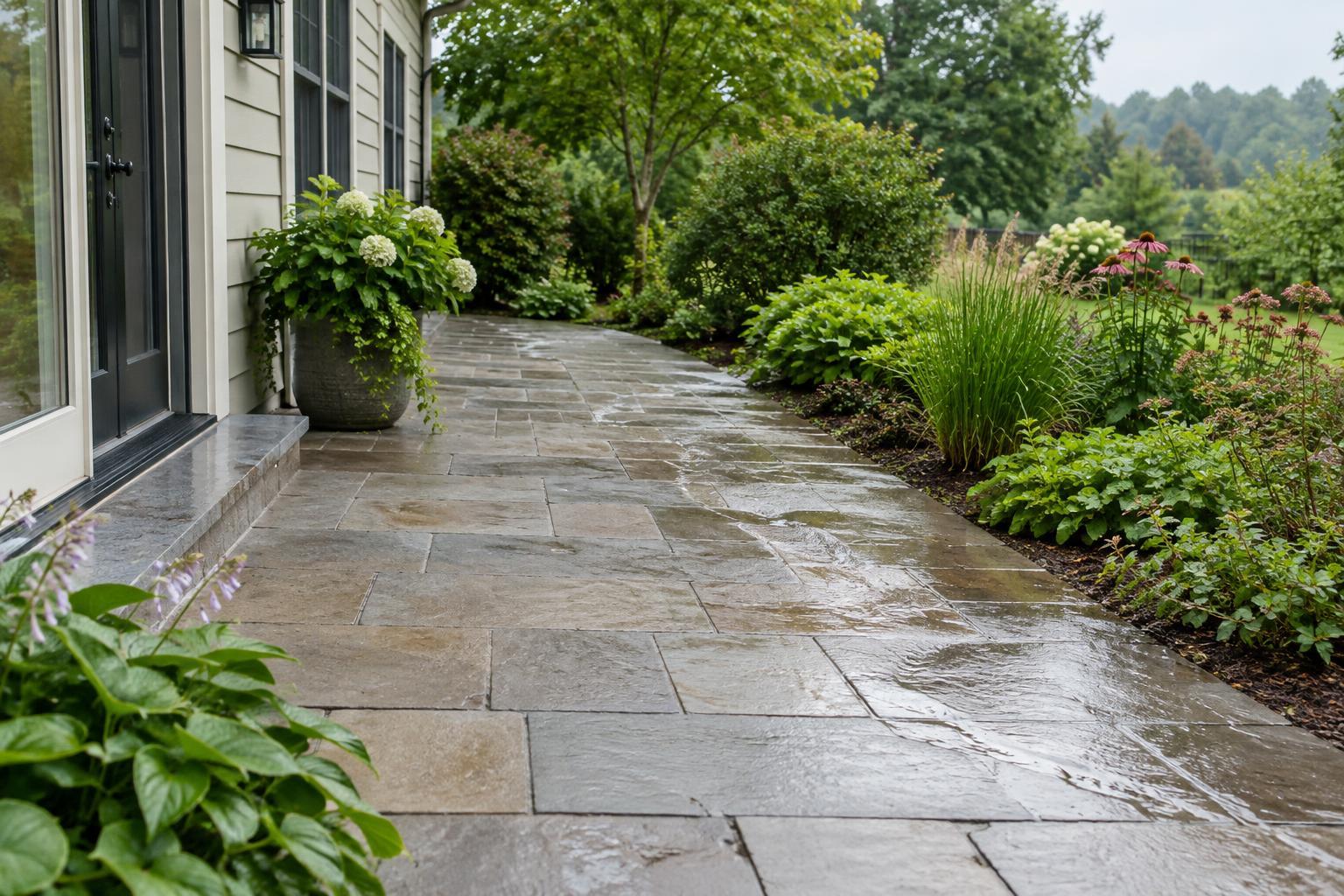
Consider the route onto the patio as carefully as the space itself. A smooth, stable surface is generally easier to navigate with a stroller, walker, or wheelchair than loose stone or wide joints. Surface texture matters, too: a very smooth finish can feel slippery when wet, while rougher finishes may be less comfortable for bare feet. If accessibility is a priority, judge sample surfaces in person rather than relying on appearance alone.
Concrete: continuous and straightforward
A poured concrete patio offers a continuous surface that suits dining areas and busy routes. It can be finished in different textures and divided with joints that help manage cracking. Once installed, it does not need regular raking or joint refilling. Its relatively fixed layout is an advantage if the patio plan is settled, but a drawback if you expect to change its shape or add planting beds later.
Concrete needs a sound base, appropriate drainage, and careful installation. Cracks can still develop as the ground moves or the material expands and contracts; control joints reduce the chance of random cracking but do not eliminate it. Repairs may remain visible beside the original surface. In hot sun, an exposed slab can become uncomfortable underfoot, so shade and the chosen finish are worth considering. Where freezing conditions occur, ask installers how they prepare the base and handle drainage.
Pavers: flexible design with more joints
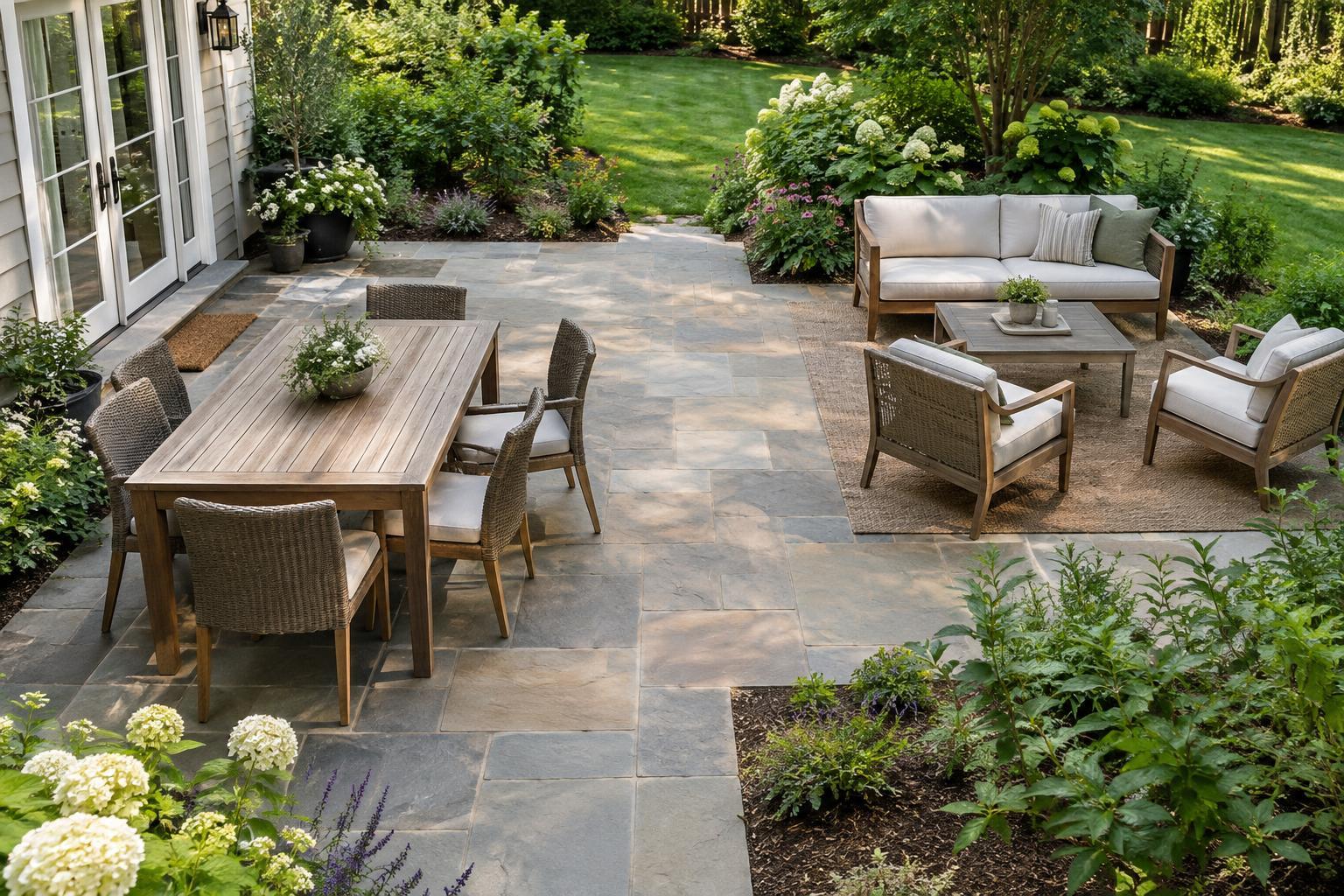
Individual concrete or stone pavers make it possible to create patterns, borders, and curves. They also allow a damaged area to be lifted and repaired without replacing the entire patio. When the base is well prepared and edges are restrained, pavers form a practical surface for tables and foot traffic. Joint width and paver texture influence how easily chairs roll across them.
Those joints require attention. Weeds may grow in accumulated debris, joint material may need replenishing, and individual units can shift if the base settles or edges loosen. Pavers do not automatically make a patio permeable: drainage depends on the type of paver, joint material, base, and surrounding soil. If you want rainwater to pass through the surface, choose a system designed for that purpose rather than assuming ordinary paving will do it.
Gravel: adaptable, but less stable underfoot
Gravel can give a patio a relaxed look and is often easier to fit around existing trees or an irregular garden edge. It can also be moved or topped up if the layout changes. A compacted base, sturdy edging, and the right depth help keep the surface usable. Angular gravel tends to knit together better than rounded pebbles, which are more likely to roll underfoot.
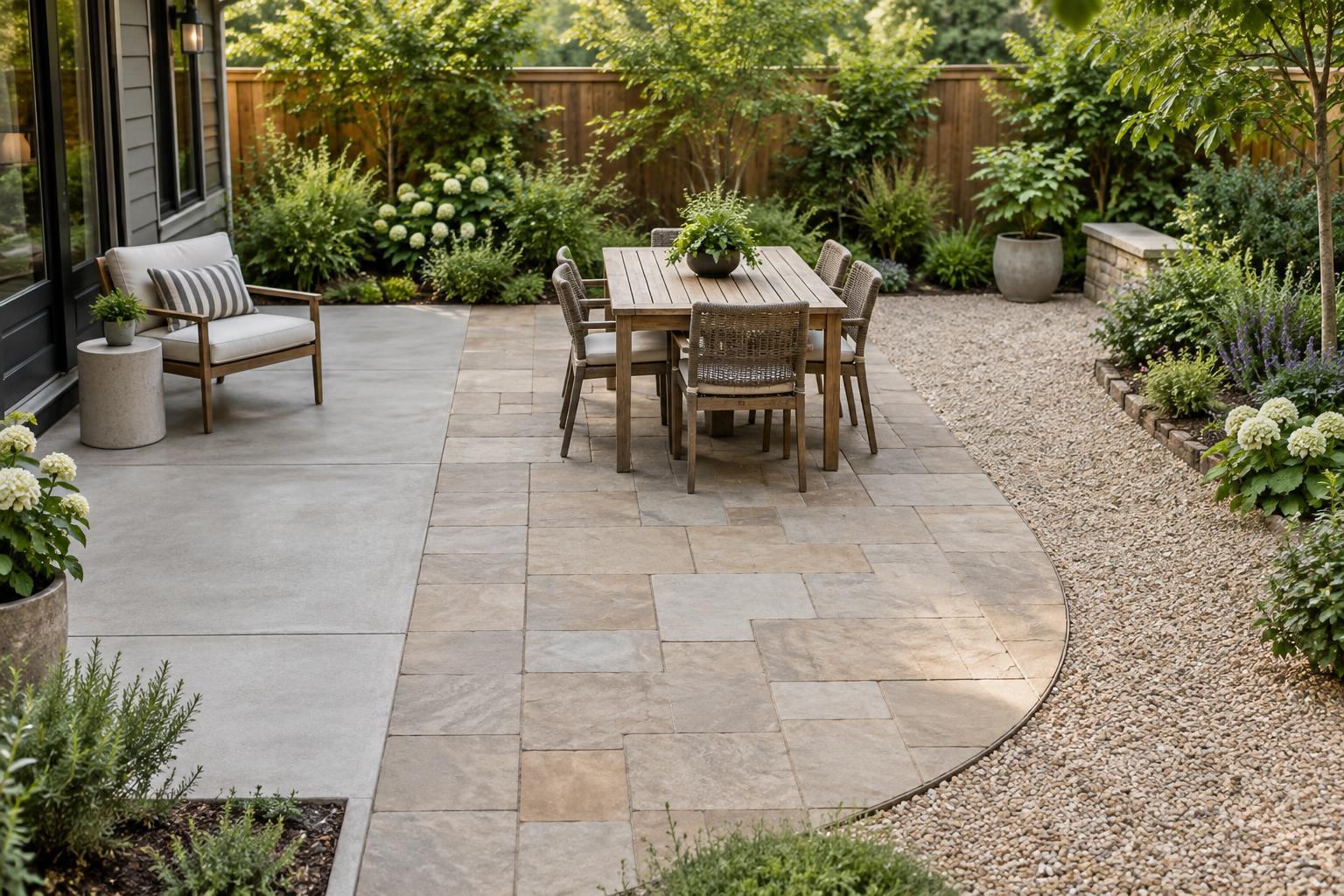
Expect some routine upkeep. Loose stones migrate onto paths or lawns, leaves can be awkward to remove, and low spots may need raking and topping up. Gravel may let rain pass through its upper layer, but water still needs somewhere to go beneath it; compacted soil or poor grading can leave the area wet. For a dining space, test how chair legs behave on a sample patch. A small paved area beneath the table can offer stability while retaining gravel elsewhere.
Make the final comparison on site
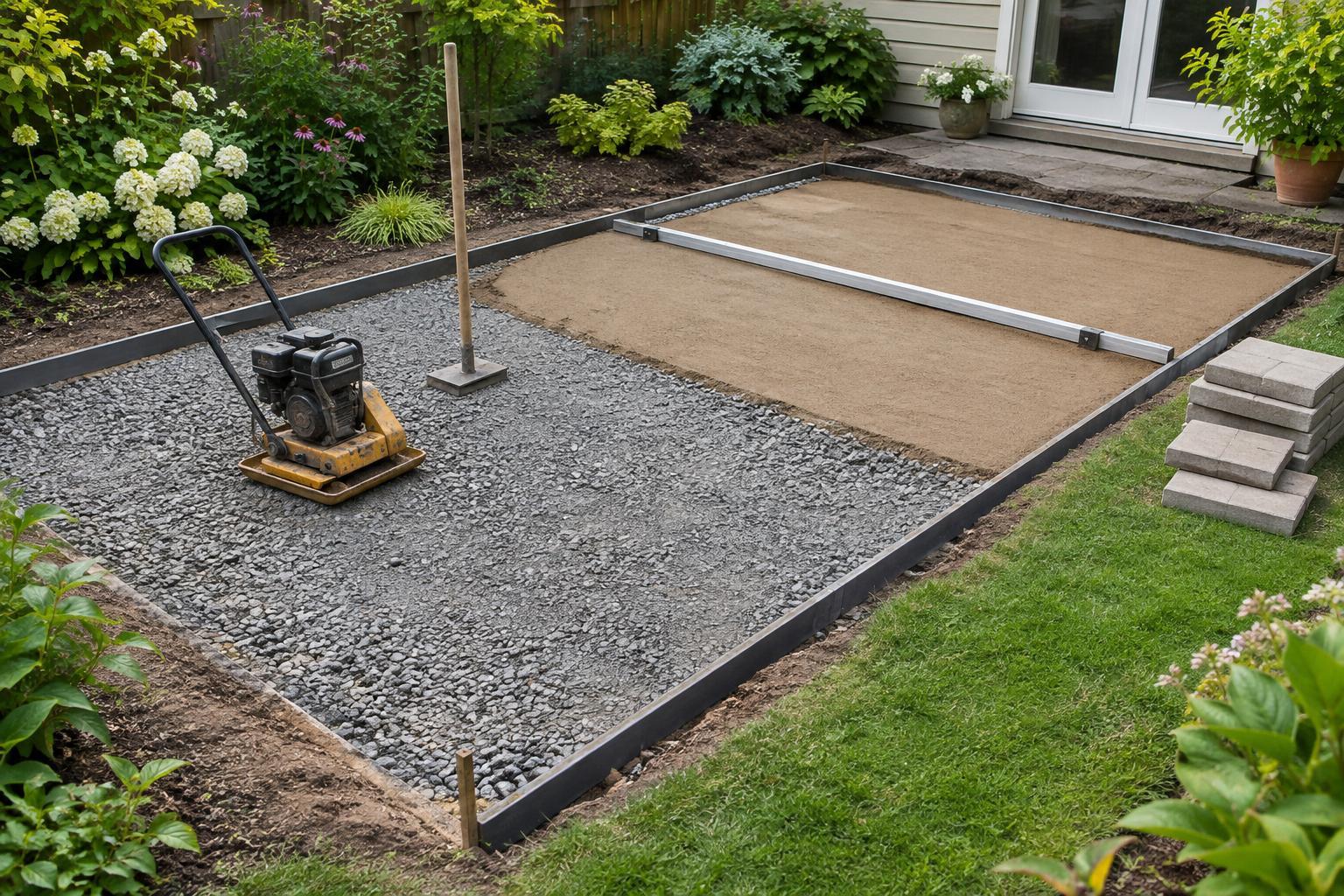
Compare complete installations, not just the visible materials. Excavation, base preparation, edging, drainage, access for equipment, and disposal of removed soil can all affect the work involved. Gravel may be simpler to adjust over time, while concrete and pavers demand more commitment to a finished layout. None is maintenance-free: choose the chores you are most willing to handle, whether that means washing a slab, tending paver joints, or raking gravel.
Mark out the proposed patio with stakes or a hose, then check that doors can open, chairs can pull back, and paths remain comfortable to use. Notice where rainwater travels and plan for the finished surface to direct it away from the house rather than trapping it against a wall. Check for buried services and any local requirements before digging. The best choice is the surface that supports your daily use, suits the site, and remains manageable as the garden changes.