Start with the space and how you will use it
Before choosing a shape, decide what the bed needs to do. A vegetable bed that you visit several times a week has different access needs from a shrub border that you tend occasionally. Note where you enter the garden, where you carry tools or a hose, and which views you want to keep open. Watch how sunlight and shade move across the site, and check whether water collects after rain. These observations will help you place a bed where its plants can thrive without making everyday garden tasks awkward.
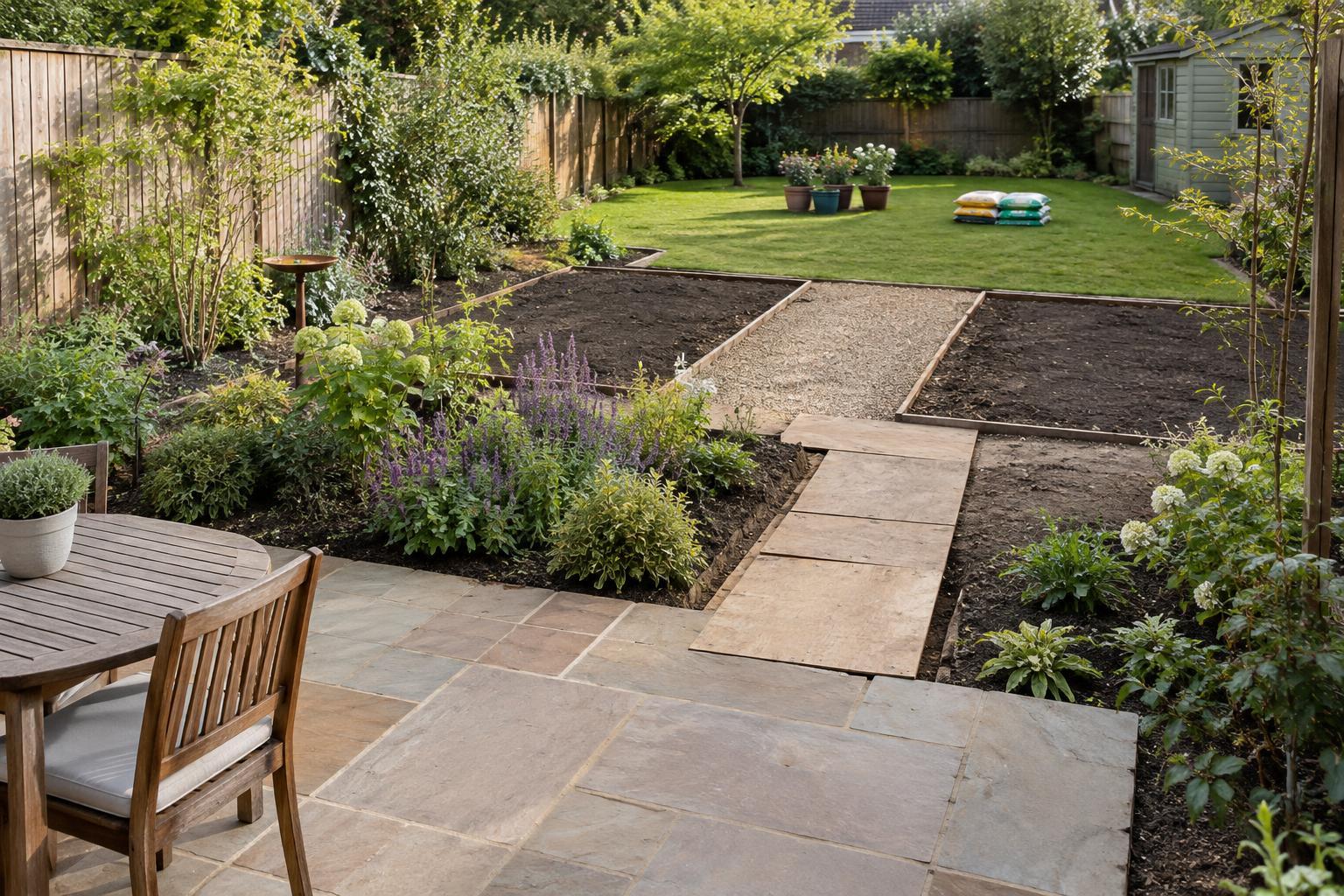
Measure the available area, but resist filling it all with planting. You will need room to walk, turn, weed, harvest and reach any nearby fence or tap. Leave space around gates and avoid creating a narrow strip that is difficult to mow or maintain. If the bed sits near a wall, allow enough room to care for the plants without leaning against the structure.
Choose a width you can comfortably reach
Reach is often a better guide to bed width than the size of the empty space. For a bed you can approach from both long sides, a width of around four feet is a useful starting point: many gardeners can work toward the middle without stepping on the soil. If you can reach it from only one side, begin with a width of around two feet. Test those distances with your own arms and tools, especially if you expect to garden while seated or prefer not to stretch.
Length is more flexible, but a very long bed can make you walk around it repeatedly. Leave a way across or around longer plantings at convenient points. For beds used by children or gardeners with limited mobility, smaller sections and wider, even paths may matter more than maximizing planting area. The right size is one you can tend comfortably through the whole growing season.
Give paths and edges enough room
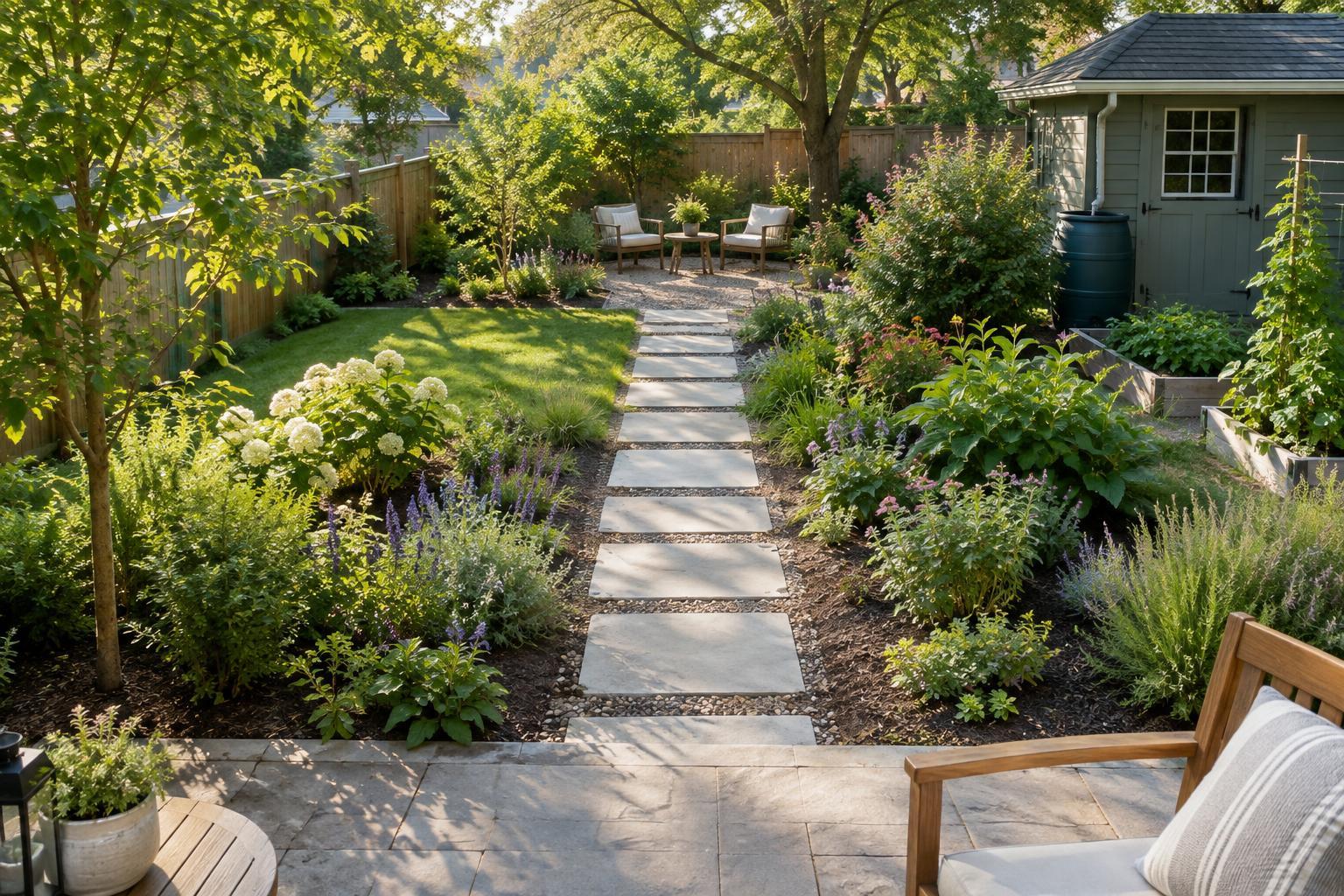
Sketch paths at the same time as beds rather than fitting them into whatever space remains. A narrow footpath may be enough for occasional access, while a route used with a wheelbarrow, watering can or mobility aid needs more width and a suitable surface. Try walking the proposed route with the equipment you normally use. Include room at corners and bed ends, where turning can be harder than moving along a straight path.
Edges also affect how much work a bed creates. A straight edge is simple to mark, cut and maintain. A curved edge can soften a patio or lawn, but broad, gentle curves are usually easier to mow alongside than a series of tight bends. If grass meets the bed, decide how you will keep it from spreading into the planting. A clearly defined edge, maintained regularly, is often more useful than an elaborate outline.
Let the plants guide the shape
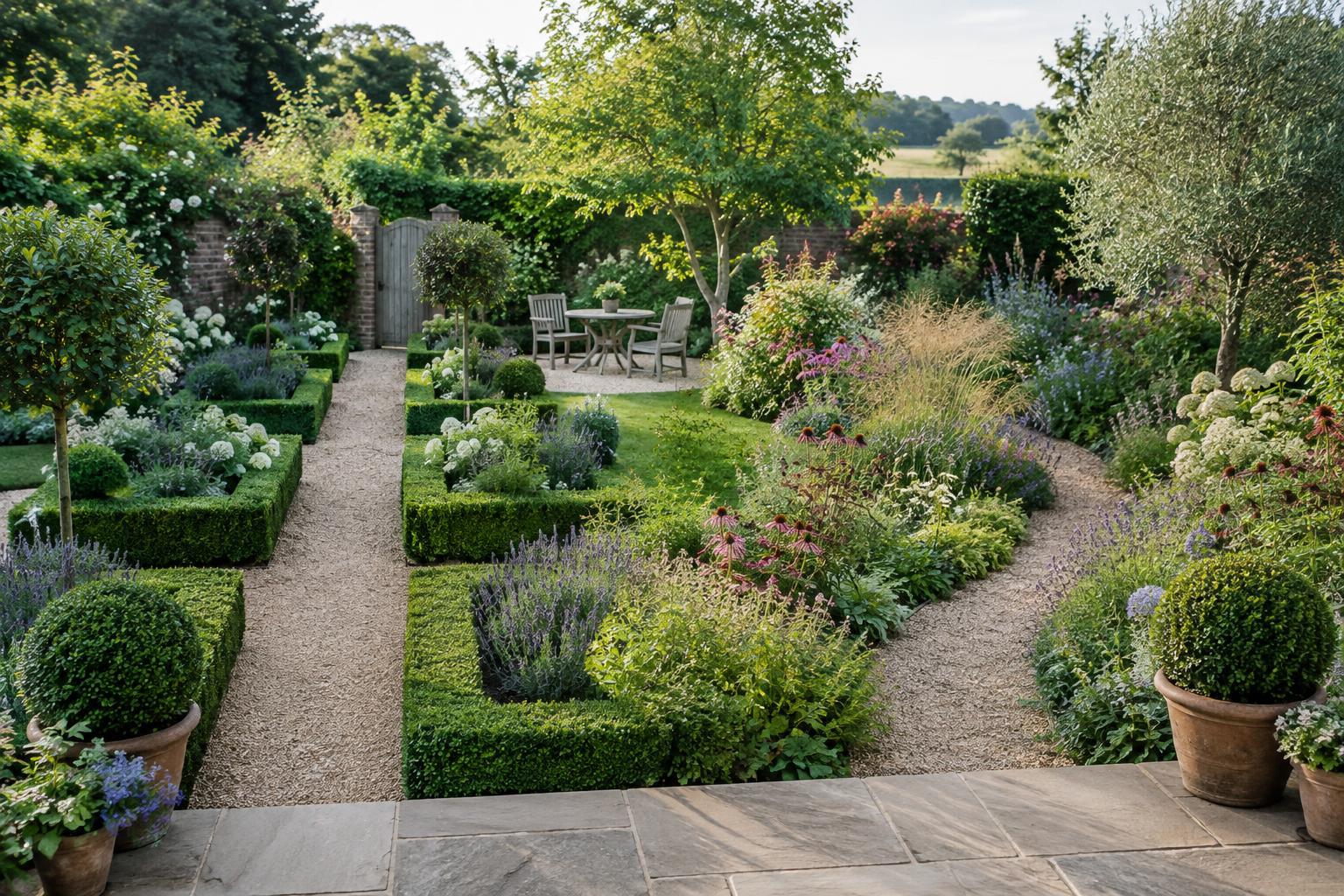
Rectangles make good use of space and suit rows, crop rotation and simple irrigation layouts. Borders along fences or paths can tie different parts of a garden together, provided they stay narrow enough to tend. Island beds, which can be reached from all sides, work well as focal points in a lawn or open area. Their planting should look considered from more than one direction, with enough space between mature plants and the edge.
Plan for eventual plant size, not just the gaps between young plants. A shrub that will spread across a path or cover its neighbors may need a deeper bed or a different location. Check each plant’s expected height and spread, light preferences and water needs before settling the outline. In dry climates, grouping plants with similar watering needs can make care simpler; in wetter spots, choose plants suited to those conditions rather than assuming a raised bed will solve every drainage problem.
Test the layout before making it permanent
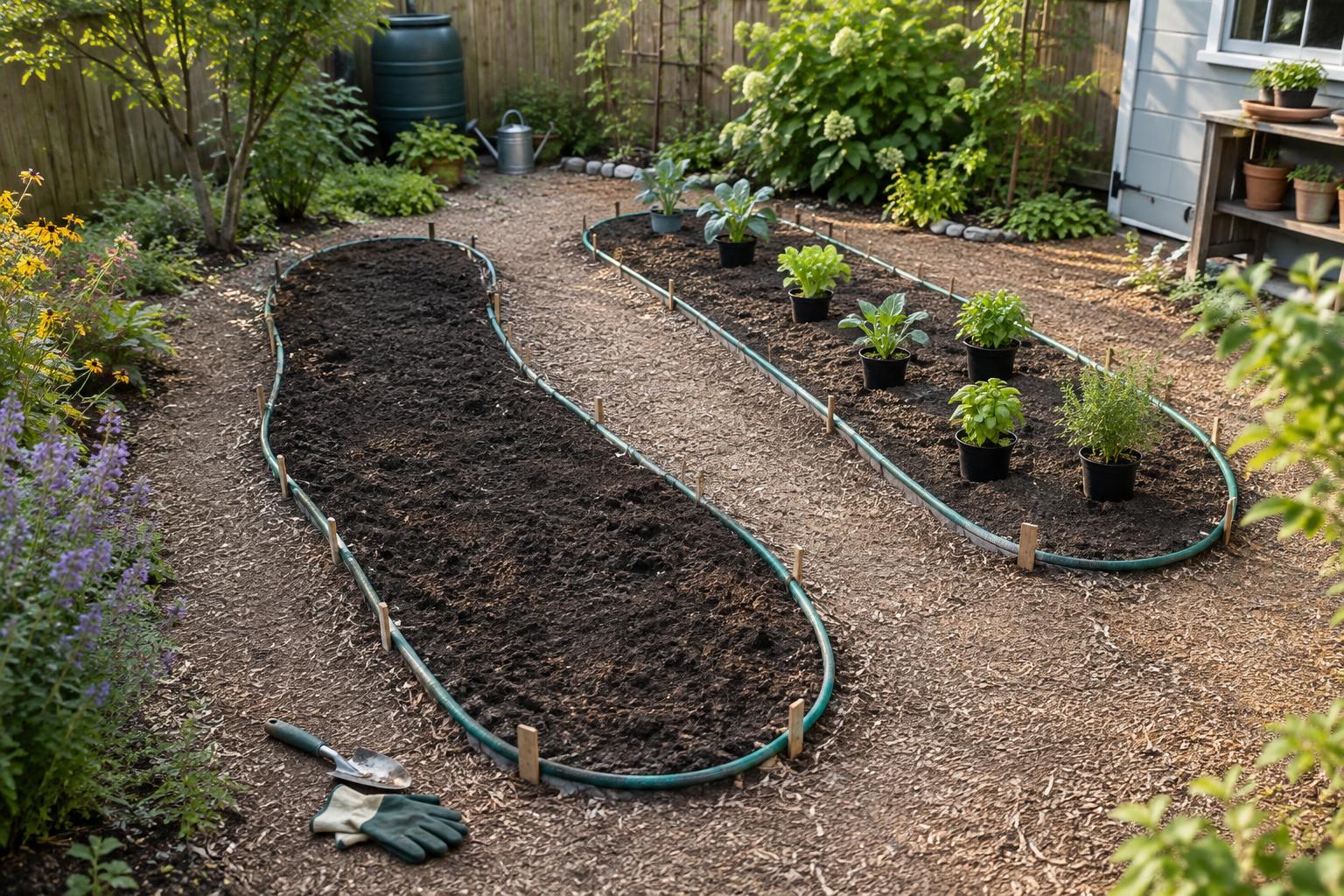
Use a hose, rope or stakes to mark the proposed edges on the ground. Walk every path, pretend to reach the center of each bed and check the view from doors, windows and seating areas. If possible, leave the outline in place for a few days. You may notice that it cuts across a familiar route, blocks a useful working area or looks different from the patio than it did on paper.
Start smaller if you are unsure how much planting you can maintain. A modest bed with comfortable access can be extended later, while an oversized bed may quickly become a chore. Once the outline feels right, prepare the soil and choose plants to suit the site. Size and shape are successful when they make gardening easier as well as making the space look good.