Start with the job the edge needs to do
A patio edge can look decorative, but its first job is practical. Loose gravel needs a boundary that limits how far stones spread into a lawn, path or planting bed. Pavers need an edge restraint that helps keep the outside row from shifting over time. Before choosing a material, decide which of those jobs matters most and whether the edge must also contain soil or separate two surfaces at different heights.
Look at how people will use the patio. An edge beside a lawn may need to accommodate a mower. One beside a garden bed should leave room to work around plants. If the patio meets a path, aim for a comfortable transition rather than an awkward raised lip. Where the ground slopes or the patio edge must hold back a substantial change in level, a simple edging strip may not be enough; that situation calls for a more carefully planned retaining detail.
Match the edging to gravel or pavers
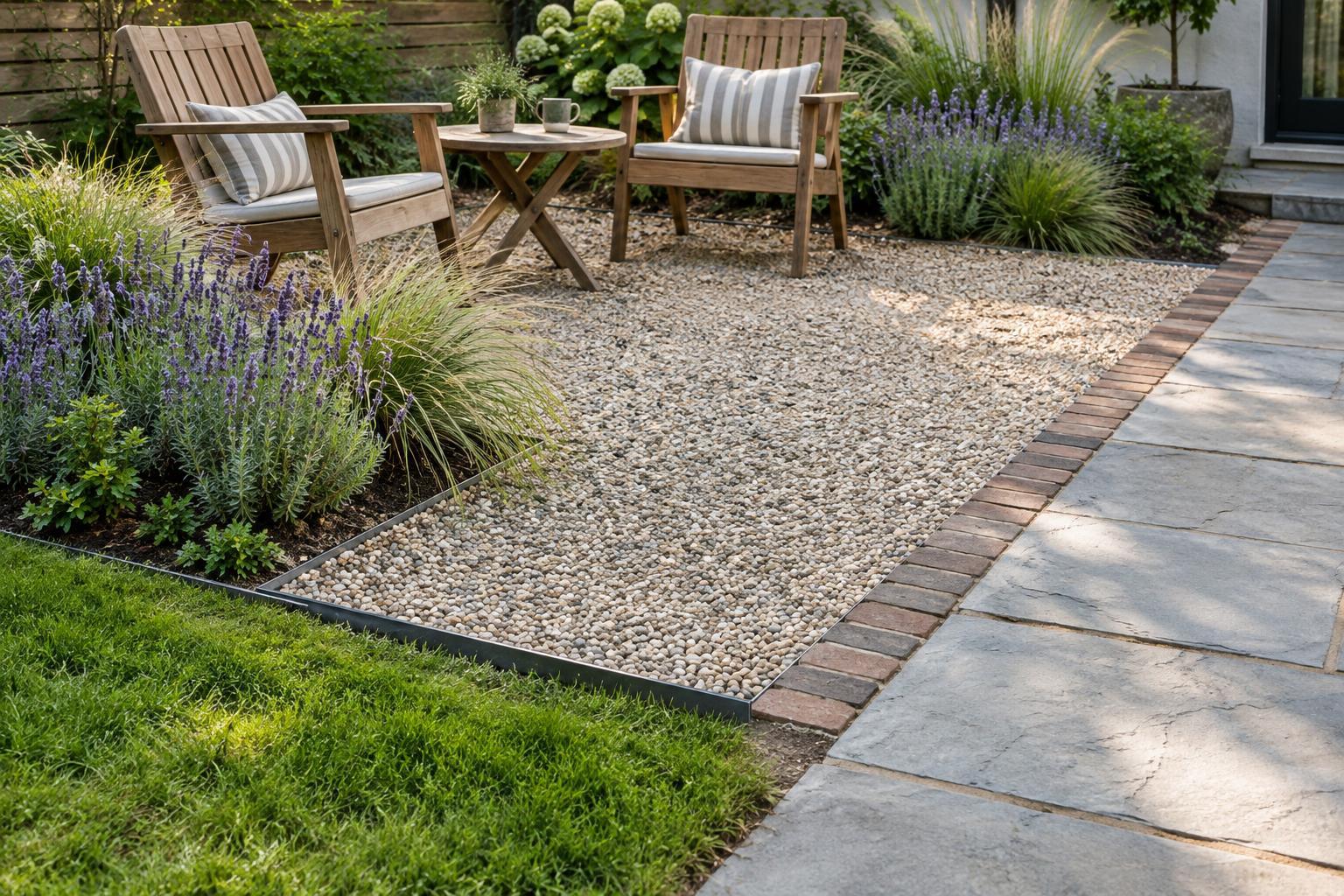
For a gravel patio, choose an edge high and firm enough to keep the gravel within its intended area while leaving the surface easy to step onto. Metal strips can create a slim, clean line, especially around curves. Brick, stone or concrete edging gives a more visible border and can suit a patio that needs a defined shape. Timber offers a softer appearance, though wood in contact with damp soil will generally need more attention as it ages.
For a paver patio, appearance alone is not enough. The edge should restrain the outer pavers and suit the base beneath them. Purpose-made paver restraints are often discreet because they sit alongside the pavers and are secured into a prepared base. A brick or stone border can also work, but it needs to be installed as a stable edge rather than simply placed next to the paving. Check the guidance for your chosen pavers and base materials before settling on a detail.
Compare materials by shape, upkeep and style
Metal edging is useful when you want a narrow border that follows gentle curves without dominating the patio. Select a product intended for ground installation, with a profile and fixings suitable for the surface it will contain. Plastic edging can be easier to cut and handle, but a lightweight strip may not stand up well where it will be kicked, mown against or pushed by loose stone.
Brick and stone make a more substantial visual frame. They can echo a house wall, a garden path or the patio paving itself. Their weight does not automatically make them stable, however: preparation beneath the border matters. Timber can suit an informal garden and is straightforward to cut into straight runs, but long-term moisture exposure and ground contact are worth considering. Whatever material you choose, think about visible corners, joints and changes in direction; these small details have a large effect on the finished look.
Plan for water, ground movement and maintenance
Edging should not trap water against a building or turn the patio into a shallow basin. Plan the patio surface and surrounding ground so water can move away from structures and toward a suitable place to soak in or drain. Gravel may allow water through its surface, but compacted layers or soil beneath it can still affect where water goes. A raised border may also interrupt runoff, so consider its height before installation.
Ground conditions affect how well any edge lasts. Soil that becomes very wet, dries and shrinks, or freezes may move enough to loosen a poorly supported border. A firm, level base and secure fixings are usually more valuable than choosing the heaviest-looking product. Plan for routine care, too: gravel may need raking back from the edge, weeds can appear along joints, and lawn grass may need trimming where a mower cannot reach.
Make the final choice before you build
Sketch the patio outline and mark where it meets lawn, beds, paths and walls. Then compare two or three edging options against the same questions: Will this hold the surface in place? Can it follow the shape? Will it create a trip point? How easy will it be to maintain? If you can, lay a short sample along the proposed boundary to judge the height and appearance from both the patio and the garden.
For gravel, a well-secured edge that contains the stones without becoming an obstacle is often the best starting point. For pavers, prioritize a restraint suited to the paving and its base, then choose how visible you want that restraint to be. The most successful edge is not necessarily the most noticeable one: it is the border that keeps the patio tidy, feels natural to use and fits the way you care for the rest of the outdoor space.