Start with how you use the patio
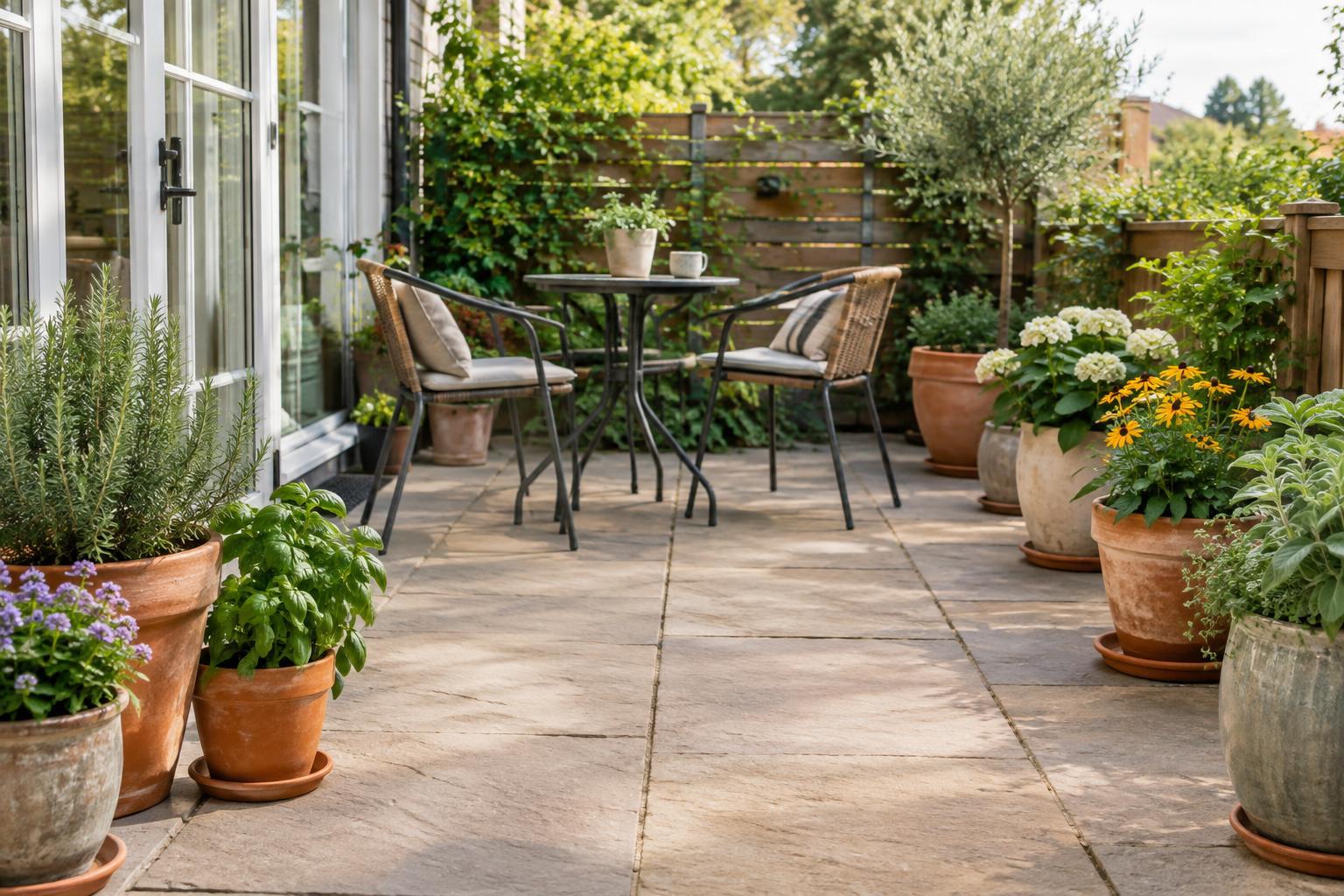
Before choosing plants, notice where people sit, walk, open doors, and carry food or gardening supplies. A planter that looks well placed on an empty patio may become an obstacle when chairs are pulled out. Mark the main routes through the space and keep them clear. If you have a dining table, check the layout with chairs occupied rather than tucked underneath it.
Give each container a purpose. A group beside a seat can soften a bare corner, while a planter near an entrance can make the transition outdoors feel welcoming. Avoid placing tall, dense plants where they block a useful view or make a small patio feel enclosed. If you want flexibility, leave room to move chairs and tables before committing to heavy containers.
Match container size to the plant and the space
Containers need enough room for roots and enough soil to hold moisture between waterings. Very small pots can dry out quickly in sun and wind, while oversized containers may be difficult to move once filled. Check a plant’s expected mature size and choose a pot that gives it room to grow without overwhelming the patio. Grouping a few pots of different heights often has more impact than scattering many small ones everywhere.
Consider weight as well as appearance. Soil, water, and a mature plant can make a container much heavier than it seems when empty. On a balcony, raised deck, or other structure with uncertain load capacity, confirm what weight it can support before adding large planters. On a ground-level patio, think about whether you will need to move pots for cleaning or seasonal changes. Lightweight materials may help, but they can be easier to tip over in exposed spots.
Choose plants for the conditions you actually have
Observe the patio at different times of day. A wall or roof overhang can create shade even when the garden beyond is sunny. Paving and nearby walls may also make a spot feel hotter or more exposed than a planting bed. Select plants for the light, wind, and temperatures at their precise location rather than relying on a general description of your yard.
Think about maintenance before buying. A patio used for meals or relaxation may be better served by plants you can keep tidy with modest effort. If you enjoy frequent watering and trimming, you have more options. If you travel or prefer a simpler routine, choose plants suited to container life and your local climate, and avoid filling the patio with more pots than you can reasonably care for. Keep plants with similar watering needs together to make the task easier.
Plan where the water will go
Most patio plants need containers with drainage openings so excess water can escape. That water still needs somewhere to go: runoff can leave marks on paving, create slippery patches, or collect beside a wall. Place pots where they can drain without sending water toward the house or across a walking route. A saucer can catch drips, but empty it when water remains standing rather than treating it as permanent storage.
Use potting mix intended for containers rather than filling pots with dense garden soil. Leave a little space below the rim so you can water without spilling soil over the sides. When arranging several planters, leave enough room behind them to reach a tap, hose connection, or watering can without shifting furniture each time. An easy watering route makes consistent care more likely.
Arrange for easy upkeep and adjustment
Try out a layout before filling every pot. Set empty containers in place, then walk through the patio and sit in the chairs you normally use. Check that leaves will not brush against a doorway as plants grow. Put frequently tended pots where you can reach them, and leave space around containers for sweeping and checking the surface beneath them.
A patio container garden does not have to be finished all at once. Begin with a few well-placed planters and watch how they perform through changing weather and daily use. You can then add greenery where it is genuinely useful, move a struggling plant to a better position, or remove a pot that gets in the way. The best arrangement is one that makes the patio pleasant to use and remains manageable to care for.