Choose a manageable place and size
A wildlife pond does not need to dominate the garden. A compact, irregular shape can fit beside a planting bed or in a quiet corner, provided you can reach it for occasional care. Choose a spot that receives some daylight but is not exposed to strong sun all day, which can make a small volume of water warm quickly. Keep it away from heavy leaf fall where possible, and check for buried pipes or cables before digging.
Plan for safety before you pick up a spade. Any open water can be a hazard to young children and pets. If they use the space, consider whether the pond can be securely fenced or placed in an area they cannot access without supervision. A shallow pond is not a substitute for a barrier. Also leave enough room around the edge to kneel or stand securely while working.
Shape the pond around easy exits
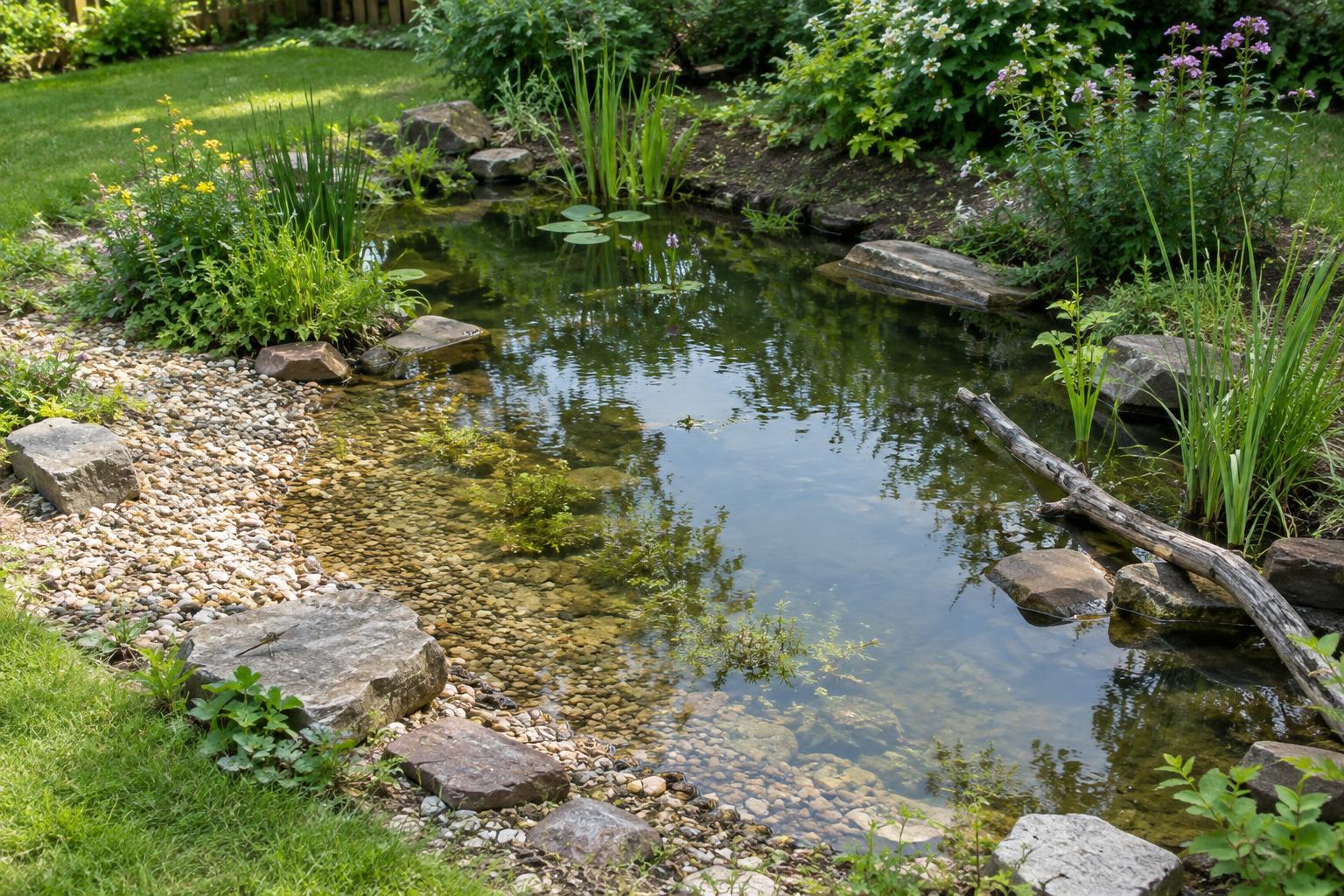
The most important feature is a route out of the water. Dig a broad, gently sloping margin on at least one side rather than making every edge vertical. Add shallow shelves at varied depths so plants can sit securely and small animals can move between water and land. The deepest part need only suit the plants and conditions you have in mind; avoid making the whole pond uniformly deep.
For a flexible liner, remove sharp stones and roots, then protect the liner with suitable underlay before laying it loosely into the hole. Fill gradually, easing folds into place rather than stretching the material tight. Where a smooth liner creates a slippery bank, cover part of the slope with clean stones or gravel that will stay put. A stable branch or rough stone rising from the water to dry ground can provide another exit, but it should not be the only one.
If you use a rigid tub or container instead, treat its steep walls as an obstacle. Build a firmly anchored ramp that reaches from the bottom or a shallow resting point up over the rim. Check that it remains usable as the water level changes. Place rocks securely outside the container too, so an animal leaving the water does not emerge onto a sudden drop.
Add water and plants without overcrowding
Rainwater is a useful choice where it is available and clean to collect. If you use tap water, check local guidance for any treatment needed before adding sensitive pond life; water supplies differ. Let newly filled water settle, and expect its appearance to change as the pond develops. Avoid adding fish to a small wildlife pond: they can disturb plants and feed on animals you may hope to attract.
Choose a modest mix of plants suited to your climate and pond size: some for the shallow margin, some with leaves at or below the surface, and nearby ground cover for shelter. Check each plant’s mature spread and whether it is considered invasive locally. Use baskets if you want to contain vigorous growers. Leave open water and clear access to the sloped edge instead of filling every shelf. Plant around the pond with a gap where you can safely approach it for care.
Let wildlife find it, then maintain the exits
A new pond may take time to attract visitors. You do not need to collect animals from another pond or move wild creatures into yours. A pesticide-free area nearby, with plants and a few sheltered spots, gives visitors places to rest after they leave the water. Keep loose netting and other materials that might entangle wildlife away from the pond.
Check the water level during dry or hot weather, especially in a small container. Top it up when necessary so ramps still meet the water. Remove excess fallen leaves and thin plants before they cover the entire surface, while taking care not to discard animals hiding among them. Inspect stones, branches, and ramps after storms or routine cleaning to make sure they have not shifted. In colder climates, plan for ice and seasonal water-level changes rather than assuming an exit that works in summer will always remain clear.
Keep the design simple enough to care for
The most useful pond is one you can maintain without dismantling it. You do not need a fountain or elaborate edging to make a welcoming water feature. Prioritize a sound liner or container, a dependable shallow route out, planting that leaves some space, and safe access for maintenance. Revisit those basics as the pond settles: a gentle bank can become slippery, and a once-clear ramp can disappear under growth.
Watch the pond from a little distance to see how its edges function, but avoid handling visiting wildlife unless it is necessary for immediate safety. Small adjustments to a stone, plant basket, or water level can make the pond easier for animals to use. With safe exits built into the structure from the start, the pond can remain a manageable part of the garden as conditions change.