Start by watching the water
Before drawing a garden plan, notice what happens during and after rain. Look for puddles, water flowing across paths, soil washed onto paving, and areas that stay soft long after the rest of the yard has dried. Check where roof downspouts release water and whether paving sends runoff toward a planting bed. Make notes after more than one rainfall if you can: a brief shower may reveal a different pattern from a long, steady rain.
Drainage varies within a single garden. A low corner may stay damp while a raised edge dries quickly; a compacted strip beside a path may hold water even when nearby soil does not. Mark these differences on a simple sketch alongside slopes, buildings, existing trees and places you want to use. The aim is not necessarily to make every patch equally dry. It is to understand each patch before assigning it a job.
Look below the surface
Soil affects how readily water moves. Sandy soil often lets water pass through quickly but may dry out between rains. Clay-rich soil can absorb water slowly, especially when compacted. Dig a small hole in a proposed bed when the ground is workable, then look at the soil structure and how wet it feels below the surface. After rain, observe whether water lingers in the hole. This is a useful clue, not a definitive test: recent weather and soil layers can change the result.
Also look for signs of compaction, such as a hard surface, shallow puddles and difficulty pushing a hand tool into the ground. Avoid walking or working on beds when the soil is very wet, since that can make compaction worse. Adding compost to suitable garden soil and keeping it covered with mulch can gradually support better structure, but amendments will not solve every drainage problem. If water is being supplied continuously by a downspout or a slope, address that flow as part of the plan.
Place beds, paths and gathering spaces with care
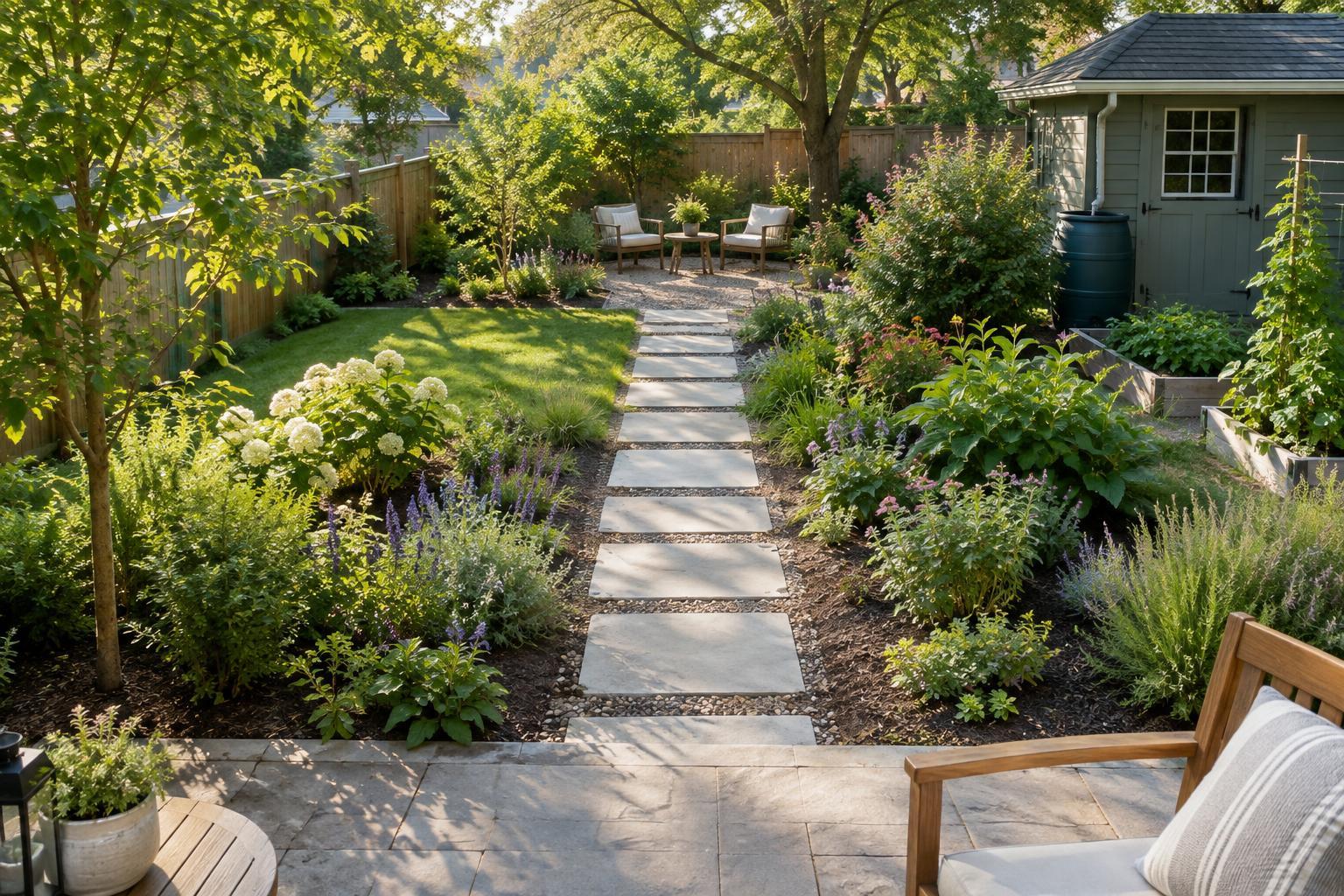
Put features that need firm, usable ground where water already clears reasonably well, if the layout allows. A path through a persistently muddy area may need a stable base and a surface that suits the amount of foot traffic it receives. Shape adjacent planting areas so soil does not wash onto the path, and avoid creating a paved barrier that traps water against a building or fence.
Raised beds can help when vegetable roots would otherwise sit in wet soil, but they still need somewhere for excess water to go. Fill them with an appropriate growing mix and consider what happens at their base during prolonged rain. On sloping ground, small level planting areas and groundcover can help slow surface flow. Do not simply send unwanted water toward a neighbor’s property, a building foundation or another vulnerable area. If a drainage change involves significant grading, buried pipes or structures, seek appropriate local guidance before digging.
Match plants to the conditions
A planting plan is more resilient when it treats wet and dry zones as different opportunities. Choose plants for the moisture, light and climate of each spot rather than relying on the label “well-drained” for the whole garden. A damp hollow may suit moisture-tolerant planting, while a sunny, fast-draining bank may call for plants that cope with drier soil. Check a plant’s expected size as well as its water needs, so mature roots and foliage fit the space.
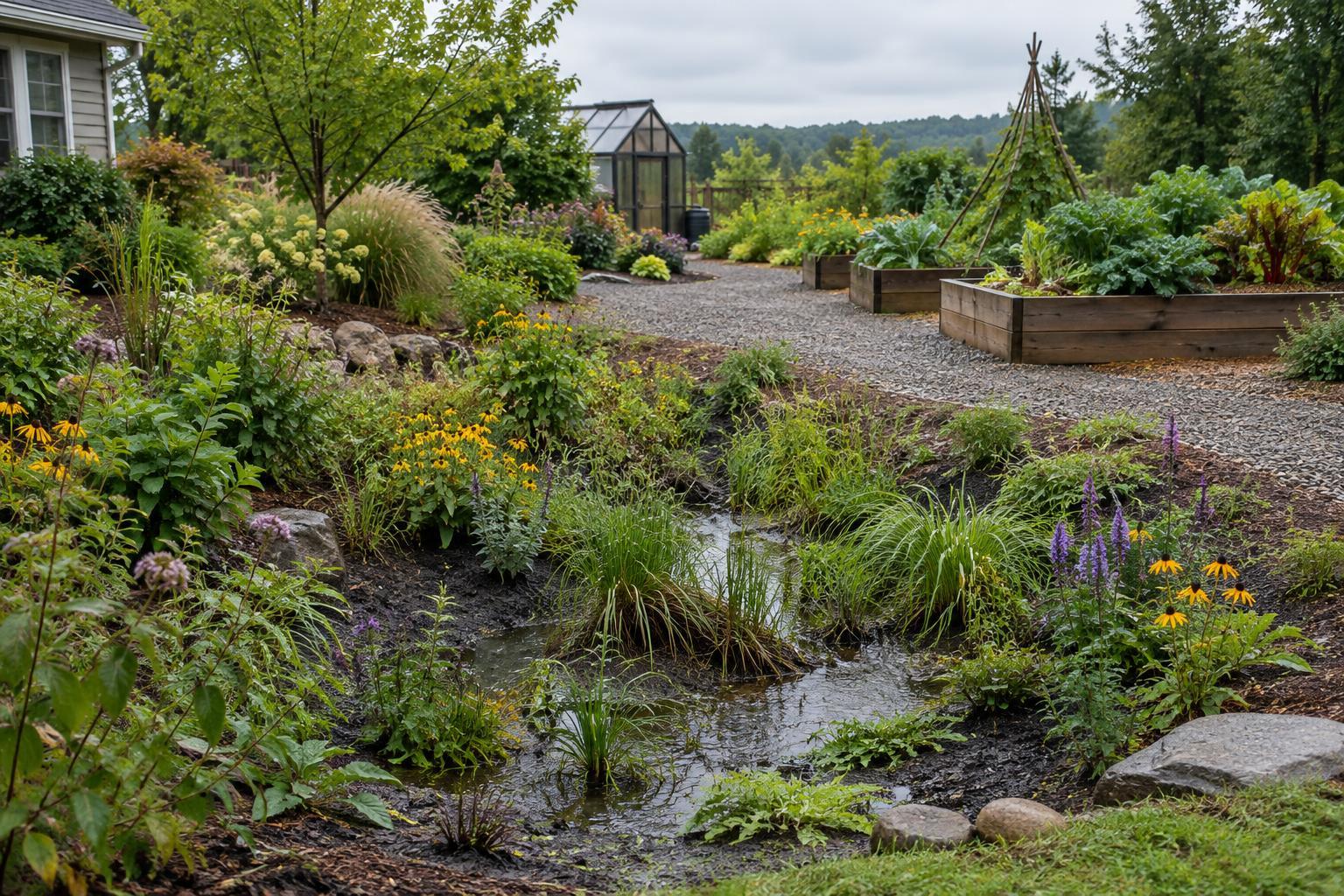
No plant should be expected to fix standing water by itself. If a spot remains waterlogged for long periods, investigate the cause before putting valuable plants there. A shallow planted depression may be an option for collecting and absorbing runoff where the site is suitable, but it needs careful placement away from buildings and other sensitive areas. In cold climates, remember that frozen ground and snowmelt may create drainage patterns you do not see in summer.
Build in room to adjust
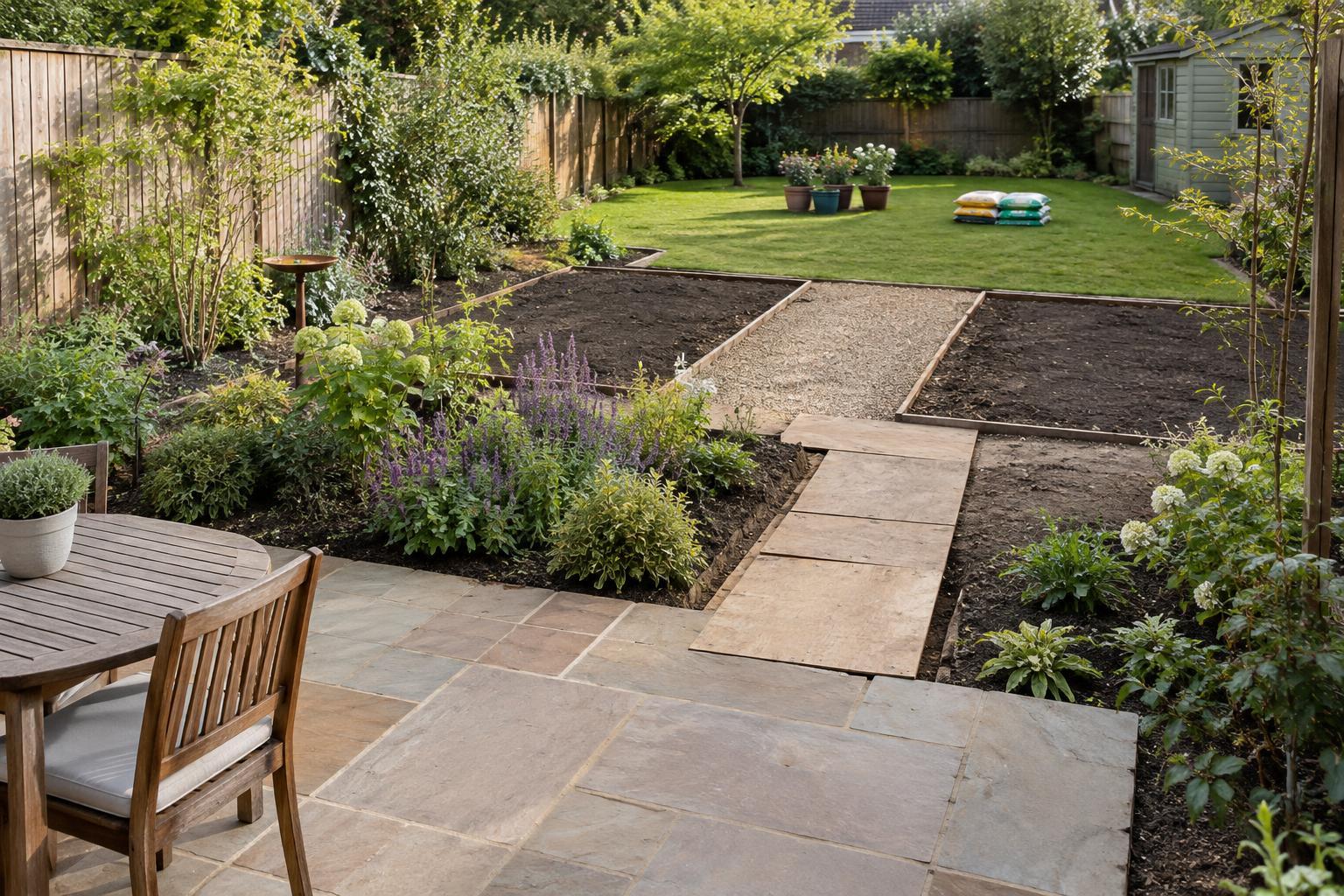
Drainage planning does not end when the first bed is planted. Watch the garden through changing weather and seasons, particularly after adding a patio, path, shed or new soil. Keep downspout outlets, surface channels and path edges clear of debris. If mulch or soil repeatedly moves to the same place, that is a sign of flowing water worth addressing rather than simply tidying away.
Start with changes you can observe and maintain: redirect foot traffic off wet soil, move a bed to a better spot, or revise planting in an area that stays damp. Leave room on your plan to adapt once you have seen how the garden behaves. Working with the existing pattern of water often produces a more practical outdoor space than trying to force every part of the garden to behave the same way.